In the realm of industrial automation and control systems, proximity mutual inductance sensors stand as a cornerstone technology for non-contact object detection and position sensing. These robust and reliable devices operate on the fundamental principle of electromagnetic induction, offering distinct advantages in harsh environments where physical contact is impractical or undesirable. Unlike capacitive or optical sensors, mutual inductance-based proximity sensors excel in detecting metallic objects, particularly ferrous metals, with high precision and repeatability.
The core operating principle involves an oscillator circuit that generates a high-frequency electromagnetic field from a coil within the sensor's active face. When a conductive target, typically a metal object, enters this oscillating field, eddy currents are induced on the target's surface. These eddy currents, in turn, create their own magnetic field, which opposes the original field generated by the sensor coil. This interaction, governed by Lenz's Law, results in a change in the oscillation amplitude or frequency within the sensor's circuitry. An integrated evaluation circuit continuously monitors this change. Once the disturbance exceeds a predefined threshold—corresponding to the sensor's nominal sensing distance—it triggers a switching signal, changing the state of the output (e.g., from OFF to ON). This entire process occurs without any physical contact, ensuring zero mechanical wear and a long operational lifespan.
A key characteristic of these sensors is their sensing range, or nominal sensing distance (Sn). This is defined as the distance at which a standard target (usually a square of mild steel) will reliably trigger the sensor. It's crucial to note that the effective sensing distance can vary with different metals. For instance, the sensing range for stainless steel or aluminum is often reduced compared to mild steel, a factor accounted for by a correction factor provided in datasheets. Furthermore, these sensors exhibit a hysteresis effect—the switch-off point occurs at a distance slightly farther than the switch-on point. This built-in hysteresis prevents output chattering when a target is positioned precisely at the sensing limit, ensuring stable switching behavior.
The applications for proximity mutual inductance sensors are vast and integral to modern manufacturing. They are ubiquitously deployed for tasks such as end-of-travel detection on linear actuators and cylinders, part presence verification on conveyor lines, rotary speed monitoring via gear teeth counting, and precise positioning in machine tools. In metalworking, they detect broken tools or monitor workpiece positioning. Their sealed, solid-state construction, often rated to IP67 or higher, makes them immune to contaminants like dust, oil, and coolant, allowing reliable operation in demanding settings such as automotive assembly, packaging machinery, and material handling systems.
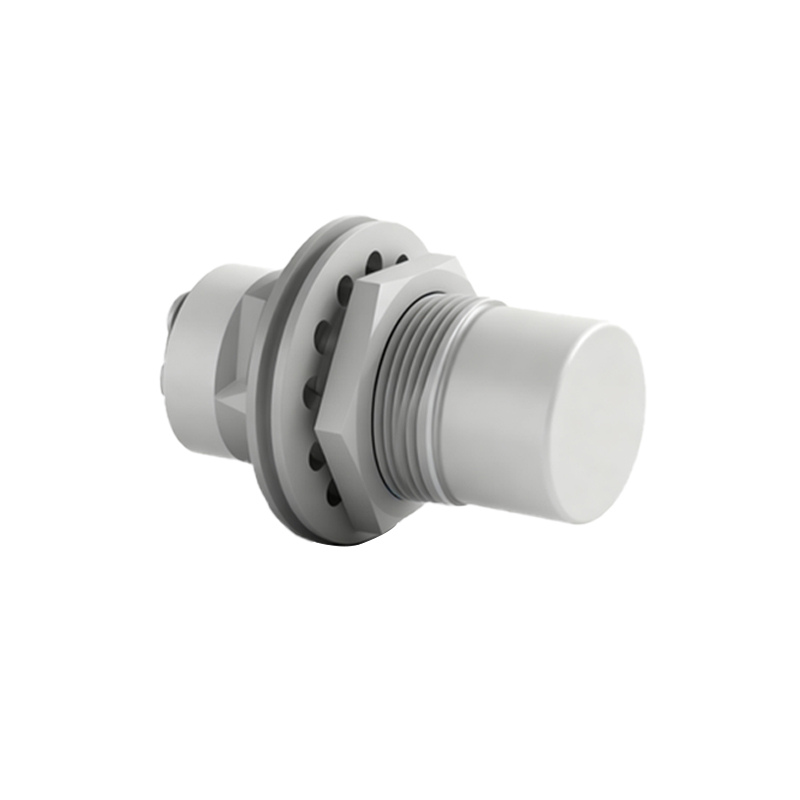
When selecting a proximity sensor for a specific application, several critical parameters must be evaluated. First is the housing style: cylindrical barrels (e.g., M8, M12, M18, M30 threads) are common for easy mounting, while rectangular or block-style housings offer alternative form factors. The sensing face can be shielded (flush-mountable) or unshielded (non-flush). Shielded sensors can be mounted flush in metal without affecting their sensing range, whereas unshielded types offer a longer range but require a non-metallic surround. Output configuration is another vital choice: DC sensors provide either PNP (sourcing) or NPN (sinking) transistor outputs, while AC/DC universal types often feature relay or solid-state outputs. Connection methods include pre-wired cables, quick-disconnect connectors, or terminal connections.
Environmental considerations are paramount. Operating voltage ranges, temperature tolerance, short-circuit and overload protection, and protection against reverse polarity are standard checks. For use in potentially explosive atmospheres, sensors with ATEX or IECEx certifications are mandatory. Additionally, certain models offer specialized features like weld-field immunity, which prevents malfunction from strong magnetic fields generated during resistance welding, and extended temperature ranges for foundries or cold storage facilities.
Installation and maintenance practices significantly impact sensor performance and longevity. Ensuring adequate clearance from adjacent metal surfaces (as per manufacturer guidelines) prevents false triggering. Regular cleaning of the active face to remove metallic swarf or buildup is essential. While these sensors are famously maintenance-free compared to mechanical limit switches, periodic functional checks should be part of a preventive maintenance routine to verify switching accuracy and output integrity.
In conclusion, proximity mutual inductance sensors provide an indispensable, robust solution for non-contact metallic object detection. Their operation, rooted in timeless electromagnetic principles, delivers the reliability required for continuous industrial processes. A thorough understanding of their operating principles, key specifications, and application nuances enables engineers and technicians to select, install, and maintain the optimal sensor, thereby enhancing system reliability, safety, and efficiency across countless automation challenges.