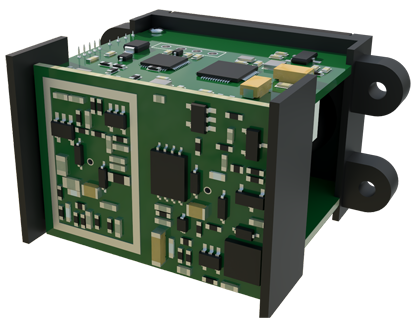
Laser sensors are pivotal components in modern industrial automation, offering high precision, reliability, and speed for triggering actions in various applications. Understanding how laser sensors trigger involves delving into their operational principles, signal processing, and integration into control systems. This article explores the mechanisms behind laser sensor triggering, common types, and practical use cases in industrial settings.
At its core, a laser sensor emits a focused beam of light—typically from a laser diode—toward a target object. The sensor detects changes in the light beam, such as reflection, interruption, or modulation, to trigger an output signal. This process relies on photoelectric principles, where the sensor's receiver converts light energy into electrical signals. When the beam interacts with an object, the sensor analyzes parameters like intensity, time-of-flight, or phase shift to determine the object's presence, position, or distance. For instance, in a through-beam sensor setup, the transmitter and receiver are placed opposite each other; if an object breaks the beam, the receiver detects a drop in light intensity, triggering a switch to an "on" or "off" state. In contrast, diffuse reflective sensors use the same unit for both emission and reception, triggering when light reflects off an object back to the sensor.
The triggering mechanism is governed by the sensor's internal electronics and firmware. Upon detection, the sensor processes the signal through amplifiers, comparators, and microcontrollers to filter noise and ensure accuracy. Many laser sensors feature adjustable thresholds or hysteresis settings to prevent false triggers from environmental factors like ambient light or vibrations. For example, in a proximity sensing application, a laser sensor might be set to trigger only when an object comes within a specific range, using time-of-flight calculations to measure distance precisely. This data is then converted into digital or analog outputs—such as NPN/PNP transistor signals or 4-20 mA currents—that interface with programmable logic controllers (PLCs), robots, or other automation devices.
In industrial environments, laser sensors are deployed for diverse triggering tasks. Common applications include object detection on conveyor belts, where sensors trigger sorting mechanisms when items pass by; position sensing in assembly lines, ensuring components are correctly aligned; and safety systems, where laser curtains trigger machine shutdowns if breached. Advanced sensors, like those using triangulation or confocal principles, enable high-resolution triggering for quality control, such as measuring thickness or detecting defects. The choice of sensor type—whether through-beam, retro-reflective, or diffuse—depends on factors like range, object properties, and environmental conditions. For instance, through-beam sensors offer long ranges and high accuracy for clear object detection, while diffuse sensors are suited for shorter distances where mounting space is limited.
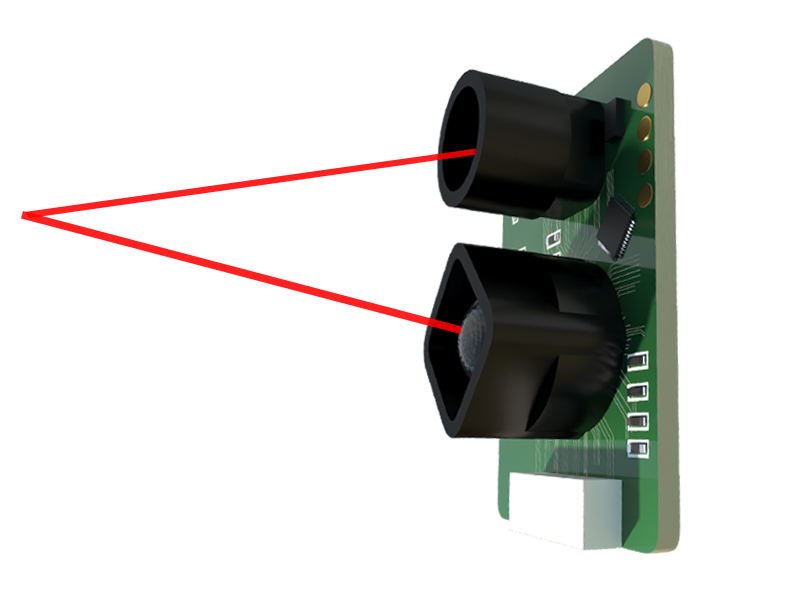
Integration and calibration are critical for reliable triggering. Engineers must align laser beams properly, account for material reflectivity (e.g., dark surfaces may absorb light, reducing signal strength), and mitigate interference from dust or humidity. Regular maintenance, like lens cleaning and output testing, ensures consistent performance. As Industry 4.0 advances, laser sensors are increasingly networked via IO-Link or Ethernet, allowing real-time data exchange and adaptive triggering based on system feedback.
In summary, laser sensors trigger through sophisticated light-based detection and signal processing, enabling automated responses in industrial systems. Their versatility and precision make them indispensable for tasks ranging from simple presence sensing to complex measurement, driving efficiency and safety in modern manufacturing. By mastering their triggering principles, engineers can optimize applications for enhanced productivity and innovation.