In the realm of industrial automation, machine vision, and robotics, the terminology surrounding measurement and detection devices can sometimes be ambiguous. A common point of discussion among engineers and technical professionals is whether a laser scanner qualifies as a sensor. This article delves into the technical definitions, operational principles, and functional roles to provide a clear, industry-informed perspective.
Fundamentally, a sensor is a device that detects or measures a physical property and records, indicates, or otherwise responds to it. It converts a physical phenomenon—such as light, heat, motion, or pressure—into an electrical signal that can be interpreted by a system. Examples include photoelectric sensors, thermocouples, and proximity sensors. Their output is typically a simple analog voltage/current or a digital signal indicating a state (on/off, present/absent).
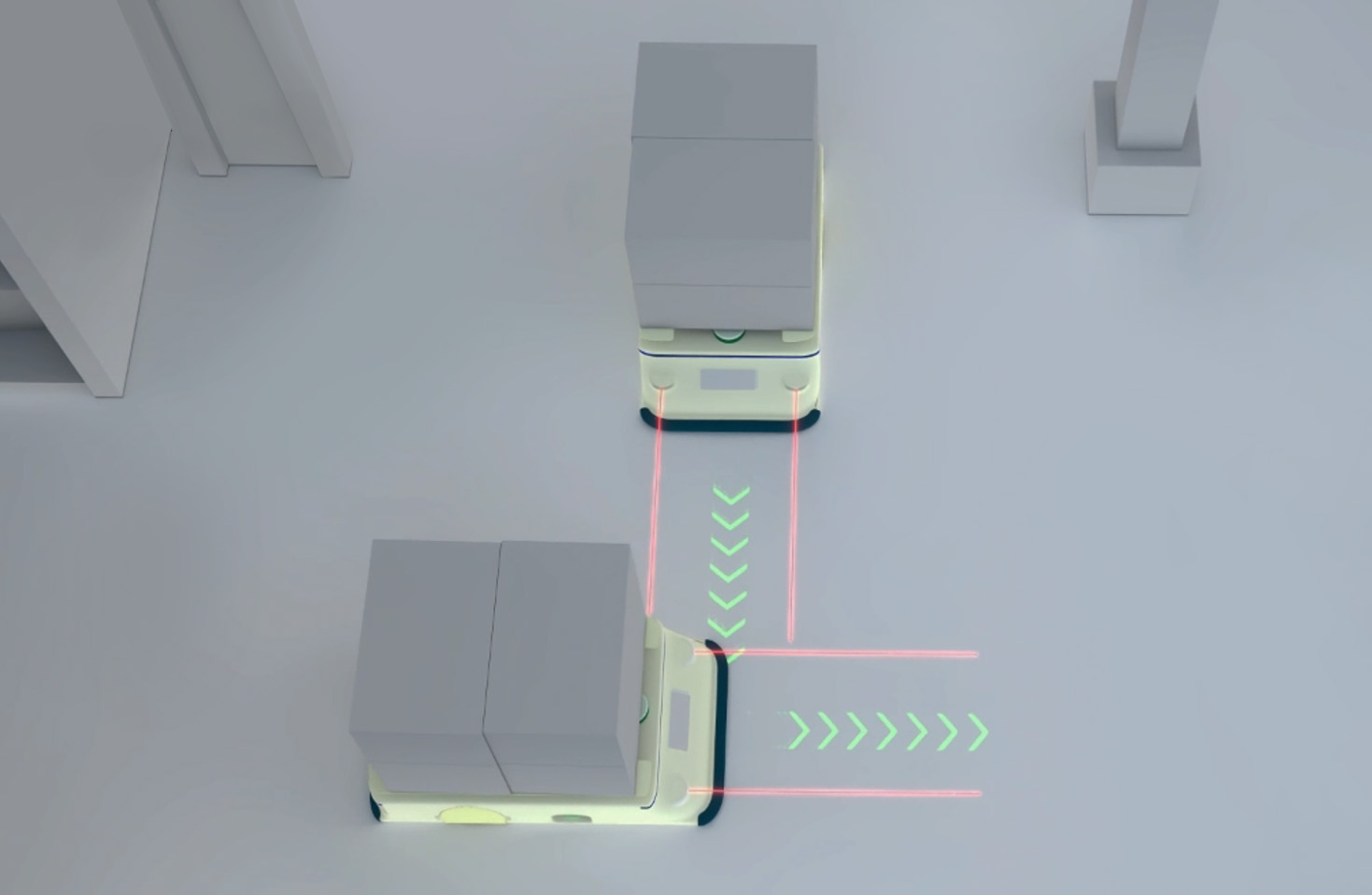
A laser scanner, however, is a more complex system. At its core, it employs a sensor—specifically, a photodetector or an array of them. The core operation involves emitting a laser beam (often via a rotating or oscillating mirror) across a field of view. The reflected light from objects within that field is captured by the photodetector. By precisely measuring the time-of-flight (ToF) of the laser pulse or the phase shift of a modulated laser beam, the device calculates the distance to each point. It performs this measurement thousands or even millions of times per second, generating a dense cloud of distance data points, often in two or three dimensions.
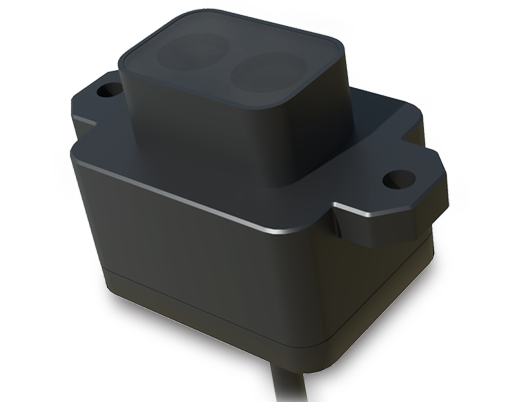
Therefore, the answer is nuanced. A laser scanner is not merely a sensor; it is a sophisticated measurement system that incorporates multiple sensors and active components. The critical distinction lies in data output and processing complexity.
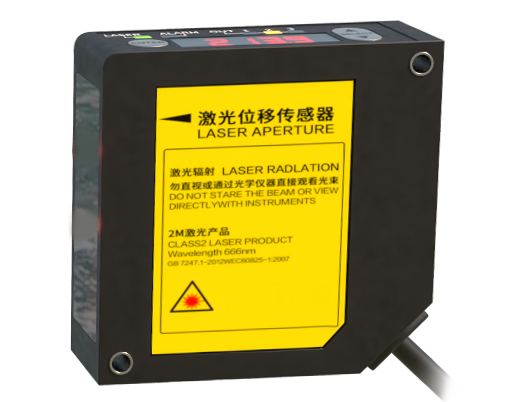
A standalone sensor provides a direct, often single-point, measurement of a specific parameter. For instance, a laser distance sensor (a type of sensor) measures the distance to a single point on a target. Its output is a continuous value corresponding to that one distance.
A laser scanner, in contrast, provides spatially resolved data. It doesn't just measure one distance; it measures thousands, constructing a profile or a map of its environment. The raw data from the photodetector undergoes significant on-board signal processing, triangulation, and computation to generate this structured point cloud or profile data. This output is informational, not merely a representation of a single physical variable.
Consider a safety application. A simple light curtain uses an array of photoelectric sensors to create a protective field; it outputs a discrete stop signal when the beam is broken. An area-scanning safety laser scanner, however, continuously maps its designated zone in two dimensions. It can differentiate between an intruding person and a stationary machine part, making complex decisions based on the shape, size, and location of detected objects before issuing a control command. This demonstrates a higher level of environmental perception and intelligence.
From a system architecture viewpoint, the photodetector within the scanner acts as the true "sensor" element, transducing light intensity into an electrical signal. The laser diode is an actuator. The rotating mirror is another actuator. The processing unit that calculates distance and assembles the point cloud is the computer. Thus, a laser scanner is an integrated system containing sensors, actuators, and a processor.
In practical industrial applications, this distinction influences selection criteria. Engineers choose a simple sensor for tasks like part presence detection, edge finding, or basic height verification—where binary or single-value feedback is sufficient. They deploy a laser scanner for more complex tasks: profiling irregular objects for quality control, guiding robots along contoured seams, creating 3D maps for autonomous mobile robots (AMRs), or monitoring volume levels in bulk storage. The scanner provides rich, multi-dimensional data that requires further software interpretation.
In conclusion, while a laser scanner fundamentally relies on sensor technology for its operation, classifying it simply as a "sensor" is an oversimplification that understates its capabilities. It is more accurately described as a multi-sensor measurement and profiling system or a vision-based metrology instrument. Understanding this distinction is crucial for proper specification, integration, and expectation setting in automation and measurement projects. The laser scanner takes the basic principle of optical sensing and elevates it through mechanical scanning and advanced digital processing to deliver a powerful tool for spatial awareness and analysis.