In the realm of industrial automation and control systems, proximity sensors are indispensable components for non-contact object detection. Among the various output configurations available, PNP (Positive-Negative-Positive) proximity sensors hold a prominent position. This article delves into the operational principles, key characteristics, and practical applications of PNP proximity switches, providing a comprehensive guide for engineers and technicians.
Fundamentally, a proximity sensor detects the presence or absence of an object within its sensing range without physical contact. PNP sensors are a specific type of three-wire DC sensor. The terminology "PNP" refers to the type of bipolar junction transistor used in its output switching circuit. In a PNP configuration, the transistor switches the positive voltage supply line. A standard three-wire PNP sensor has three connections: a brown wire for the positive DC supply voltage (typically +10 to +30 VDC), a blue wire for the common negative or 0V, and a black wire as the switched output signal.
The core operating principle is as follows: When no target is within the sensor's detection field, the output transistor is in an "off" state. In this state, the black output wire is effectively disconnected from the positive supply (brown wire). The output voltage, measured between the black and blue wires, is near 0V. When a metallic or other detectable target enters the sensing range, the sensor's internal oscillator circuit is damped, triggering the output stage. The PNP transistor turns "on," connecting the black output wire internally to the positive supply voltage. Consequently, the output (black wire) now carries a voltage close to the supply voltage (e.g., +24V) relative to the common negative (blue wire). This behavior is often described as "sourcing" output because the sensor sources or provides positive current from the supply to the load.
This sourcing characteristic is a primary differentiator from its counterpart, the NPN (Negative-Positive-Negative) sensor, which is a "sinking" type. In a PNP system, the load (such as a programmable logic controller (PLC) input, relay coil, or indicator lamp) is connected between the sensor's output (black wire) and the common negative (blue wire). The positive current flows from the sensor's output terminal into the load. This wiring scheme is frequently preferred in many regions and applications because it aligns intuitively with the concept of switching the "hot" or positive side of the circuit, similar to conventional switch wiring.
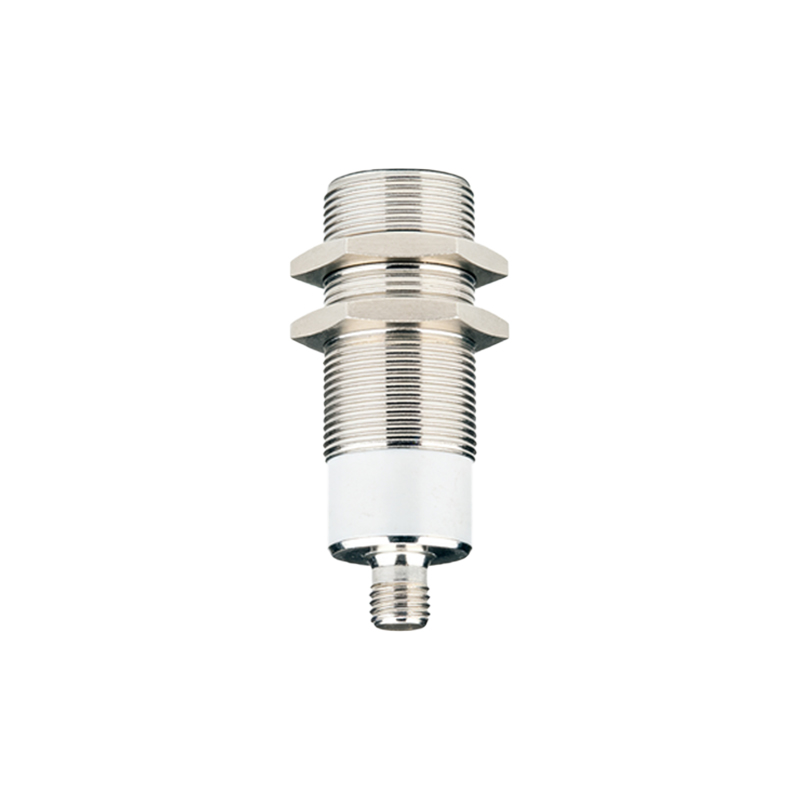
Key advantages of PNP proximity sensors contribute to their widespread adoption. Firstly, their compatibility is a major strength. Many modern PLCs and digital input modules are designed to readily accept PNP sourcing signals. Connecting a PNP sensor to a PLC digital input is often straightforward: the sensor's output goes to the PLC input terminal, and the sensor's common (blue) and the PLC input common are both connected to the DC power supply's 0V. This simplifies installation and reduces wiring errors. Secondly, from a safety perspective, some fault conditions can be easier to diagnose. An unintended short circuit of the output wire to ground (0V) in a PNP system typically does not cause a supply short circuit, as the current path is not completed without the load. Furthermore, PNP sensors are often considered more intuitive for personnel familiar with traditional relay logic, where a switch controls the positive leg of a circuit.
When selecting and applying a PNP proximity sensor, several critical parameters must be considered. The sensing range, typically a few millimeters up to several centimeters, must be appropriate for the application. The target material is crucial; inductive sensors detect metals (with different correction factors for steel, aluminum, copper), while capacitive sensors can detect non-metals. The housing material (e.g., brass, stainless steel, PBT plastic) should be chosen based on the environmental conditions, including exposure to chemicals, washdowns, or physical impact. The output current rating must not be exceeded, and protection against short circuits and reverse polarity is often a built-in feature in modern sensors.
PNP proximity sensors find applications across virtually every industry. In automotive manufacturing, they count parts on conveyors, detect robot arm positions, and verify component presence in assembly jigs. In packaging machinery, they ensure correct bottle or box placement. In material handling, they provide position feedback for actuators and cylinders. They are also integral to automated storage and retrieval systems, CNC machine tools for tool detection, and food & beverage processing lines.
In conclusion, PNP proximity sensors offer a reliable, robust, and intuitive solution for non-contact sensing tasks in industrial environments. Their sourcing output configuration provides seamless integration with common control hardware like PLCs. Understanding their operation, the significance of their three-wire connection, and their advantages over NPN alternatives enables engineers to design more efficient, safe,