In the rapidly evolving landscape of consumer electronics, the integration of laser sensors into smartphones represents a significant leap forward in human-machine interaction. This technological advancement, once primarily confined to industrial and scientific applications, is now reshaping the capabilities of everyday mobile devices. Laser sensors, particularly time-of-flight (ToF) variants, are becoming a cornerstone feature in modern flagship smartphones, enabling unprecedented levels of precision, speed, and functionality.
The core principle behind a laser sensor in a smartphone is the emission of a laser beam—typically infrared and invisible to the human eye—and the precise measurement of the time it takes for the light to reflect off an object and return to the sensor. This Time-of-Flight measurement allows the device to create a detailed depth map of its surroundings with remarkable accuracy, often at distances of up to several meters. Unlike traditional camera-based systems that rely on complex software algorithms and ample lighting, laser sensors provide direct, real-time distance data, functioning effectively even in low-light or challenging environmental conditions.
The applications of this technology within a smartphone ecosystem are diverse and transformative. One of the most prominent uses is in augmented reality (AR). By instantly and accurately mapping the three-dimensional space around the user, laser sensors allow virtual objects to be placed and anchored in the real world with stunning realism. This enables immersive gaming experiences, practical furniture visualization apps, and enhanced navigation tools that overlay directions onto the live camera feed. The precision of laser scanning eliminates the "jitter" and misplacement common in earlier AR implementations, creating a seamless blend of digital and physical realms.
Furthermore, laser autofocus has revolutionized mobile photography. Traditional autofocus systems can struggle in low-contrast or dark scenes, leading to blurry images. A laser-assisted autofocus system measures the distance to the subject almost instantaneously, allowing the camera lens to lock focus in a fraction of a second. This results in sharper photos, especially for macro shots or portraits with a pronounced background blur (bokeh) effect. The speed and reliability of laser autofocus are critical for capturing fleeting moments without delay.
Beyond imaging, laser sensors enhance device security and user convenience. They contribute to more secure facial recognition systems by adding a layer of depth perception, making it extremely difficult to spoof the system with a photograph or a mask. This 3D facial mapping is a key component in robust biometric authentication. Additionally, simple gestures can be detected with high accuracy. A user can, for example, silence an alarm or skip a music track by waving a hand over the phone without physically touching the screen, a feature particularly useful when hands are wet or dirty.
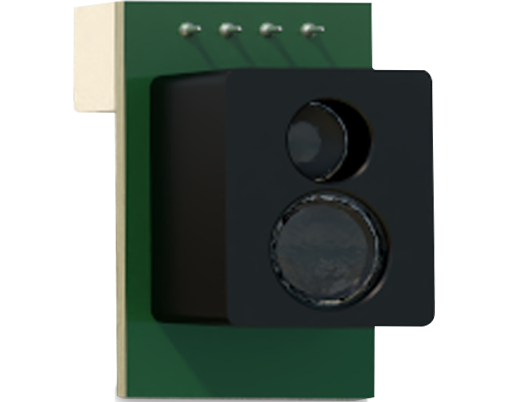
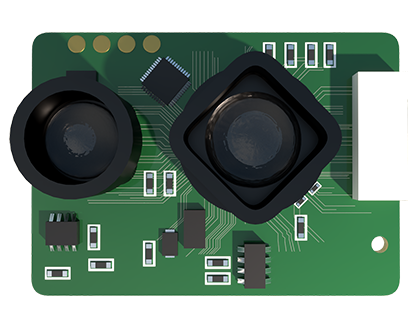
From an engineering perspective, integrating a laser sensor into the compact form factor of a smartphone presents notable challenges. Power consumption, heat dissipation, and component miniaturization are primary concerns. Manufacturers must carefully calibrate the laser's power output to be both effective for sensing and safe for human eyes, adhering to strict international laser safety standards (Class 1). The sensor module itself, comprising the laser emitter, the specialized receiver, and the controlling circuitry, must be meticulously designed to fit within the increasingly crowded internal space of a smartphone, often sharing real estate with multiple camera lenses, flash units, and other sensors.
The future trajectory of laser sensor technology in mobile devices points toward even greater integration and capability. We are moving towards full-room 3D scanning, where a smartphone can quickly generate a complete and accurate 3D model of an interior space for renovation or design purposes. Improved sensor resolution and faster processing will enable more nuanced gesture control, potentially replacing traditional touch inputs in certain scenarios. Furthermore, the synergy between laser data and advanced machine learning algorithms will unlock new possibilities in health monitoring, object recognition, and immersive social interactions.
In conclusion, the incorporation of laser sensors is not merely an incremental upgrade but a foundational shift in smartphone design philosophy. It transitions the device from a passive tool for communication and media consumption into an active, perceptive instrument that understands and interacts with its three-dimensional environment. As the technology matures and becomes more accessible, it will undoubtedly become a standard feature, pushing the boundaries of what is possible with a device we carry in our pockets. The laser sensor, in essence, is giving the smartphone a new sense—the sense of depth and spatial awareness—fundamentally enriching the user experience and opening a portal to a more interactive and connected digital future.