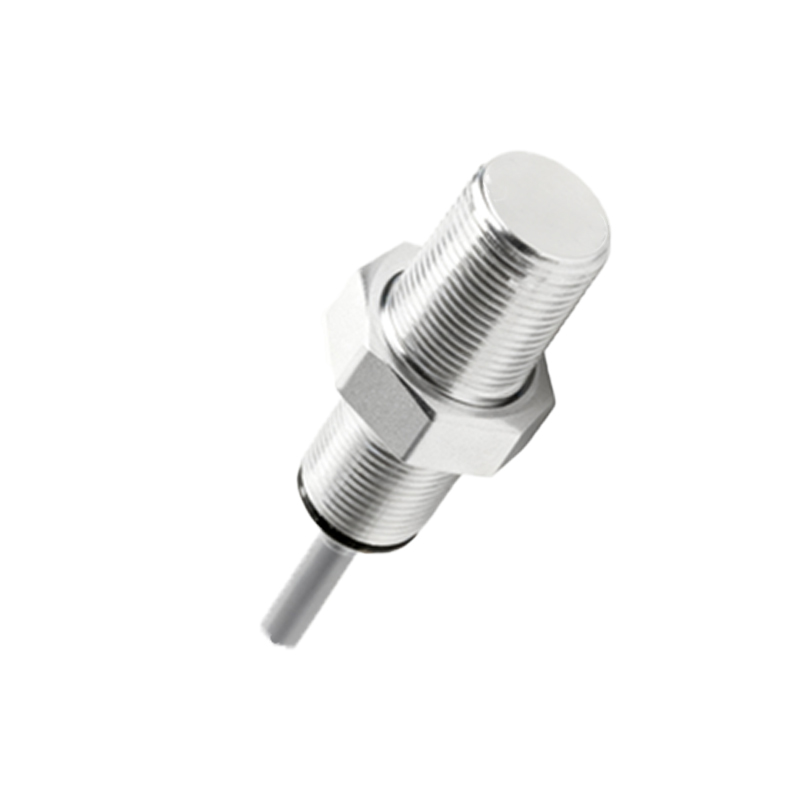
In the intricate world of industrial automation, where precision and reliability are paramount, proximity sensors operate as the silent, unseen sentinels. These devices, fundamental to countless systems, detect the presence or absence of an object without any physical contact. Their operation hinges on the emission of an electromagnetic field or a beam of electromagnetic radiation, and the subsequent detection of changes in the field or return signal. The primary advantage is clear: non-contact sensing eliminates mechanical wear and tear, enabling high-speed operation and longevity in harsh environments where dirt, oil, and vibration would cripple mechanical switches.
The taxonomy of proximity sensors is defined by their underlying technology, each suited to specific material types and application demands. Inductive proximity sensors are the workhorses for metal detection. They generate an oscillating electromagnetic field. When a metallic target enters this field, it induces eddy currents within the metal, causing a measurable change in the sensor's oscillation amplitude. This change triggers the sensor's output switch. Their robustness makes them ideal for machine tools, automotive assembly lines, and metal stamping presses. Capacitive sensors, in contrast, can detect both metallic and non-metallic materials—liquids, plastics, wood, or granules. They function by sensing changes in capacitance caused by the presence of any material that alters the dielectric constant of the space between the sensor's electrode and the ground. This versatility finds application in level detection for tanks, material handling for plastics, and packaging lines.
For longer-range detection and precise positioning, photoelectric sensors use light. An emitter projects a light beam (often infrared, visible red, or laser) to a receiver. The detection occurs when the target object interrupts (through-beam mode) or reflects (retro-reflective or diffuse mode) this beam. They excel in conveyor belt systems, object counting, and transparent bottle detection. Ultrasonic sensors employ high-frequency sound waves, measuring the time delay between the emitted pulse and the received echo to calculate distance. They are largely material-independent and effective in challenging conditions with dust, fog, or varying colors, commonly used in palletizing, collision avoidance on AGVs, and liquid level sensing.
The selection criteria for a proximity sensor extend beyond the detection principle. Key parameters include sensing distance (nominal and effective), repeat accuracy, response frequency, output type (PNP/NPN, analog, IO-Link), and environmental ratings (IP67, IP69K for washdown). Housing material, such as nickel-plated brass or stainless steel, is critical for chemical resistance. Furthermore, the emergence of smart sensors with integrated IO-Link communication allows for parameter setting, real-time diagnostics, and process data monitoring, paving the way for predictive maintenance and Industry 4.0 integration.
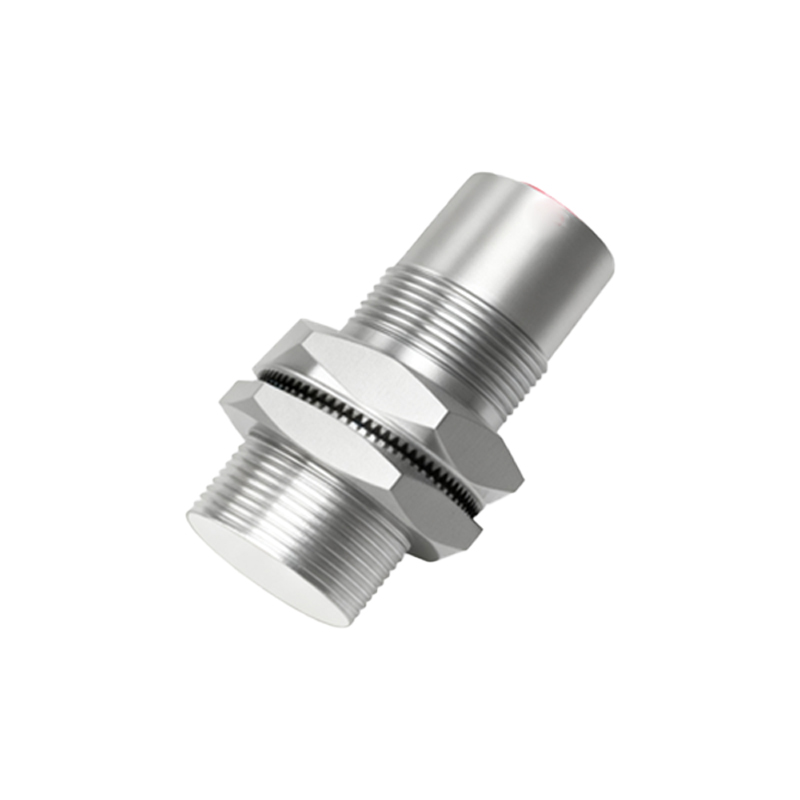
In practice, these sensors form the foundational layer of data acquisition. On a high-speed bottling line, an inductive sensor verifies the presence of a metal cap, while a capacitive sensor checks the liquid fill level, and a photoelectric sensor ensures labels are correctly applied. In automated warehousing, ultrasonic sensors guide robotic arms for precise pallet handling. Their failure can halt an entire production cell, underscoring their critical role.
Looking ahead, the evolution continues toward miniaturization, enhanced intelligence, and greater resilience. Sensors are becoming smaller yet more powerful, with embedded processing capabilities to filter noise and make preliminary decisions. The integration with industrial Ethernet protocols facilitates seamless data flow into higher-level control systems. As automation grows more complex and collaborative, the humble proximity sensor, in its various forms, will remain an indispensable, invisible guardian—ensuring efficiency, safety, and the seamless flow of modern industrial processes.