In the world of industrial automation, manufacturing, and safety systems, the ability to detect the presence or absence of an object without physical contact is paramount. This is where proximity sensors come into play. Among the various types, metal sensors—a specialized subset of proximity sensors—hold critical importance in numerous applications. Understanding their principles, types, and uses is essential for engineers and technicians.
At its core, a proximity sensor is a device that detects the presence of a nearby object within its sensing range, typically without any physical contact. It emits an electromagnetic field or a beam of radiation and looks for changes in the field or return signal. The object being detected is often referred to as the sensor's target. The key advantage is non-contact detection, which allows for high reliability, long operational life, and minimal maintenance as there is no mechanical wear.
Metal sensors, specifically, are designed to detect metallic targets. The most common and widely used type is the inductive proximity sensor. These sensors operate on the principle of electromagnetic induction. Inside the sensor, an oscillator generates a high-frequency alternating magnetic field that radiates from the sensing face, which is usually made of a ferrite core. When a metallic object enters this magnetic field, eddy currents are induced on the surface of the metal. These eddy currents draw energy from the oscillator circuit, causing a reduction in the amplitude of oscillation. This change is detected by a threshold circuit, which then triggers a solid-state output switch, signaling the presence of the metal target.
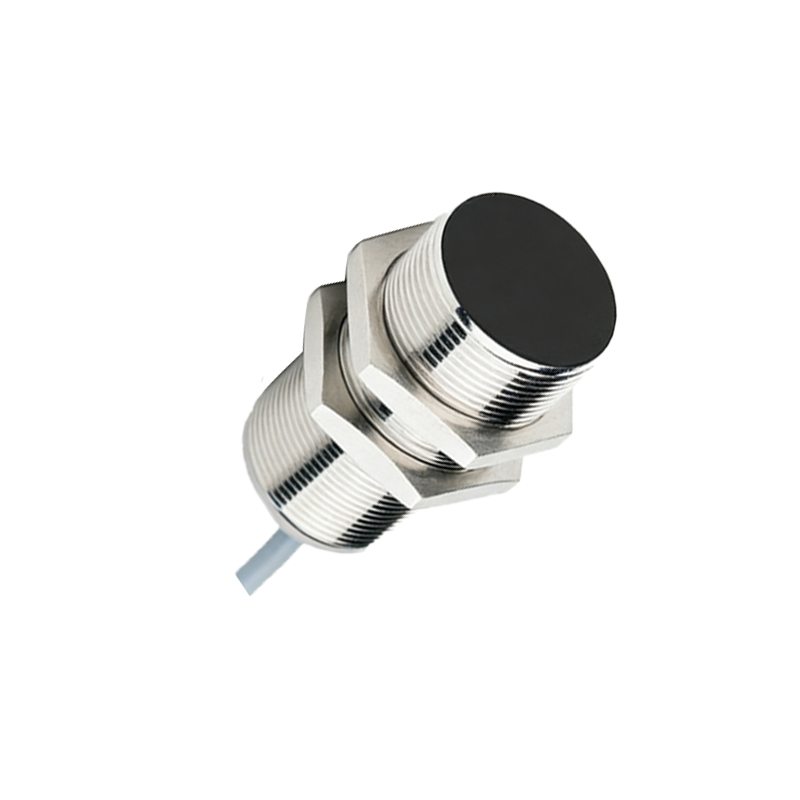
Inductive proximity sensors are highly effective for detecting ferrous metals like iron and steel, but they can also detect non-ferrous metals such as aluminum, copper, and brass, albeit with a reduced sensing range. The effective sensing distance depends on the size, shape, and material of the target, as well as the sensor's own specifications. They are inherently rugged, resistant to environmental factors like dust, dirt, and moisture (with appropriate IP ratings), and are not affected by most non-metallic materials, making them ideal for harsh industrial environments.
Another important category is the capacitive proximity sensor. While not exclusively for metals, they are highly effective at detecting them. These sensors can detect both metallic and non-metallic materials (liquids, plastics, wood) by measuring changes in capacitance. The sensor forms one plate of a capacitor, with the target object acting as the other plate. As the target approaches, the capacitance increases. When it reaches a preset threshold, the sensor triggers. For metal detection, capacitive sensors offer an alternative, especially when the target metal might be non-ferrous or when detection through a non-metallic barrier (like a glass or plastic container) is required.
The applications for metal sensors are vast and varied. In manufacturing assembly lines, they are used for part presence verification, counting, and position detection. For instance, ensuring a metal component is correctly placed before a robotic arm performs a weld. In the automotive industry, they monitor the position of metal parts during robotic painting or assembly. In material handling and packaging, they detect metal containers or foil seals. Safety is another critical domain; metal sensors are integral to machine guarding systems, ensuring operators are clear of dangerous moving parts before a cycle begins. They are also used in anti-collision systems for cranes and elevators.
Selecting the right metal sensor involves several considerations. The first is the target material—ferrous or non-ferrous metal, and its size. The required sensing distance, or range, is crucial and must be chosen with a safety margin, typically 70-80% of the nominal range to account for variations. Environmental conditions like temperature extremes, exposure to chemicals, or washdown requirements dictate the sensor's housing material and ingress protection (IP) rating. The output type is also key: standard options include NPN (sinking), PNP (sourcing), or analog outputs (4-20 mA, 0-10V) for distance-proportional measurement. Finally, the physical form factor—barrel-shaped, rectangular, or ring-shaped—must suit the mounting constraints.
Installation and maintenance are straightforward but vital for optimal performance. Sensors should be mounted securely to avoid vibration, and care must be taken to ensure the sensing face is clear of obstructions. It's important to maintain the specified lateral and axial clearance from surrounding metal structures to prevent false triggering—a phenomenon known as "shielding." Regular checks for physical damage, buildup of debris on the sensing face, and verification of output signals are part of a good maintenance routine.
In conclusion, proximity sensors designed for metal detection, primarily inductive sensors, are indispensable tools in modern industry. Their non-contact operation, durability, and precision enable automation, enhance safety, and improve quality control. From simple part detection to complex positioning tasks, these sensors form the silent, reliable backbone of countless automated processes. As technology advances, we see