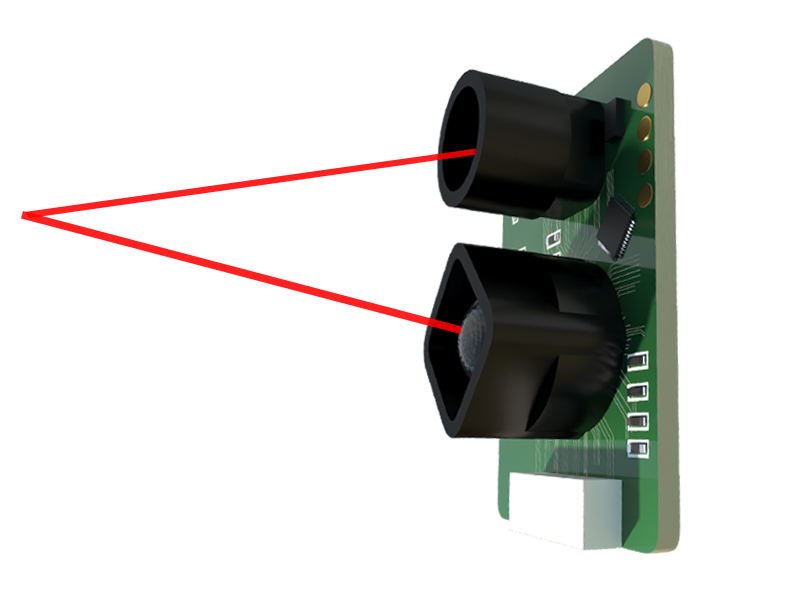
Laser sensors represent a cornerstone technology in modern industrial automation and precision measurement. Operating on the fundamental principle of emitting a focused beam of coherent light and analyzing its reflection, these devices provide non-contact, high-accuracy solutions for a vast array of tasks. The core components typically include a laser diode as the light source, optics for beam shaping and focusing, a photodetector, and sophisticated signal processing electronics. The working principle can be based on several methods, with triangulation and time-of-flight (ToF) being among the most prevalent. In triangulation sensors, the emitted laser beam strikes a target, and the reflected light is detected at a specific angle by a position-sensitive element. The displacement of the detected light spot directly correlates to the target's distance or profile. Time-of-flight sensors, conversely, measure the time delay between the emission of a laser pulse and the reception of its reflection to calculate distance, making them ideal for longer ranges.
The diversity of laser sensor types addresses distinct application needs. Common classifications include laser distance sensors, laser displacement sensors, laser profile sensors, and laser contrast sensors. Distance and displacement sensors are ubiquitous for position control, thickness gauging, and vibration analysis. Profile sensors, often using laser line triangulation, capture detailed 2D or 3D cross-sectional data for inspection and reverse engineering. Contrast sensors excel at detecting marks, labels, or material differences based on reflectivity. Key performance parameters defining a sensor's capability include measuring range, resolution, repeatability, linearity, and response time. Environmental factors such as ambient light, target surface properties (color, texture, material), and atmospheric conditions can significantly influence performance, necessitating careful selection and configuration.
The industrial applications of laser sensors are extensive and critical. In automotive manufacturing, they ensure precise gap and flush measurements between body panels. In electronics, they verify component placement on PCBs and measure solder paste height. Robotics relies on them for accurate positioning, obstacle detection, and bin picking guidance. Logistics and packaging systems use them for dimensioning, level detection, and object counting. Furthermore, laser sensors are indispensable in quality control for inspecting surface defects, contour dimensions, and warp detection. Their advantages over mechanical contact methods or other optical sensors are compelling: exceptional accuracy and resolution, high-speed response enabling in-line inspection, non-contact operation that prevents damage to delicate targets, and remarkable reliability in harsh industrial environments with proper housing.

When integrating a laser sensor, several practical considerations are paramount. Selecting the correct type and model based on the specific measurement task is the first step. Installation requires attention to mounting stability, alignment, and minimizing environmental interference like dust or strong ambient light. Regular calibration against known standards is essential to maintain long-term accuracy. Safety is a non-negotiable aspect; even low-power laser sensors must comply with international laser safety standards (e.g., IEC 60825-1) to ensure eye safety, often requiring appropriate labeling and enclosure. The future trajectory of laser sensor technology points towards miniaturization, enhanced intelligence with integrated processors for edge computing, multi-sensor fusion combining laser data with vision or spectral information, and the development of more robust designs for extreme conditions. As Industry 4.0 and smart factories evolve, laser sensors will continue to be pivotal enablers of precision, efficiency, and automated quality assurance across global industries.