In the realm of industrial automation and control systems, proximity sensors are indispensable components for non-contact object detection. Among the various configurations, the Normally Closed (NC) proximity sensor holds a distinct and critical role. This article delves into the operational principles, key characteristics, practical applications, and essential selection criteria for normally closed proximity sensors, providing a comprehensive guide for engineers and technicians.
At its core, a proximity sensor detects the presence or absence of an object within its sensing range without physical contact. It achieves this through various technologies, with inductive, capacitive, and photoelectric being the most common. The "normally closed" designation refers to the electrical state of the sensor's output circuit when no target is present in its active sensing zone. In a Normally Closed sensor, the output switch is closed, allowing current to flow in its idle state. When a target enters the detection field, the switch opens, interrupting the current flow. This behavior is the inverse of a Normally Open (NO) sensor, where the output circuit is open until a target is detected.
The fundamental working principle varies by technology. An inductive NC sensor, for detecting metallic objects, generates an electromagnetic field. In its normal state (no target), an internal oscillator is active, and the output circuit remains closed. When a metal target enters the field, it causes eddy currents that dampen the oscillator's amplitude. This change is detected by the evaluation circuitry, which triggers the output switch to open. Similarly, a capacitive NC sensor monitors changes in capacitance caused by any material, while a photoelectric NC sensor uses a light beam; the output is closed when the beam is unbroken and opens when the beam is interrupted by an object.
The choice of a normally closed configuration is often driven by specific safety and functional requirements in circuit design. One of the primary advantages is inherent fail-safe operation in certain scenarios. For instance, in a safety interlock circuit, a wire break or a loss of power in a Normally Closed sensor loop will cause the circuit to open, which can be configured to trigger a machine shutdown or an alarm. This mimics the behavior of traditional mechanical safety switches. This characteristic makes NC sensors suitable for applications where a fault condition must default to a "safe" state, often meaning stopping a process or machine.
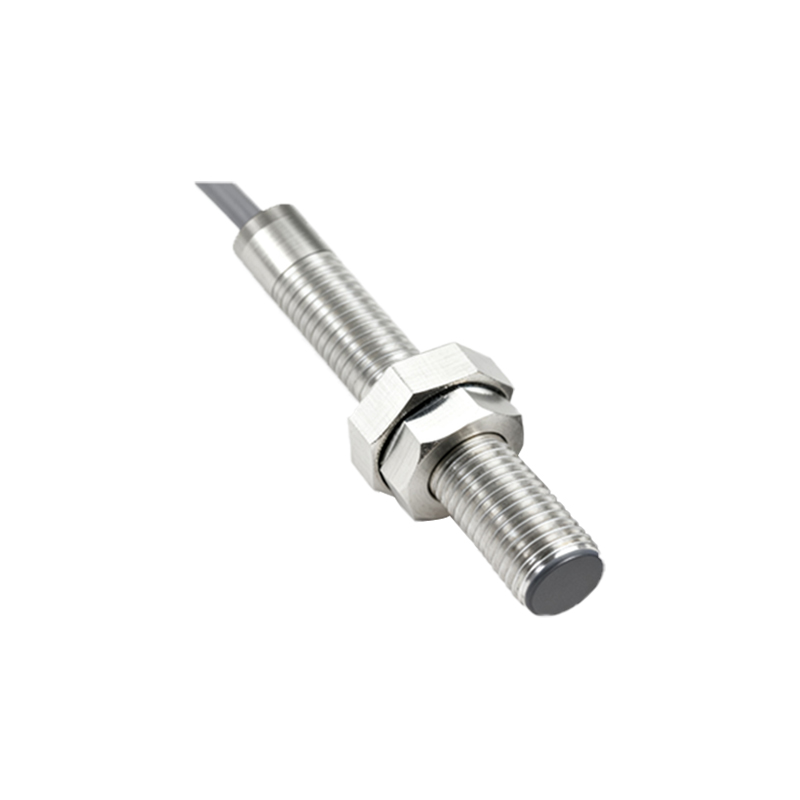
Furthermore, NC outputs can simplify control logic in particular systems. In monitoring for object presence on a conveyor, an NC sensor positioned to detect a missing part would open its circuit when the part is absent, directly signaling a fault without additional programming inversion. This direct correlation can streamline PLC programming and reduce potential logic errors.
In practical applications, Normally Closed proximity sensors are deployed across numerous industries. In automotive manufacturing, they are used in robotic welding cells as safety curtains; if the beam is broken (output opens), the robot stops immediately. In packaging machinery, an NC photoelectric sensor might monitor for material jams or breaks. In material handling, NC inductive sensors can confirm the closed position of a gate or the presence of a pallet before initiating a lift sequence. They are also prevalent in elevator systems for door safety monitoring and in automated storage and retrieval systems for position verification.
When selecting a Normally Closed proximity sensor, several critical parameters must be evaluated. First, the sensing technology (inductive, capacitive, photoelectric) must match the target material and environmental conditions. Second, the sensing range must be appropriate for the application, with a suitable safety margin. The electrical specifications are paramount: the output type (PNP vs. NPN in DC models), voltage rating, and current-carrying capacity must be compatible with the control system's input module (e.g., PLC). The housing material and ingress protection (IP) rating must withstand the operational environment, which may involve exposure to coolants, oils, dust, or moisture. Response time and switching frequency are vital for high-speed applications. Finally, the physical form factor (barrel, rectangular, ring-shaped) must allow for proper mounting and alignment.
Installation and wiring require careful attention. Always refer to the manufacturer's datasheet for wiring diagrams. For a 3-wire DC sensor, the brown wire is typically connected to the positive supply, the blue wire to the negative, and the black wire is the switched output load wire. In an NC configuration, the black wire will have voltage present relative to blue when no target is sensed. It is crucial to ensure that the load (e.g., PLC input, relay coil) is connected in series between the sensor's output and the power supply. Proper shielding and routing of cables away from high-power lines are necessary to prevent electromagnetic interference, which could cause false triggering.
In conclusion, the Normally Closed proximity sensor is a versatile and safety-oriented component in the electrical engineer's toolkit. Its defining characteristic—a closed output circuit in the absence of a target—provides specific advantages in fail-safe design and control