In the rapidly evolving landscape of industrial automation, precision, reliability, and speed are non-negotiable. Among the myriad of sensing technologies available, Time-of-Flight (TOF) laser sensors have emerged as a cornerstone for critical measurement and detection tasks. Unlike traditional photoelectric or ultrasonic sensors, TOF laser sensors offer unparalleled accuracy over long distances and in challenging environmental conditions. This article delves into the operational principles, key advantages, diverse applications, and essential selection criteria for TOF laser sensors.
At its core, a TOF laser sensor operates on a straightforward yet powerful principle. It emits a pulsed laser beam towards a target object. A high-speed receiver within the sensor then detects the reflection of this beam. The sensor's internal processor precisely calculates the time interval between the emission and the reception of the laser pulse. Since the speed of light is a known constant, the distance to the target can be determined with exceptional accuracy using the formula: Distance = (Speed of Light × Time of Flight) / 2. This direct time measurement makes TOF sensors inherently stable and less susceptible to errors caused by target color, reflectivity, or ambient light interference compared to triangulation-based methods.
The advantages of integrating TOF laser sensors into industrial systems are substantial. First and foremost is their long-range capability. They can accurately measure distances from a few centimeters up to several hundred meters, making them ideal for large-scale applications like warehouse logistics and crane positioning. Secondly, they provide high precision and repeatability, often down to the millimeter level, which is crucial for quality control and robotic guidance. Their fast response time enables real-time process control in high-speed production lines. Furthermore, many modern TOF sensors feature a background suppression function, allowing them to ignore objects beyond a user-defined setpoint, thus preventing false triggers. Their robust construction typically ensures high ingress protection (IP) ratings, allowing reliable operation in dusty, humid, or vibratory industrial environments.
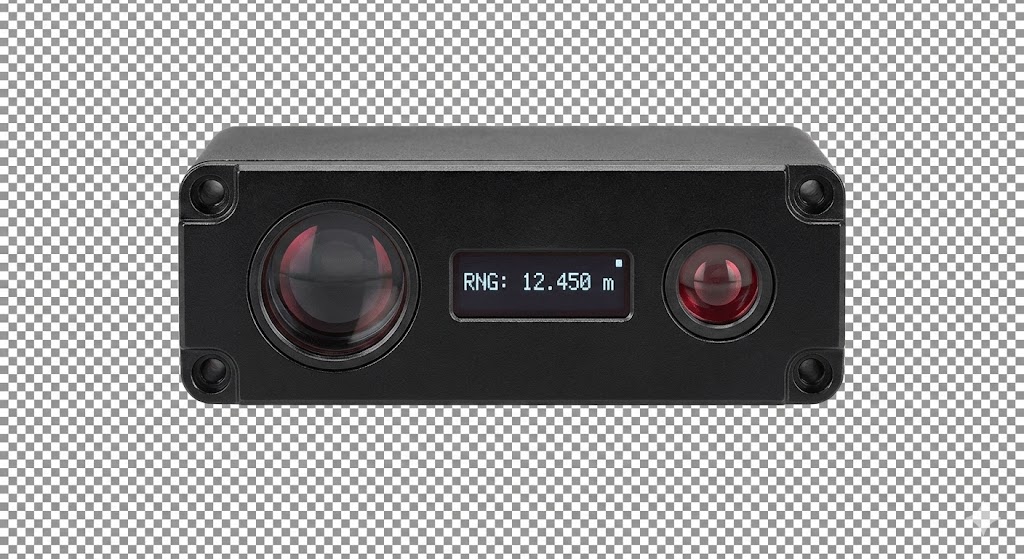
The applications of TOF laser sensors span virtually every sector of modern industry. In material handling and logistics, they are indispensable for palletizing, warehouse vehicle navigation, and container level detection. In the automotive industry, they guide robots for precise part placement and assembly. They play a vital role in forestry and agriculture for volume measurement of timber or grain silos. In building automation, they are used for people counting, door control, and elevator positioning. A particularly growing application is in the field of mobile robotics and Autonomous Guided Vehicles (AGVs), where they provide essential data for navigation, obstacle avoidance, and localization.
Selecting the right TOF laser sensor for a specific application requires careful consideration of several parameters. The primary specification is the measuring range, which must encompass the minimum and maximum distances expected in the operation. The required accuracy and repeatability will dictate the sensor's performance grade. The response time must be compatible with the process speed. The size and type of the laser spot (e.g., fine point for small objects, larger spot for uneven surfaces) is another critical factor. Environmental conditions demand attention to the sensor's housing material, IP rating, and operating temperature range. Finally, the output interface (e.g., analog 4-20mA, voltage, IO-Link, PROFINET, Ethernet/IP) must be compatible with the existing control system for seamless integration.
In conclusion, TOF laser sensors represent a sophisticated and versatile solution for distance measurement and object detection in industrial settings. Their principle of operation grants them robustness and high performance where other technologies may falter. By understanding their capabilities and carefully matching sensor specifications to application requirements, engineers and system integrators can significantly enhance the efficiency, safety, and intelligence of automated processes. As Industry 4.0 continues to advance, the role of precise, connected sensors like TOF lasers will only become more central to building the smart factories of the future.