In the rapidly evolving landscape of industrial automation, precision measurement and positioning are paramount. Among the array of sophisticated sensing technologies, laser autofocus sensors have emerged as a critical component, offering unparalleled accuracy and speed for a multitude of applications. This article delves into the operational principles, key advantages, and diverse use cases of these advanced sensors, providing a comprehensive overview for engineers and system integrators.
At its core, a laser autofocus sensor is a non-contact measurement device that utilizes a focused laser beam to determine the precise distance to a target object. Unlike simple proximity sensors, autofocus systems dynamically adjust the focal point of the laser. This is typically achieved through an internal mechanism, often a moving lens or a variable focus liquid lens, which changes the optical path based on feedback from a dedicated detector. The system continuously analyzes the reflected laser spot, and by optimizing the focus, it can calculate the exact working distance with micron-level resolution. This active feedback loop is what distinguishes it from static laser triangulation sensors, enabling it to maintain optimal measurement conditions even on surfaces with varying reflectivity, angles, or heights.
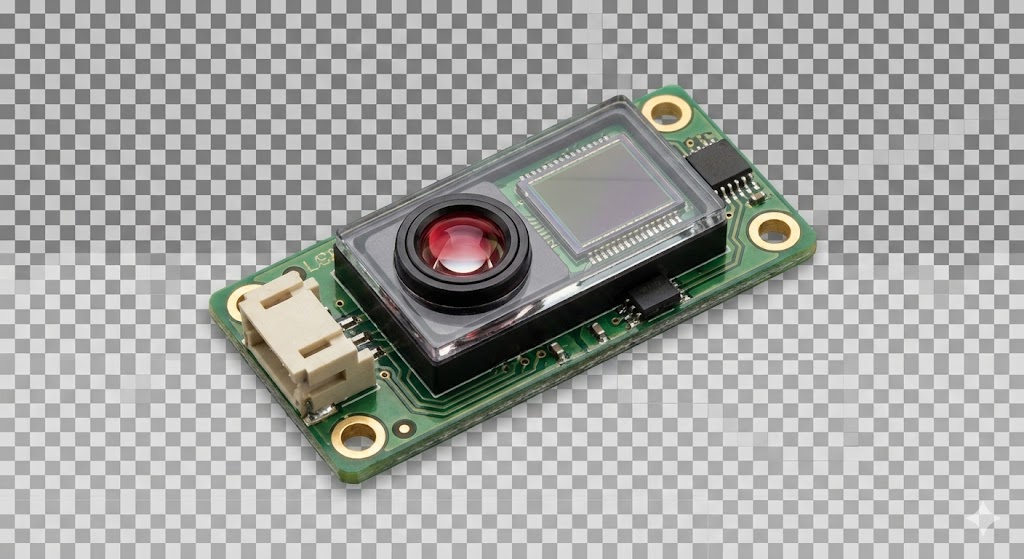
The operational principle often combines triangulation with confocal microscopy techniques. In a common configuration, a laser diode emits a beam that passes through a focusing lens. The light reflected from the target is captured by a receiving lens and directed onto a position-sensitive detector (PSD) or a CMOS/CCD array. The sensor's internal processor analyzes the spot's position and sharpness. If the spot is blurred, the control system commands the focusing element to move, shifting the focal plane until the sharpest possible image is obtained. The corresponding position of the focusing mechanism is directly correlated to the distance, providing a highly accurate measurement. This method is exceptionally robust against ambient light interference and surface color variations, making it suitable for challenging industrial environments.
The advantages of implementing laser autofocus sensors are substantial. First and foremost is their exceptional accuracy and repeatability, capable of resolving differences down to a single micrometer. This makes them indispensable in precision manufacturing, such as in semiconductor wafer inspection, PCB drilling, and micro-machining. Secondly, their high-speed response, often in the millisecond range, allows for real-time process control and in-line inspection without becoming a production bottleneck. Thirdly, their non-contact nature eliminates the risk of damaging delicate surfaces, a crucial factor in electronics and medical device assembly. Furthermore, their ability to measure on a wide range of materials—including shiny, transparent, or dark surfaces—without the need for extensive recalibration significantly enhances operational flexibility. Finally, modern sensors integrate seamlessly with industrial networks (e.g., EtherCAT, PROFINET, IO-Link), facilitating easy data acquisition and integration into larger Industry 4.0 frameworks.

The applications for laser autofocus sensors span numerous industries. In electronics manufacturing, they are used for solder paste inspection, component coplanarity checks, and precise height measurement of BGA balls. In the automotive sector, they ensure the correct gap and flushness between body panels and measure tire tread depth. Within pharmaceutical packaging, they verify fill levels in vials and blister packs. They also play a vital role in 3D profiling and surface metrology, robotic guidance for pick-and-place operations, and controlling the standoff distance in laser welding and cutting processes. Their versatility continues to grow as sensor miniaturization and computational power increase.
When selecting a laser autofocus sensor, several key specifications must be considered: measurement range, standoff distance, spot size, linearity, repeatability, and response time. Environmental factors like temperature stability, ingress protection (IP) rating, and resistance to vibrations are equally important for reliable operation in harsh plants. Integration aspects, such as the available output interfaces and software development kits (SDKs), will determine how smoothly the sensor can be incorporated into an existing control system.
In conclusion, laser autofocus sensors represent a sophisticated fusion of optics, electronics, and control software, delivering a level of precision that is essential for modern high-tech manufacturing and quality assurance. As industries push the boundaries of miniaturization and quality standards, the role of these intelligent sensors will only become more central. For engineers aiming to enhance automation system capability, a deep understanding of laser autofocus technology is not just beneficial—it is increasingly imperative.