In the realm of industrial automation and control systems, proximity switches are fundamental components for non-contact detection of objects. The core question often posed by engineers is: "What type of sensor can function as a reliable proximity switch?" The answer lies not in a single device, but in a family of sensing technologies, each with distinct operating principles, advantages, and ideal application scenarios. Selecting the correct sensor is paramount for ensuring system reliability, precision, and cost-effectiveness.
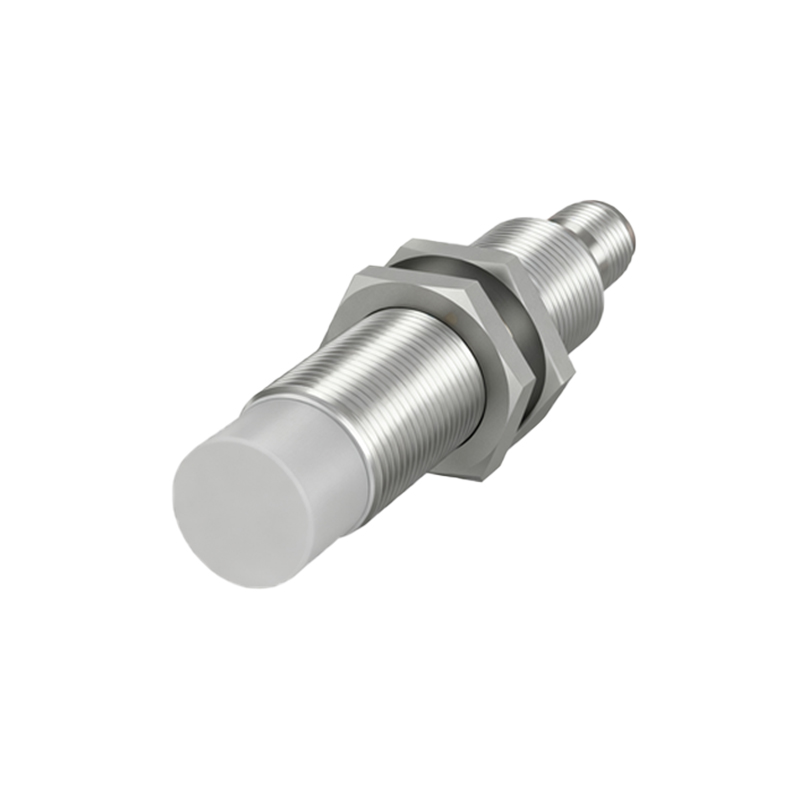
The most prevalent and versatile technology used for proximity sensing is the inductive proximity sensor. These sensors generate an electromagnetic field. When a metallic object (ferrous or non-ferrous) enters this field, it induces eddy currents within the target, causing a change in the sensor's oscillation amplitude. This change is detected and converted into a switching signal. Inductive sensors are exceptionally robust, resistant to environmental contaminants like dust, oil, and coolant, and offer long operational life. They are the go-to choice for detecting metal objects in harsh industrial environments, such as in machine tools, automotive assembly lines, and material handling systems. Their limitation is clear: they cannot detect non-metallic materials.
For applications requiring detection of all material types—including metals, plastics, glass, wood, and liquids—capacitive proximity sensors are the solution. These sensors function by generating an electrostatic field. Any object with a dielectric constant different from air will alter the capacitance of the sensor's circuit upon approach, triggering an output state change. This makes them ideal for level detection in tanks (e.g., monitoring liquid or granular materials), detecting filled bottles on a conveyor, or sensing the presence of wood or plastic panels. However, they can be susceptible to false triggers from humidity or contaminant buildup on the sensing face, requiring careful installation and tuning.
Where very long sensing ranges or detection of fine objects is needed, photoelectric sensors are often employed as proximity switches. These operate by emitting a beam of light (visible red, infrared, or laser) and detecting its reflection. In the diffuse (proximity) mode, the sensor detects light reflected directly from the target itself. The sensing range depends on the target's color, reflectivity, and surface texture. Photoelectric sensors excel at detecting small parts, transparent objects (using polarized filters), and can offer ranges far exceeding inductive or capacitive types. They are common in packaging, electronics assembly, and pharmaceutical industries. Their performance can be adversely affected by ambient light, heavy dirt, or highly reflective backgrounds.
For applications demanding extreme precision in position detection, especially with ferromagnetic metals, Hall-effect sensors are utilized. These solid-state devices respond to changes in magnetic field strength. When a permanent magnet or a ferrous object (in conjunction with a magnet) approaches, the Hall element produces a voltage change, enabling switching. They provide very accurate and repeatable switching points, are immune to dust and dirt, and can operate at high frequencies. Typical uses include speed sensing (e.g., detecting gear teeth), end-of-travel detection in cylinders with integrated magnets, and current sensing.
Finally, ultrasonic sensors use sound waves for detection, measuring the time taken for an emitted ultrasonic pulse to reflect off a target and return. They are excellent for detecting objects of virtually any material, shape, or color, and are largely unaffected by environmental factors like dust, smoke, or light. They are the preferred choice for challenging applications such as bulk material level sensing, transparent object detection, and measuring distance or presence in messy environments. Their drawbacks include a slower response time compared to other technologies and potential inaccuracies with soft, sound-absorbing materials or in environments with significant temperature gradients.
In conclusion, the decision on which sensor to use as a proximity switch is a systematic process. The engineer must define key parameters: target material composition, required sensing distance, environmental conditions (contaminants, temperature, pressure), required switching frequency, accuracy, and installation constraints. An inductive sensor is optimal for metals in dirty settings. A capacitive sensor is necessary for non-metallics or level control. For long range or small object detection, photoelectric sensors lead. High-precision magnetic detection calls for Hall-effect sensors, and challenging, multi-material environments may necessitate ultrasonic technology. By meticulously matching the sensor's inherent capabilities to the application's specific demands, engineers can build robust, efficient, and fail-safe automated systems.