In the realm of optoelectronics and precision photonics, maintaining the precise thermal management of laser diodes is not merely an operational consideration—it is a fundamental requirement for ensuring performance, longevity, and reliability. Laser diodes, the core components in applications ranging from telecommunications and medical devices to industrial manufacturing and scientific instrumentation, exhibit a high degree of sensitivity to temperature fluctuations. This sensitivity directly impacts critical parameters such as output wavelength, optical power, threshold current, and overall efficiency. Consequently, the role of the laser diode temperature sensor transitions from a passive monitoring component to an active, integral element of the control system. This article delves into the operational principles, types, and implementation strategies of temperature sensors specifically engineered for laser diode thermal stabilization.
The underlying physics of laser diodes reveals why temperature control is paramount. The semiconductor materials within the diode have a bandgap energy that is temperature-dependent. As temperature increases, the bandgap energy decreases, causing a redshift in the emitted wavelength. For applications demanding precise wavelength stability, such as dense wavelength-division multiplexing (DWDM) in fiber optics or spectroscopic analysis, even a minor drift of a few nanometers can lead to system failure or data corruption. Furthermore, elevated temperatures accelerate non-radiative recombination processes and increase the threshold current, reducing the diode's slope efficiency and optical output power. Prolonged operation at high temperatures significantly shortens the device's operational lifespan due to mechanisms like facet degradation and increased dark line defect growth. Therefore, an effective thermal management system, anchored by a responsive and accurate temperature sensor, is indispensable.
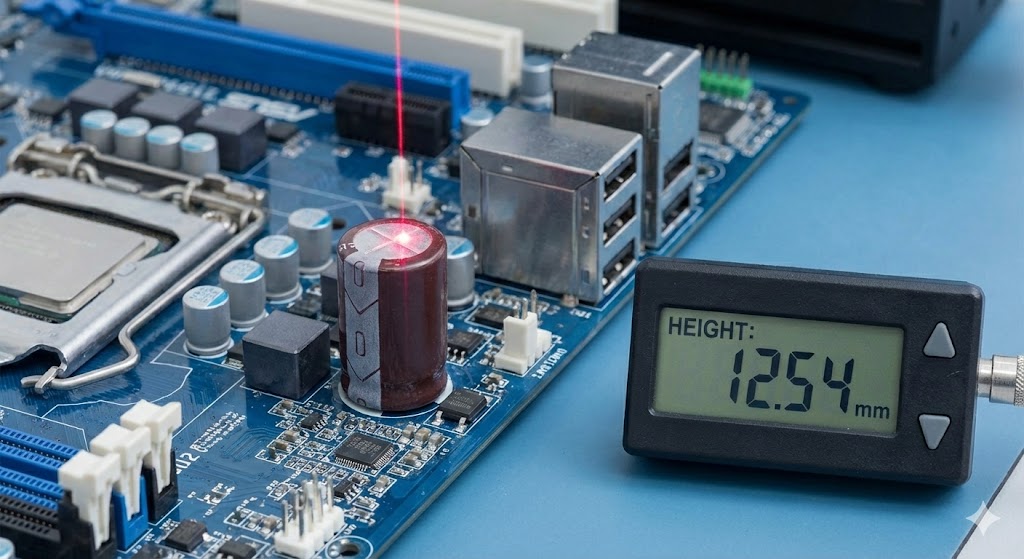
Several sensor technologies are employed to monitor laser diode temperature, each with distinct advantages tailored to specific requirements. Negative Temperature Coefficient (NTC) thermistors are widely favored due to their high sensitivity, small form factor, and cost-effectiveness. Their resistance decreases exponentially with increasing temperature, allowing for precise measurement in the typical operating range of laser diodes (often -10°C to 80°C). For applications demanding higher accuracy and linearity over a broader range, Resistance Temperature Detectors (RTDs), typically made of platinum (Pt100 or Pt1000), are the preferred choice. Although slightly larger and more expensive than thermistors, RTDs offer excellent long-term stability and repeatability. In high-power or high-frequency laser systems where minimal sensor intrusion and fast response time are critical, thin-film RTDs or thermocouples may be utilized. Thermocouples, generating a voltage proportional to the temperature difference between two junctions, are robust and cover extreme temperature ranges but generally offer lower accuracy compared to RTDs and thermistors for the precise control needs of most laser diodes.
Integrating the temperature sensor into the laser diode package or module is a discipline in itself. The primary goal is to achieve the lowest possible thermal resistance between the laser diode junction and the sensor while ensuring electrical isolation and mechanical stability. Common mounting configurations include attaching the sensor to the thermoelectric cooler (TEC) cold plate on which the laser diode is mounted, or in some advanced packages, placing it in very close proximity to the diode submount. The sensor's output is fed into a proportional-integral-derivative (PID) controller, which dynamically adjusts the current to the TEC to maintain the setpoint temperature. This closed-loop control system must be carefully tuned to avoid oscillations and ensure a stable thermal environment despite external thermal loads or changes in the laser diode's own heat dissipation.
Key considerations for selection and implementation include sensor accuracy, response time, long-term drift, and self-heating effects. The sensor's accuracy directly defines the stability of the controlled temperature. A fast response time allows the control loop to react swiftly to disturbances. Long-term drift must be minimal to maintain setpoints over the product's lifetime without requiring recalibration. Finally, the sensor's own power dissipation should be negligible to avoid introducing measurement errors. Designers must also account for the thermal path and thermal mass of the entire assembly, as these factors ultimately determine the system's performance.

In conclusion, the laser diode temperature sensor is a critical enabler of modern photonic systems. Its selection and integration require a nuanced understanding of both the laser diode's thermal characteristics and the sensor's operational parameters. By implementing an appropriate sensor within a well-designed thermal management architecture, engineers can unlock the full potential of laser diode technology, ensuring consistent output characteristics, maximizing efficiency, and guaranteeing the reliability required for today's demanding applications. As laser technology continues to advance toward higher powers and more compact form factors, the innovation in precision temperature sensing and control will remain a vital field of development.