In the realm of industrial automation and electrical control systems, proximity sensors are indispensable components. They detect the presence or absence of an object without physical contact, enabling precise, reliable, and wear-free operation in countless applications. For electrical engineers and system designers, selecting the appropriate sensor type is critical for optimal performance. This guide delves into the primary types of proximity sensors, explaining their operating principles, key characteristics, and typical use cases.
The most fundamental categorization is based on the underlying sensing technology. The four main types are Inductive, Capacitive, Ultrasonic, and Photoelectric (Optical) proximity sensors. Each type interacts with the target object in a distinct way, making them suitable for different materials and environmental conditions.
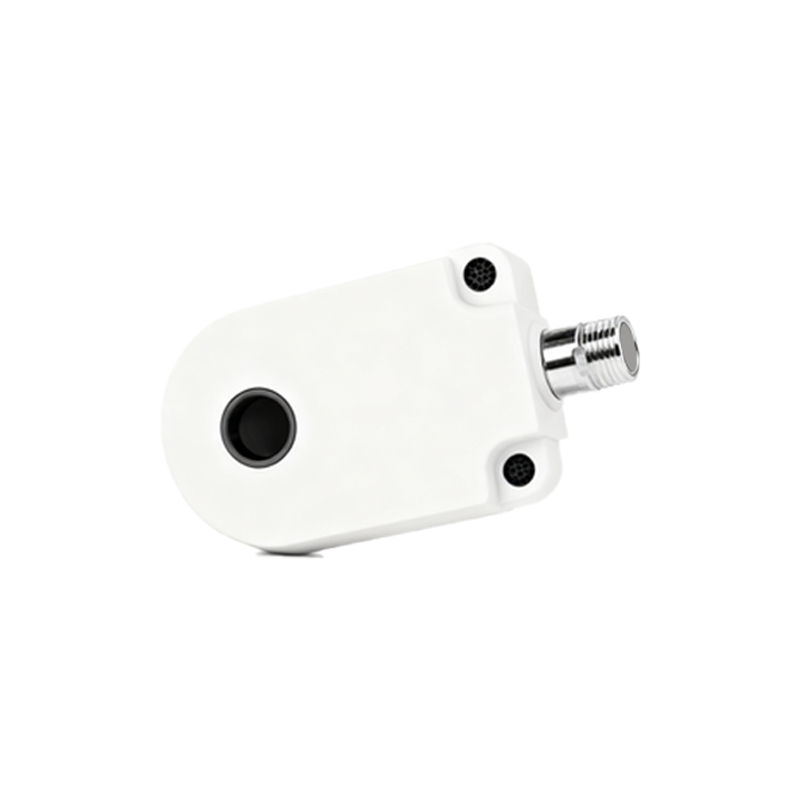
Inductive Proximity Sensors
Inductive sensors are the workhorses of metal detection. Their operation relies on electromagnetic induction. The sensor generates an oscillating electromagnetic field from its active face. When a metallic object enters this field, eddy currents are induced within the metal, causing a change in the oscillation amplitude. This change is detected by the sensor's circuitry, which triggers a switching output. These sensors are highly reliable, resistant to environmental factors like dust, oil, and moisture, and offer very fast response times. They are ideal for detecting ferrous metals (like steel and iron) and, with specialized designs, non-ferrous metals (like aluminum or copper). Common applications include position sensing of machine parts, limit switching, and counting metal objects on conveyor belts.
Capacitive Proximity Sensors
Capacitive sensors can detect both metallic and non-metallic objects, including liquids, powders, plastics, and wood. They function by measuring changes in capacitance. The sensor face acts as one plate of a capacitor, with the target object acting as the other plate. As an object approaches, the dielectric constant between the plates changes, altering the capacitance. The sensor's internal oscillator detects this change and activates the output. Their ability to sense through non-metallic barriers makes them versatile. They are commonly used for level detection in tanks (liquids or granular materials), material handling, and detecting filled packages or glass bottles. Sensitivity adjustments are often available to fine-tune the sensor for specific materials.
Ultrasonic Proximity Sensors
These sensors use sound waves beyond the human hearing range (typically >20 kHz). They operate on the time-of-flight principle. The sensor emits a burst of ultrasonic pulses and then listens for the echo reflected from a target object. By calculating the time delay between emission and reception, the sensor can determine the distance to the object. Ultrasonic sensors are excellent for detecting objects of virtually any material, shape, or color, as long as they reflect sound adequately. They are effective for longer-range detection, presence sensing, and precise distance measurement. Applications include pallet detection, loop control, and liquid level sensing in harsh environments where other sensors might fail due to dust, steam, or opaque containers.
Photoelectric Sensors
Photoelectric, or optical, sensors use light to detect objects. They consist of a light emitter (usually an LED) and a receiver. They are further divided into three main sub-types based on their operational mode. First, Through-beam (or opposed) sensors have separate emitter and receiver units. An object is detected when it interrupts the light beam. This mode offers the longest sensing range and highest reliability. Second, Retro-reflective sensors house both emitter and receiver in one unit, using a reflector to bounce the light back. Detection occurs when the beam is broken. Third, Diffuse (or proximity) sensors also have a combined unit, but they detect light reflected directly off the target object. Advanced versions use background suppression or fixed-field technology for precise detection regardless of object color or surface. Photoelectric sensors are highly versatile for detecting small objects, transparent materials, and are used extensively in packaging, material handling, and assembly lines.
Beyond these core types, specialized variants exist, such as Magnetic Proximity Sensors (Reed switches or Hall-effect sensors) that detect permanent magnets, often used for cylinder position sensing. The choice of sensor depends on multiple factors: target material, required sensing distance, environmental conditions (IP rating, temperature), output type (PNP/NPN, analog, IO-Link), and electrical requirements.
In conclusion, understanding the distinct operational principles of inductive, capacitive, ultrasonic, and photoelectric proximity sensors is fundamental for any electrical engineering professional. Inductive sensors excel with metals, capacitive with diverse materials including non-solids, ultrasonic for challenging environments and distance, and photoelectric for precision and versatility with light. A thorough analysis of the application requirements will lead to the correct selection, ensuring system reliability, efficiency, and longevity in automated industrial processes.