Laser sensors have become indispensable tools across various industrial sectors, offering unparalleled precision in measurement, detection, and positioning tasks. However, their pricing structure can be complex and varies significantly, often leading to confusion among procurement specialists and engineers. This article delves into the key factors influencing laser sensor prices, providing a clear framework for cost evaluation and selection.
The core technology behind a laser sensor is a primary cost driver. Sensors utilizing time-of-flight (ToF) principles for long-range distance measurement, commonly found in autonomous vehicles or large-scale surveying, typically command a higher price point due to sophisticated electronics and signal processing requirements. In contrast, triangulation-based laser sensors, ideal for high-accuracy, short-range applications like assembly line inspection, may be more moderately priced but vary based on resolution. Furthermore, the laser class (e.g., Class 1, Class 2) impacts cost, with higher-safety-class lasers requiring more engineering to ensure eye safety, thereby increasing the unit price.
Performance specifications directly correlate with cost. Critical parameters include measurement range, accuracy, repeatability, and response speed. A sensor with a sub-micron accuracy and a 100kHz sampling rate will be substantially more expensive than a model offering millimeter accuracy at 10Hz. The required optical resolution and spot size also play crucial roles. Additionally, environmental robustness factors such as Ingress Protection (IP) ratings, operating temperature range, and resistance to vibrations or ambient light interference add to the manufacturing cost. An IP67-rated sensor designed for harsh factory environments will cost more than a basic benchtop model.

Beyond the sensor itself, integrated features and brand value contribute to the final price. Sensors with built-in intelligence, such as programmable logic, analog/digital outputs, Ethernet/IP or PROFINET interfaces, and advanced software for data analysis, offer greater functionality at a premium. The reputation and support network of the manufacturer are also significant. Established brands like Keyence, SICK, or Banner often price their products higher, justified by extensive R&D, global technical support, longer warranties, and proven reliability, which reduces long-term operational risk. Conversely, generic or newer market entrants may offer lower initial costs.
The total cost of ownership (TCO) extends beyond the initial purchase price. Considerations must include installation complexity, calibration needs, maintenance requirements, and compatibility with existing systems. A seemingly cheaper sensor that requires custom mounting, frequent re-calibration, or specialized software for integration may incur higher lifetime costs than a more expensive, plug-and-play solution. Therefore, a thorough application analysis is essential. For instance, a high-speed bottling line would justify investment in a premium, high-speed laser sensor to minimize downtime, whereas a basic object presence detection in a clean lab might be well-served by a standard model.
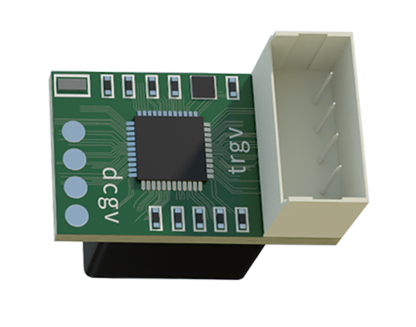
In conclusion, the price of a laser sensor is a synthesis of its technological sophistication, performance capabilities, environmental durability, and added features. A strategic procurement approach involves clearly defining the application requirements, evaluating the TCO, and balancing performance needs against budget constraints. Engaging with technical suppliers for application-specific demonstrations and quotes is highly recommended to secure the optimal sensor that delivers both value and performance for your specific industrial challenge.
