In industrial automation and object detection, proximity sensors are renowned for their reliability in detecting metallic and opaque objects. However, detecting transparent materials like glass presents a unique set of challenges. This article delves into the principles, technologies, and practical considerations for using proximity sensors to detect transparent glass effectively.
The core challenge in detecting transparent glass lies in its optical and electromagnetic properties. Standard inductive proximity sensors, which rely on electromagnetic fields to detect conductive metals, are ineffective because glass is non-conductive and non-metallic. Similarly, standard capacitive sensors, which detect changes in capacitance caused by the presence of any material, can struggle with thin, transparent glass due to its low dielectric constant. This often results in weak signal changes, leading to unreliable detection.
To overcome these limitations, specialized capacitive proximity sensors with high sensitivity settings are typically employed. These sensors are calibrated to detect the minute changes in capacitance caused by the glass's dielectric properties. Even though glass has a relatively low dielectric constant (typically around 4-7, compared to water's 80), modern high-precision capacitive sensors can be tuned to recognize this subtle shift in the electric field. The key is to adjust the sensor's sensitivity threshold precisely so it responds to the glass while ignoring background environmental noise.
Another effective technology is the background suppression (BGS) or foreground suppression (FGS) photoelectric sensor. These optical sensors use triangulation principles to measure distance. A BGS sensor is programmed to ignore reflections from surfaces beyond a set distance (the background), while only reacting to objects within a specific range (the foreground). For clear glass, which allows most light to pass through, a retro-reflective or through-beam sensor might fail. However, a diffuse sensor with BGS can be positioned at an angle. It detects the minimal amount of light reflected from the glass surface itself, not the light passing through it. By setting a very precise detection window, the sensor can reliably identify the presence of the glass pane.
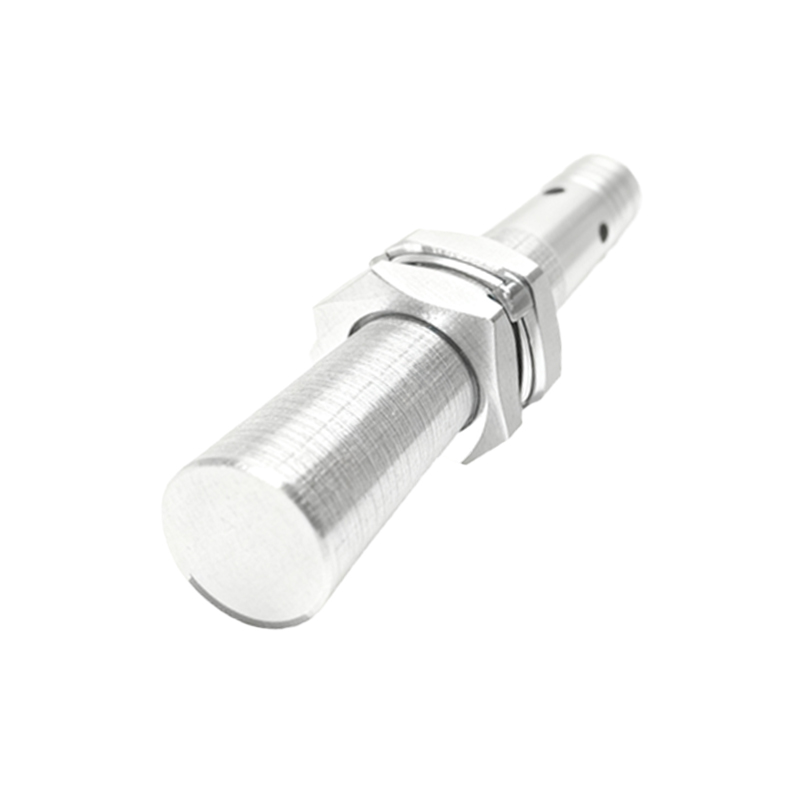
Ultrasonic proximity sensors offer a robust alternative, especially for thicker glass or complex installations. They operate by emitting high-frequency sound waves and measuring the time taken for the echo to return. Since ultrasonic waves reflect off most solid surfaces, including glass, regardless of transparency or color, they provide consistent detection. Factors like the glass's surface angle and environmental conditions (e.g., temperature, air turbulence) must be considered, but ultrasonic sensors are generally less affected by the optical properties that challenge photoelectric systems.
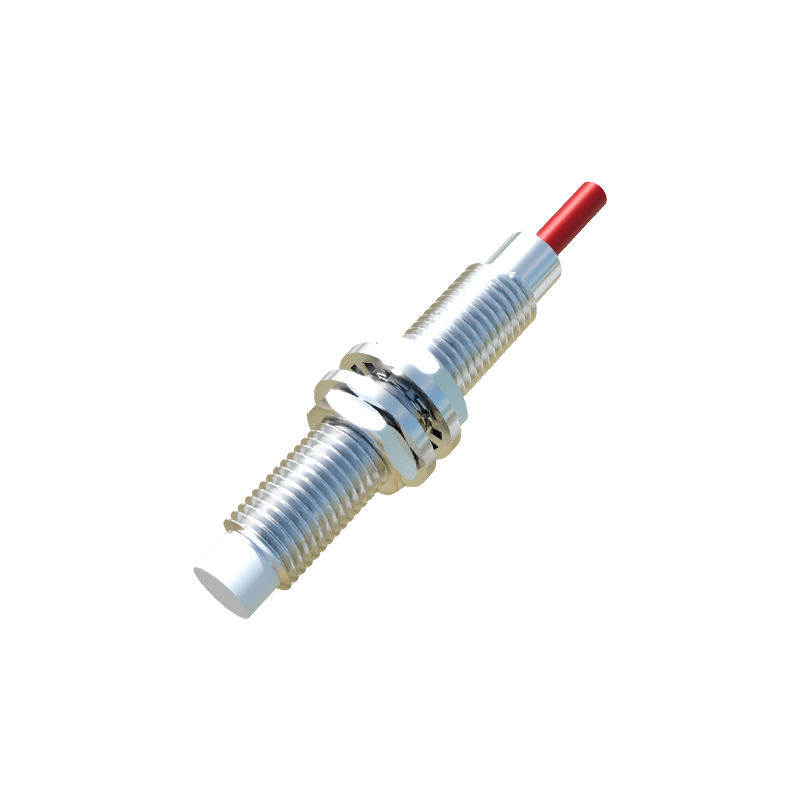
Several critical factors influence successful detection in real-world applications. Sensor selection is paramount: capacitive sensors are ideal for close-range detection where the glass is directly approaching the sensor face, while photoelectric BGS sensors excel at detecting glass on conveyor belts from a slight offset. Ultrasonic sensors are versatile for varying distances and harsh environments. Installation and alignment are equally crucial; even a slight misalignment can cause a photoelectric sensor to miss the faint reflection. Environmental interferences, such as dust, moisture, or vibrations, must be mitigated through proper housing and filtering settings.
In practice, these sensors are vital in glass manufacturing, bottling plants, and electronic device assembly. For instance, in a bottling line, capacitive sensors verify the presence of glass bottles before filling. In automotive assembly, photoelectric sensors ensure a windshield is correctly positioned before robotic application of adhesive. Each application demands careful tuning—adjusting the sensing distance, hysteresis, and response time to match the specific type of glass (e.g., tempered, laminated, or coated) and the required speed of the process.
In conclusion, detecting transparent glass with proximity sensors is not only possible but highly reliable with the correct sensor technology and precise configuration. By understanding the material's properties and leveraging advanced capacitive, photoelectric with background suppression, or ultrasonic sensing principles, engineers can integrate robust detection solutions into automated systems, ensuring efficiency and accuracy in handling transparent materials.