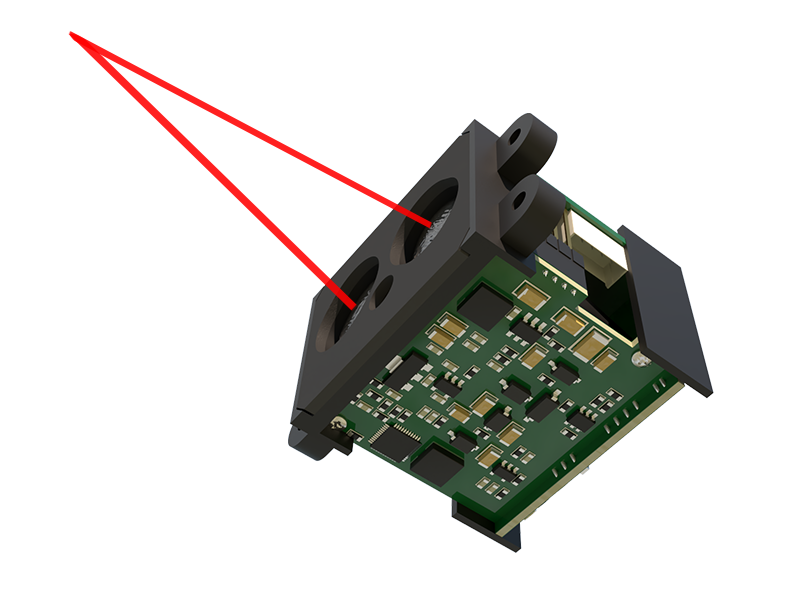
LiDAR (Light Detection and Ranging) sensors have emerged as a cornerstone technology across a diverse spectrum of engineering disciplines, from autonomous vehicles and robotics to topographic mapping and industrial automation. Their unique operational principle, which involves emitting pulsed laser light and measuring the time it takes for the reflections to return, provides a set of distinct advantages over other sensing modalities like cameras or radar. This article delves into the core benefits that make LiDAR an indispensable tool for modern engineers.
The foremost advantage of LiDAR is its exceptional accuracy and precision in distance measurement and 3D mapping. Unlike passive optical systems, LiDAR actively illuminates the target, allowing it to operate effectively in a wide range of lighting conditions, including total darkness. The use of laser light enables the creation of high-resolution point clouds with centimeter-level accuracy. This precise spatial data is critical for applications such as generating digital elevation models (DEMs) for civil engineering projects, performing detailed structural inspections of bridges or wind turbines, and enabling safe navigation for autonomous mobile robots (AMRs) in dynamic warehouse environments. The ability to capture the exact geometry of an object or environment in three dimensions provides a data-rich foundation for analysis and decision-making that 2D imaging cannot match.
Another significant strength is LiDAR's superior performance in adverse environmental conditions. While traditional camera vision systems can be severely compromised by factors like low light, glare, fog, or rain, LiDAR sensors are largely unaffected. The coherent, narrow-wavelength laser beams can penetrate light precipitation and dust more effectively than visible light, providing more reliable data continuity. This robustness is paramount for the reliability of Level 4 and 5 autonomous driving systems, where sensor fusion must ensure functionality 24/7, regardless of weather. In industrial settings, this translates to fewer operational disruptions and more consistent automated processes.
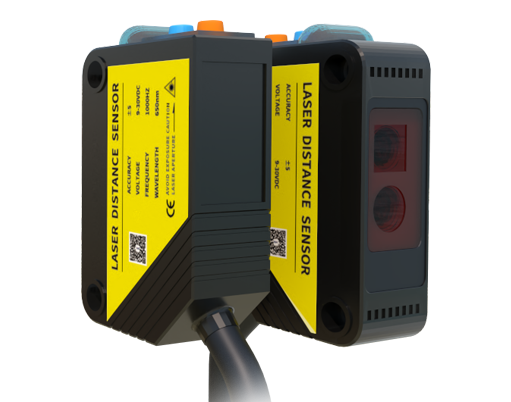
LiDAR technology also excels in providing direct velocity and motion data through Doppler-based systems. Advanced Frequency-Modulated Continuous Wave (FMCW) LiDAR not only measures distance but can also detect the velocity of a moving object by analyzing the frequency shift in the reflected laser light. This capability is a game-changer for tracking multiple dynamic objects simultaneously. In traffic management systems, it can distinguish between stationary infrastructure and moving vehicles, bicycles, and pedestrians, calculating their speed and trajectory with high fidelity. This real-time kinematic data is essential for predictive algorithms in advanced driver-assistance systems (ADAS) and urban mobility solutions.
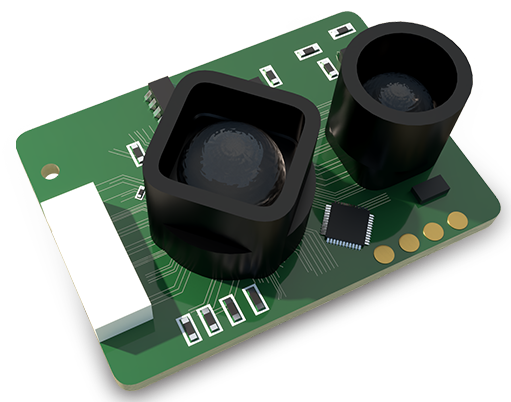
Furthermore, the evolution of LiDAR has led to remarkable improvements in size, cost, and integration. Early systems were bulky, expensive, and reserved for specialized aerial surveys. Today, solid-state LiDAR (SSL) and Micro-Electro-Mechanical Systems (MEMS)-based LiDAR have dramatically reduced the form factor and cost while increasing durability by eliminating moving mechanical parts. This miniaturization allows for seamless integration into consumer vehicles, smartphones for augmented reality applications, and compact drones. The scalability of modern LiDAR systems makes them accessible for a broader range of projects, from large-scale infrastructure monitoring to embedded sensing in IoT devices.
Finally, LiDAR data offers a unique combination of richness and privacy. It captures detailed geometric information without recording identifiable visual features like faces or license plates, which are often captured by cameras. This characteristic makes LiDAR a preferable solution for applications in public spaces, security perimeters, or any scenario where privacy concerns are paramount. The data output is inherently anonymized, focusing purely on the shape, location, and movement of objects.
In conclusion, the advantages of LiDAR sensors—unparalleled accuracy in 3D spatial awareness, resilience in challenging environments, direct velocity measurement, evolving compactness and affordability, and inherent data privacy—solidify their role as a transformative sensing technology. As innovation continues to drive down costs and enhance performance, LiDAR's integration into our engineered world will only deepen, enabling smarter, safer, and more efficient systems across every sector of industry.