In the rapidly evolving landscape of industrial automation and precision measurement, MLD (Multi-Layer Detection) laser sensors have emerged as a cornerstone technology. These advanced sensors utilize laser triangulation principles to deliver unparalleled accuracy, reliability, and versatility in a multitude of demanding applications. Unlike conventional single-point sensors, MLD laser sensors are engineered to detect and measure multiple layers or surfaces simultaneously within a single measurement cycle. This capability is transformative for industries where complex material profiling, precise gap measurement, or multi-surface inspection is critical.
The core operational principle of an MLD laser sensor involves projecting a highly focused laser line onto a target surface. A high-resolution CMOS or CCD camera, positioned at a known angle to the laser emitter, captures the deformation or position of this laser line. Sophisticated onboard processors then analyze this image data. By processing the distinct reflections from different layers or surfaces, the sensor can calculate precise distance, height, thickness, or profile data for each detected layer in real-time. This multi-layer analysis happens at high speeds, making it ideal for dynamic production lines.
The advantages of integrating MLD laser sensors into industrial systems are substantial. First and foremost is their exceptional precision, capable of micron-level resolution, which is essential for quality control in semiconductor manufacturing, precision machining, and electronics assembly. Their non-contact nature eliminates the risk of damaging delicate surfaces, a significant limitation of tactile probes. Furthermore, their robustness allows them to perform consistently in harsh environments with exposure to dust, vibration, and variable lighting conditions that would compromise other optical systems. The ability to measure transparent or semi-transparent materials, such as glass or plastic films, by detecting both the front and back surface reflections, is another standout feature.
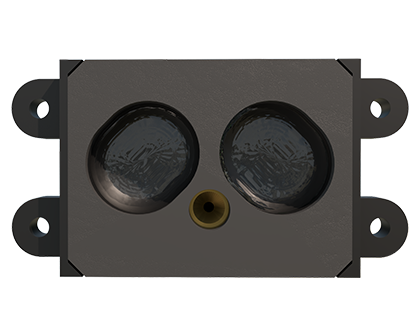
Practical applications span across key sectors. In the automotive industry, MLD sensors are deployed for precise measurement of body panel gaps and flushness, ensuring superior build quality. In packaging, they verify the fill level in translucent bottles or check the seal integrity of multi-layered blister packs. Within the realm of web inspection, such as in paper, plastic, or metal foil production, these sensors continuously monitor material thickness and detect defects like delamination or air bubbles across the entire web width. Robotics and automated guided vehicles (AGVs) leverage MLD sensors for advanced navigation and object recognition, enabling robots to perceive depth and handle objects with complex geometries.
When selecting an MLD laser sensor, engineers must consider several technical parameters. Measurement range, resolution, and linearity are fundamental. The sensor's interface—common options being Ethernet/IP, PROFINET, EtherCAT, or analog outputs—must seamlessly integrate with the existing control architecture. Data processing speed, often referred to as measurement rate or sampling frequency, is crucial for high-speed production lines. Environmental ratings, such as IP67 for dust and water ingress protection, ensure longevity in industrial settings. Modern MLD sensors also come with intuitive software for easy configuration, allowing users to define regions of interest, set measurement tolerances, and output customized data packets.
Looking ahead, the integration of MLD laser sensors with Industry 4.0 frameworks and artificial intelligence is set to unlock even greater potential. Sensor data can be fed into cloud platforms for predictive analytics, enabling predictive maintenance of the sensors themselves and the machinery they monitor. AI algorithms can enhance defect classification, learning from historical measurement data to identify subtle anomalies that escape traditional threshold-based detection. This evolution positions the MLD laser sensor not just as a measurement tool, but as a critical data node within the smart factory ecosystem.
In conclusion, MLD laser sensors represent a significant leap forward in metrology and industrial sensing. Their unique multi-layer detection capability, combined with high speed, robustness, and precision, solves complex measurement challenges that were previously difficult or impossible to address. As manufacturing demands for higher quality, efficiency, and flexibility continue to intensify, the adoption of MLD laser sensor technology will undoubtedly become more widespread, driving innovation and operational excellence across the global industrial landscape.