In the realm of industrial automation and precision measurement, the evolution of laser sensor technology has been pivotal. Among the most innovative developments are adjustable spot laser sensors, which offer unparalleled flexibility and accuracy for a wide range of applications. Unlike traditional fixed-spot sensors, these advanced devices allow operators to dynamically modify the laser spot size and shape, catering to specific task requirements without the need for hardware changes or complex optical setups. This adaptability is crucial in environments where target objects vary in size, reflectivity, or geometry, such as in electronics assembly, automotive manufacturing, and pharmaceutical packaging.
The core principle behind adjustable spot laser sensors lies in their sophisticated optical design. Typically incorporating micro-electromechanical systems (MEMS) mirrors, liquid crystal lenses, or programmable diffraction optics, these sensors can electronically control the laser beam's divergence. By adjusting parameters like focal length or beam angle, the spot diameter can be tuned from a fine point for high-resolution edge detection to a broader area for surface profiling or presence sensing. For instance, in quality inspection of semiconductor wafers, a small spot enables detection of micron-level defects, while a larger spot facilitates rapid scanning of larger components for dimensional verification. This capability significantly reduces setup time and enhances process efficiency, as a single sensor can perform multiple functions that previously required several dedicated units.
Key performance metrics for these sensors include resolution, repeatability, response time, and environmental robustness. High-end models offer sub-micron resolution and repeatability, with response times in the microsecond range, ensuring reliable operation in high-speed production lines. Moreover, many adjustable spot sensors are designed with IP67 or higher ratings, providing resistance to dust, moisture, and mechanical vibrations common in industrial settings. Integration with industrial networks like EtherCAT, PROFINET, or IO-Link further simplifies data communication, enabling real-time monitoring and adaptive control within Industry 4.0 frameworks. For example, in robotic guidance systems, an adjustable spot sensor can dynamically alter its beam to track irregularly shaped objects, improving pick-and-place accuracy and reducing cycle times.
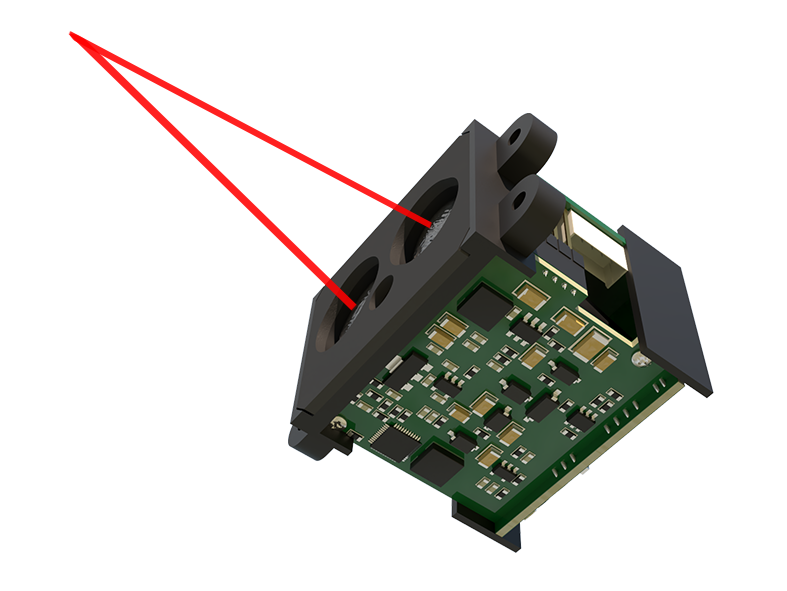
Applications span diverse sectors. In logistics, they optimize barcode reading by adjusting spot size to match label dimensions, even on curved surfaces. In automotive welding, precise spot control ensures consistent weld seam tracking. Challenges remain, such as managing speckle noise in coherent light or optimizing algorithms for varying surface textures, but ongoing advancements in AI and machine learning are addressing these issues. By enabling customizable, non-contact measurement, adjustable spot laser sensors represent a significant leap toward smarter, more adaptable manufacturing ecosystems, driving productivity and quality assurance to new heights.