In the realm of industrial automation and electronic control systems, proximity sensors stand as fundamental components, enabling machines to "sense" the presence or absence of objects without physical contact. A proximity sensor is a device that detects the presence of a nearby object and outputs a corresponding signal, typically a switch-like on/off signal. This non-contact detection capability is its defining characteristic, offering significant advantages over mechanical limit switches, including higher reliability, longer operational life, and the ability to detect a wide range of materials.
The core principle behind proximity sensors involves generating an electromagnetic field, beam of light, or ultrasonic waves. When a target object enters this field, it causes a change in the field's state or the signal's return path. This change is then converted by the sensor's internal circuitry into an electrical output signal. The specific technology employed dictates the sensor's capabilities, limitations, and ideal applications.
Several primary types of proximity sensors dominate the market. Inductive proximity sensors are among the most common. They generate an oscillating electromagnetic field and detect the eddy current losses induced in conductive metallic targets. Consequently, they are used exclusively for detecting metals. Their robustness, high switching frequency, and resistance to environmental factors like dust and oil make them ideal for harsh industrial environments, such as counting metal parts on a conveyor or determining the position of a machine tool.
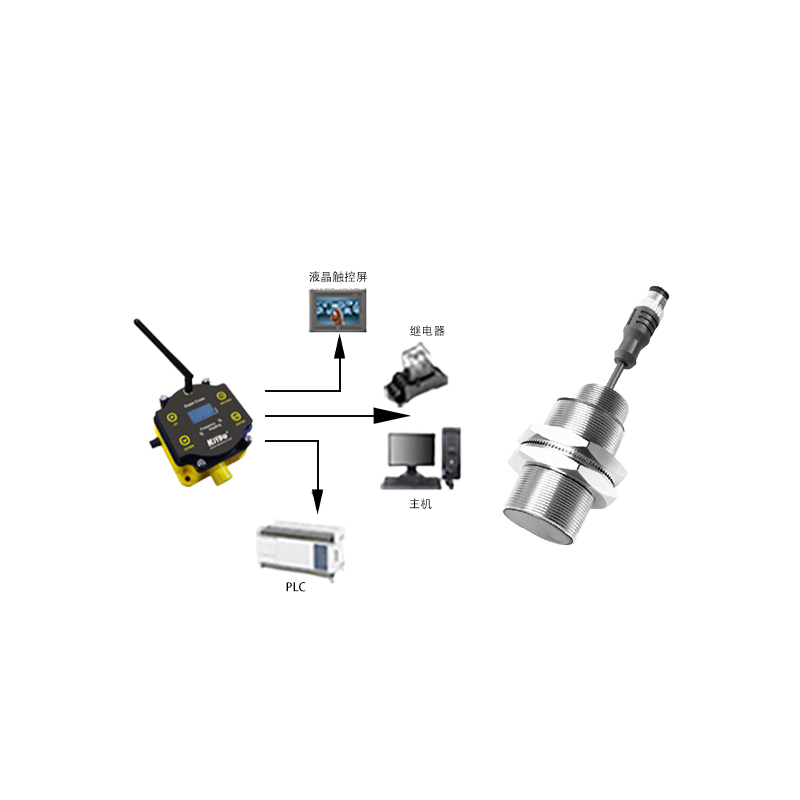
Capacitive proximity sensors, on the other hand, can detect both metallic and non-metallic materials, including liquids, plastics, wood, and granules. They function by measuring changes in capacitance between the sensor's active face and the target object. This makes them versatile for applications like liquid level detection, material handling of non-metallic products, or presence detection of packaged goods. However, they can be more susceptible to environmental factors like humidity.
Photoelectric sensors operate on a different principle, using a light emitter (usually LED or laser) and a receiver. They detect objects by sensing the interruption or reflection of a light beam. These sensors offer the longest sensing ranges and can detect virtually any material, provided it interrupts the light path. Common configurations include through-beam (separate emitter and receiver), retro-reflective (uses a reflector), and diffuse (reflective), each suited for different range and environmental conditions. They are widely used in packaging, material handling, and safety systems.
Ultrasonic proximity sensors measure the time it takes for a high-frequency sound wave to reflect off a target and return to the sensor. They are excellent for detecting objects of various materials, shapes, and colors, and are particularly effective for distance measurement, level sensing of liquids or bulk solids, and detecting transparent objects that photoelectric sensors might miss. Their performance can be affected by temperature variations and soft, sound-absorbing materials.
Key parameters for selecting a proximity sensor include sensing range, the nature of the target material, required output type (e.g., NPN/PNP, NO/NC), switching frequency, environmental conditions (IP rating, temperature), housing style (cylindrical, rectangular), and supply voltage. For instance, an inductive sensor for detecting steel pistons in an automotive assembly line would have different specifications than a capacitive sensor monitoring plastic bottle fill levels in a beverage plant.
Applications are vast and cross-industry. In automotive manufacturing, they position robotic arms and verify part assembly. In food and beverage, they detect container presence on filling lines. In material handling, they control conveyor systems and manage palletizing. They are also integral to consumer electronics (smartphone screen on/off detection), aerospace, and security systems.
In conclusion, proximity sensors are indispensable for modern automated systems, providing reliable, non-contact detection. Understanding the distinct operating principles of inductive, capacitive, photoelectric, and ultrasonic types is crucial for optimal selection. By carefully matching the sensor's technology and specifications to the application's specific requirements—considering target material, required range, environmental challenges, and output needs—engineers and technicians can ensure robust, efficient, and maintenance-free operation, thereby enhancing overall system productivity and intelligence.