In today's competitive industrial landscape, precision measurement is non-negotiable, yet budget constraints are a constant reality. The market for laser displacement sensors has evolved significantly, offering high-performance options at increasingly accessible price points. This guide explores the current landscape of affordable laser displacement sensors, providing key insights for engineers and procurement specialists seeking reliable measurement solutions without compromising on essential performance.
The primary driver behind more cost-effective laser displacement sensors is technological maturation and economies of scale. Core components like laser diodes, CMOS/CCD linear image sensors, and specialized optics have become more standardized and less expensive to manufacture. This does not inherently mean lower quality. Many reputable manufacturers now offer "value series" or "standard grade" models that utilize proven, stable technology platforms, stripping away premium features that are unnecessary for common applications like thickness gauging, vibration analysis, or basic profile inspection. The key is identifying which performance parameters are critical for your specific use case.
When evaluating an affordable sensor, focus on the core specifications that directly impact your application. Resolution and linearity are paramount. A sensor with a 0.1% F.S. linearity and 1µm resolution might be perfectly adequate for monitoring part presence or large displacement, whereas a high-precision assembly line might require 0.01% F.S. linearity. Sampling speed is another differentiator; a 10kHz sensor is considerably less expensive than a 100kHz model. For static or slow-moving targets, the lower-speed option presents substantial savings. The type of measurement—diffuse reflection, retro-reflective, or through-beam—also affects cost. Standard diffuse reflection models are typically the most budget-friendly and suitable for most non-contact distance measurements on standard surfaces.
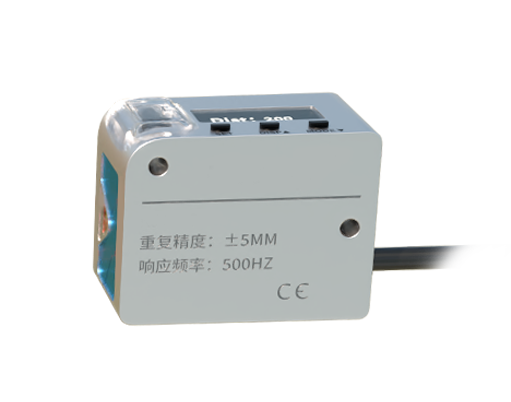
The emergence of competitive brands from various global regions has further intensified market pricing. While established industry leaders offer reliability and extensive support, several specialized manufacturers provide sensors with excellent performance-to-cost ratios, particularly for standard requirements. Sourcing from these suppliers often yields significant savings, especially for volume purchases. It is crucial, however, to verify product certifications (like CE, RoHS) and the availability of technical documentation, software SDKs, and a reasonable warranty.
Procurement strategy plays a vital role in securing the best value. Consider bundled purchases for multiple measurement points, as suppliers frequently offer tiered discounts. Evaluate the total cost of ownership, which includes not just the unit price but also mounting accessories, cabling, and potential integration software. Some affordable models use standardized M8 connectors and generic mounting brackets, keeping ancillary costs low. Engaging directly with supplier application engineers can also uncover opportunities; they can often recommend a slightly different, more cost-effective model that still meets the technical need.

Furthermore, the rise of online industrial marketplaces and distributor networks has increased price transparency and accessibility. These platforms allow for easy comparison of specifications and pricing across multiple brands. Many also offer evaluation unit programs, enabling engineers to test a sensor in their actual environment before committing to a large purchase—a highly recommended step to validate performance claims.
In conclusion, obtaining a high-quality laser displacement sensor at an advantageous price is entirely feasible. The process requires a clear understanding of application fundamentals, a focus on essential specifications over premium extras, and strategic engagement with the supply chain. By carefully navigating these factors, engineering teams can deploy accurate, robust measurement systems that enhance process control and quality assurance while adhering to stringent budgetary guidelines. The current market offers capable tools that make precision measurement a viable investment for a wide range of industrial operations.