Laser sensors have revolutionized industrial automation by providing unparalleled precision, speed, and reliability in measurement and detection tasks. These devices utilize laser beams to capture data on distance, position, displacement, and surface characteristics, enabling real-time monitoring and control in diverse sectors such as manufacturing, robotics, automotive, and aerospace. Their non-contact nature minimizes wear and tear, reduces maintenance costs, and enhances operational safety, making them indispensable in high-stakes environments.
In manufacturing, laser sensors are widely employed for quality control and inspection. For instance, in automotive assembly lines, they measure component dimensions with micron-level accuracy, ensuring parts like engine blocks or brake discs meet stringent specifications. Similarly, in electronics production, sensors detect minute defects on circuit boards or verify solder joint integrity, preventing costly recalls. The ability to perform these tasks at high speeds—often thousands of measurements per second—boosts throughput without compromising accuracy.
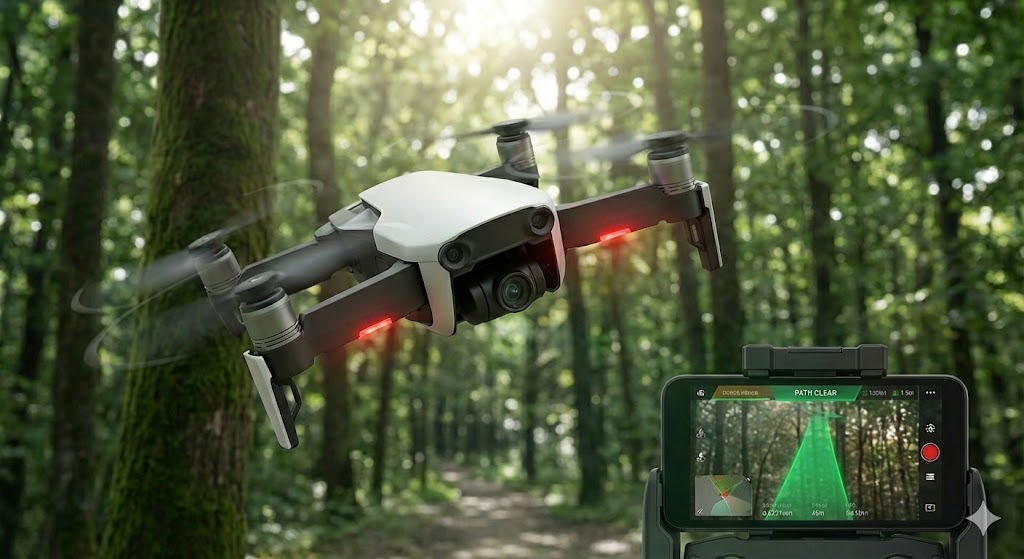
Robotics and automation systems heavily rely on laser sensors for navigation and object recognition. Autonomous guided vehicles (AGVs) use LiDAR (Light Detection and Ranging) sensors to map surroundings and avoid obstacles, facilitating seamless material handling in warehouses. In collaborative robotics, sensors enable safe human-robot interaction by detecting proximity and adjusting movements accordingly. This enhances efficiency in tasks like pick-and-place operations, where precise positioning is critical.
The automotive industry leverages laser sensors for advanced driver-assistance systems (ADAS) and autonomous driving. Sensors monitor lane boundaries, detect pedestrians, and measure distances to other vehicles, contributing to features like adaptive cruise control and emergency braking. In aerospace, they are used for structural health monitoring, assessing wing deformations or turbine blade conditions during flight tests, thereby improving safety and performance.
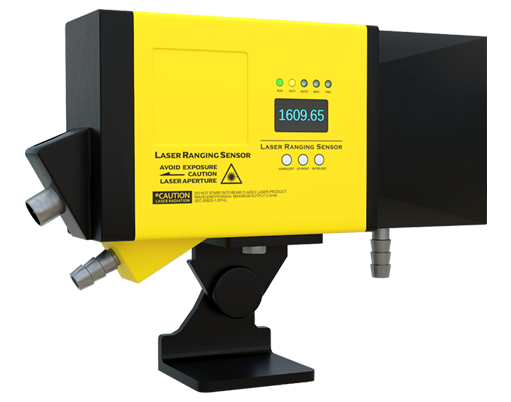
Environmental and energy sectors also benefit from laser sensor applications. In renewable energy, sensors optimize solar panel alignment for maximum sunlight capture or inspect wind turbine blades for cracks. In agriculture, they assist in precision farming by measuring crop height or soil topography, enabling targeted resource use. Additionally, laser sensors play a role in medical devices, such as surgical robots that require exact tissue depth measurements for minimally invasive procedures.
Despite their advantages, challenges like sensitivity to ambient light, dust, or reflective surfaces persist. Innovations in filtering algorithms and multi-wavelength designs are addressing these issues, expanding sensor applicability. Future trends include integration with IoT (Internet of Things) for predictive maintenance and AI-driven analytics to enhance decision-making. As industries push toward smarter automation, laser sensors will continue to evolve, offering higher resolutions, faster response times, and greater adaptability.

Overall, laser sensors are pivotal in driving industrial efficiency and innovation. Their versatility across applications—from micro-scale inspections to large-scale monitoring—underscores their transformative impact. By enabling precise, contactless measurements, they not only streamline processes but also pave the way for next-generation technologies in an increasingly automated world.