In the rapidly evolving landscape of electrical engineering and industrial automation, precision measurement stands as a cornerstone of innovation, efficiency, and quality control. Among the vanguard of technologies enabling this precision, Noptel laser sensors have emerged as a transformative force. These sophisticated devices, originating from Finland's renowned expertise in photonics and measurement systems, offer unparalleled accuracy, reliability, and versatility for a myriad of applications critical to modern electrical systems and manufacturing processes.
At its core, a Noptel laser sensor operates on the principle of laser triangulation or time-of-flight measurement, projecting a focused laser beam onto a target surface. The reflected light is captured by a high-resolution receiver, and through advanced signal processing algorithms, the sensor calculates precise distance, displacement, or position data with micron-level accuracy. This non-contact methodology is pivotal, eliminating the wear, mechanical hysteresis, and potential damage associated with traditional tactile probes, especially in high-speed or delicate measurement scenarios common in electrical component production and assembly.
The integration of Noptel sensors within electrical engineering is particularly profound in several key areas. In power generation and distribution, these sensors facilitate exact alignment and gap measurement in turbine generators, circuit breakers, and busbar systems, ensuring operational safety and minimizing energy loss. For semiconductor and PCB (Printed Circuit Board) manufacturing, Noptel's laser systems provide critical dimensional inspection, solder paste height measurement, and component placement verification, directly impacting yield rates and product reliability. Furthermore, in the burgeoning field of renewable energy, they are instrumental in the precise manufacturing and alignment of solar panels and wind turbine blades, optimizing energy capture efficiency.
A distinguishing feature of Noptel laser sensors is their robust design, engineered to perform consistently in challenging industrial environments. They are often equipped with high ingress protection (IP) ratings, making them resistant to dust, moisture, and electromagnetic interference—a common concern in electrical substations or factory floors filled with motors and drives. Their high sampling speed, sometimes reaching into the kilohertz range, allows for real-time monitoring and closed-loop control in dynamic processes such as wire drawing, cable insulation thickness control, or robotic assembly lines.
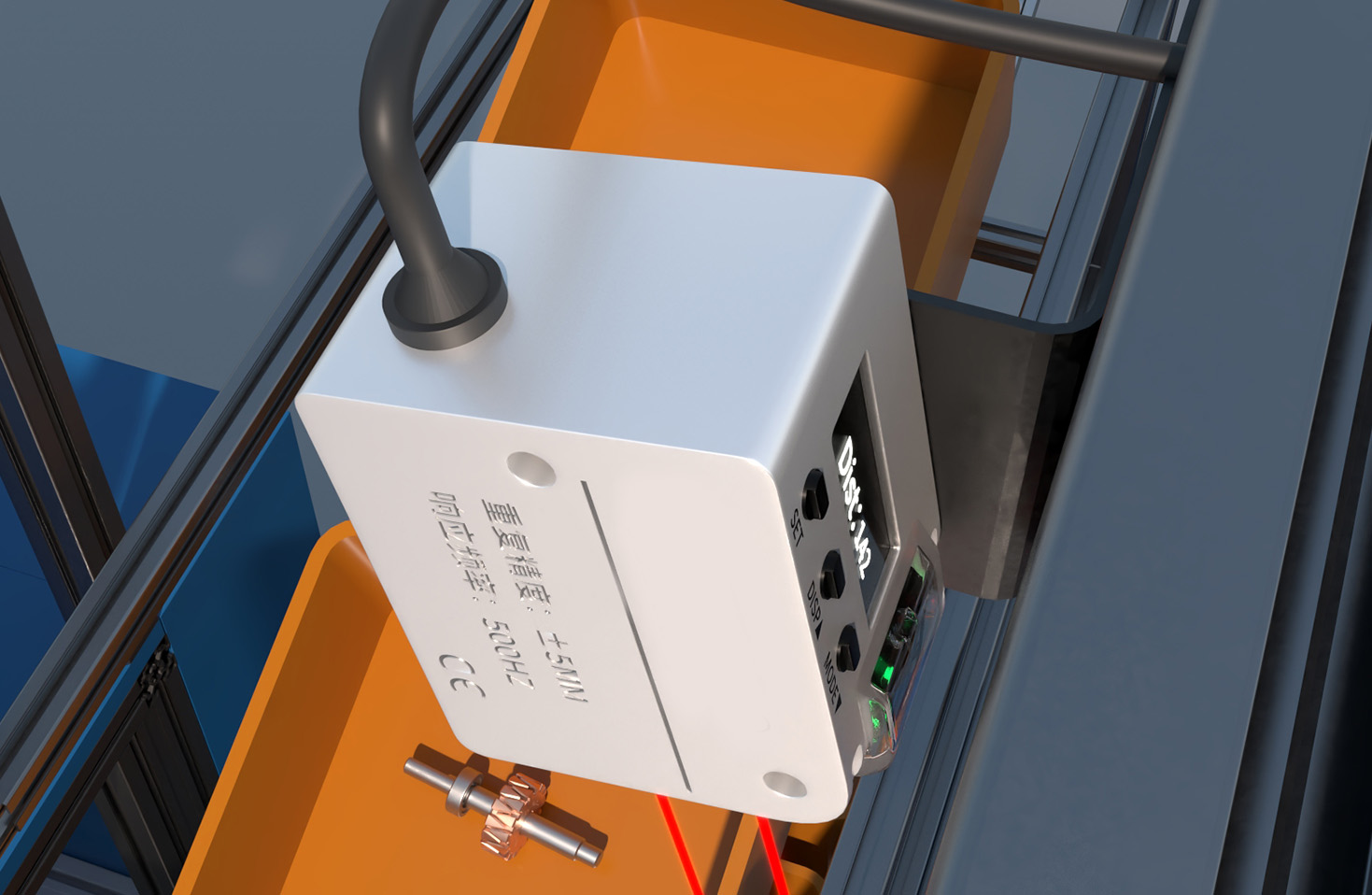
The software ecosystem accompanying Noptel sensors further enhances their utility. User-configurable interfaces allow engineers to set measurement tolerances, output data in various formats (analog, digital, or via industrial protocols like Ethernet/IP or PROFINET), and integrate seamlessly with PLCs (Programmable Logic Controllers) and SCADA (Supervisory Control and Data Acquisition) systems. This connectivity is vital for Industry 4.0 and smart factory initiatives, where sensor data feeds into digital twins and predictive maintenance algorithms, preventing downtime and optimizing production flow.
Comparative analysis with other optical measurement techniques, such as conventional vision systems or confocal sensors, often highlights Noptel's advantages in specific contexts. While vision systems offer rich 2D information, laser triangulation sensors like Noptel's provide superior accuracy and speed for precise 1D or 3D profile measurements. Their laser's coherence allows for measurements on difficult surfaces—shiny, dark, or transparent—that often challenge other optical methods, a common hurdle when inspecting polished electrical contacts or glass substrates.
Looking forward, the role of Noptel laser sensors is set to expand with trends like miniaturization in electronics and the demand for higher power densities. As electrical components become smaller and tolerances tighter, the need for sub-micron measurement capabilities grows. Noptel's ongoing research in laser diode technology and advanced filtering algorithms promises to meet these future demands, continuing to provide electrical engineers with the tools necessary for innovation. In conclusion, Noptel laser sensors are not merely measurement instruments; they are enablers of precision, quality, and intelligence in the electrical industry, forming an invisible yet indispensable layer in the foundation of advanced manufacturing and reliable energy infrastructure.