In the demanding landscape of modern industrial automation, the reliability of proximity sensors is paramount. Among the various types, anti-interference proximity sensors have emerged as critical components, designed to maintain accurate detection and switching functions amidst a sea of electromagnetic noise, temperature fluctuations, and physical contaminants. This article delves into the core performance characteristics, technological advancements, and practical considerations for optimizing these robust sensing devices.
The fundamental principle of an inductive proximity sensor involves generating an electromagnetic field and detecting changes caused by a metallic target. However, industrial environments are rife with interference sources such as variable frequency drives (VFDs), welding equipment, and other high-power machinery, which can induce false triggering or signal degradation. Anti-interference models are engineered with sophisticated circuitry and shielding techniques to mitigate these effects. Key performance metrics include switching frequency, sensing distance, hysteresis, and most critically, noise immunity. High noise immunity, often quantified in volts per meter (V/m) for radiated interference or specific test standards like IEC 60947-5-2, ensures the sensor ignores spurious signals without compromising its response to legitimate targets.
Recent technological strides have significantly bolstered sensor performance. The integration of advanced ASICs (Application-Specific Integrated Circuits) allows for smarter signal processing. These chips can differentiate between the sensor's own oscillating field and external noise through frequency modulation or digital filtering algorithms. Furthermore, the use of ferrite cores and optimized coil geometries enhances the focus of the electromagnetic field, reducing its susceptibility to external influences. Housing design has also evolved, with robust materials like PBT or stainless steel providing not just physical protection but also acting as effective shields against electromagnetic interference (EMI).
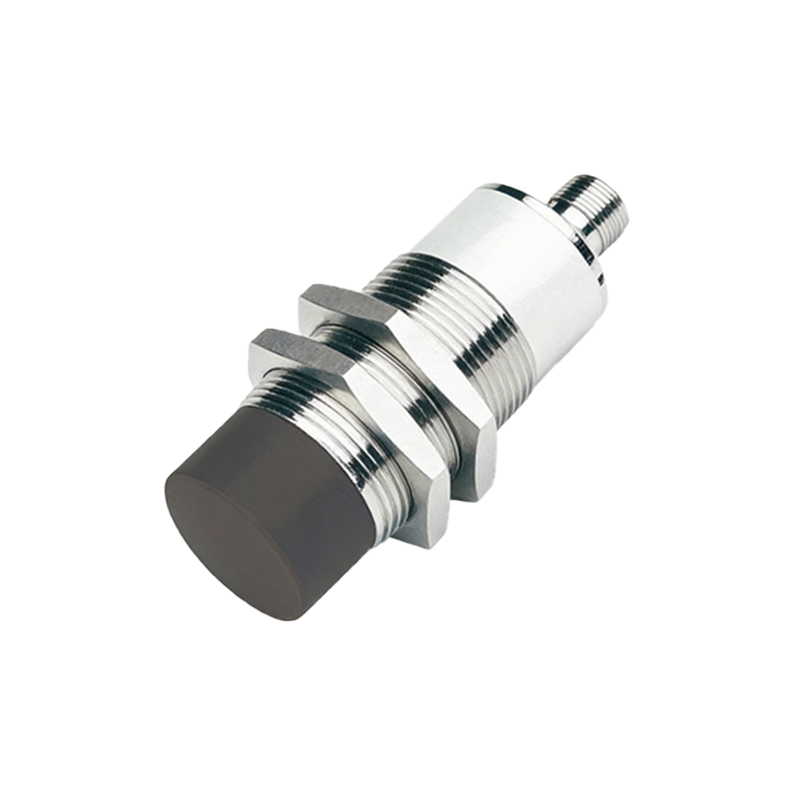
Selecting the right sensor for an application requires a thorough analysis of the operating environment. For instance, in a packaging line with multiple closely spaced sensors, cross-talk interference can occur. Sensors with frequency jitter technology or those offering multiple selectable operating frequencies are ideal here, as they prevent sensors from interfering with one another. In areas with strong RF noise, sensors with enhanced shielding and certified high electromagnetic compatibility (EMC) ratings are non-negotiable. It is also crucial to consider the electrical specifications, such as the sensor's ability to handle supply voltage fluctuations and its short-circuit protection, which contribute to long-term stability.
Installation and wiring practices are as vital as the sensor's intrinsic design. To maximize anti-interference performance, cables should be routed away from power lines and noise sources. Using shielded cables, properly grounded at the controller end, is a standard best practice. The sensor should be mounted securely to avoid vibration-induced errors, and the sensing face must be kept clean from accumulations of metallic dust or coolant, which can alter its effective sensing range. Regular maintenance checks, including verifying the stability of the output signal under normal operating conditions, help in preempting failures.
Looking ahead, the convergence of Industry 4.0 and IIoT (Industrial Internet of Things) is pushing the boundaries of sensor capabilities. Modern anti-interference proximity sensors increasingly feature IO-Link communication. This digital interface not only transmits the standard switch signal but also provides valuable diagnostic data, such as operating temperature, signal strength, and even warnings about potential contamination or weakening performance due to environmental factors. This predictive maintenance capability transforms the sensor from a simple switch into an intelligent node in a networked system, further enhancing overall system reliability and uptime.
In conclusion, the performance of anti-interference proximity sensors is a multifaceted subject rooted in electrical engineering, materials science, and practical application knowledge. By understanding the sources of interference, leveraging modern design features like smart ICs and robust shielding, and adhering to rigorous installation protocols, engineers can ensure these sensors deliver unwavering reliability. As industrial environments grow more complex, the continued innovation in sensor technology will remain a cornerstone of efficient and resilient automation systems.