In the rapidly evolving landscape of industrial automation, the demand for high-precision, reliable, and robust sensing technology is paramount. Among the leaders in this critical field, TOYO laser sensors have carved out a significant reputation for their exceptional performance in diverse and challenging applications. These sensors, utilizing advanced laser triangulation or time-of-flight principles, offer non-contact measurement solutions that are indispensable for modern manufacturing, quality control, and robotic guidance systems.
The core technology behind TOYO laser sensors lies in their ability to emit a focused beam of coherent light onto a target surface. The reflected light is then captured by a high-resolution receiver within the sensor. By precisely calculating the angle of the reflected beam (in triangulation models) or the time it takes for the light pulse to return (in time-of-flight models), the sensor can determine the exact distance, position, height, or presence of an object with micron-level accuracy. This non-contact method eliminates issues associated with mechanical wear, surface contamination, and physical deformation, ensuring long-term stability and reducing maintenance costs.
One of the standout features of TOYO laser sensors is their versatility. They are engineered to perform reliably in extreme industrial environments. Many models boast high IP ratings for resistance against dust and water ingress, ensuring functionality in dirty or washdown settings. Furthermore, they are designed to compensate for ambient light interference, a common challenge in factory settings with variable lighting. This makes them ideal for applications such as precise wafer alignment in semiconductor fabrication, continuous thickness monitoring of rolled metals or plastics, edge detection in high-speed web processing, and precise gap or step measurement in automotive assembly lines.
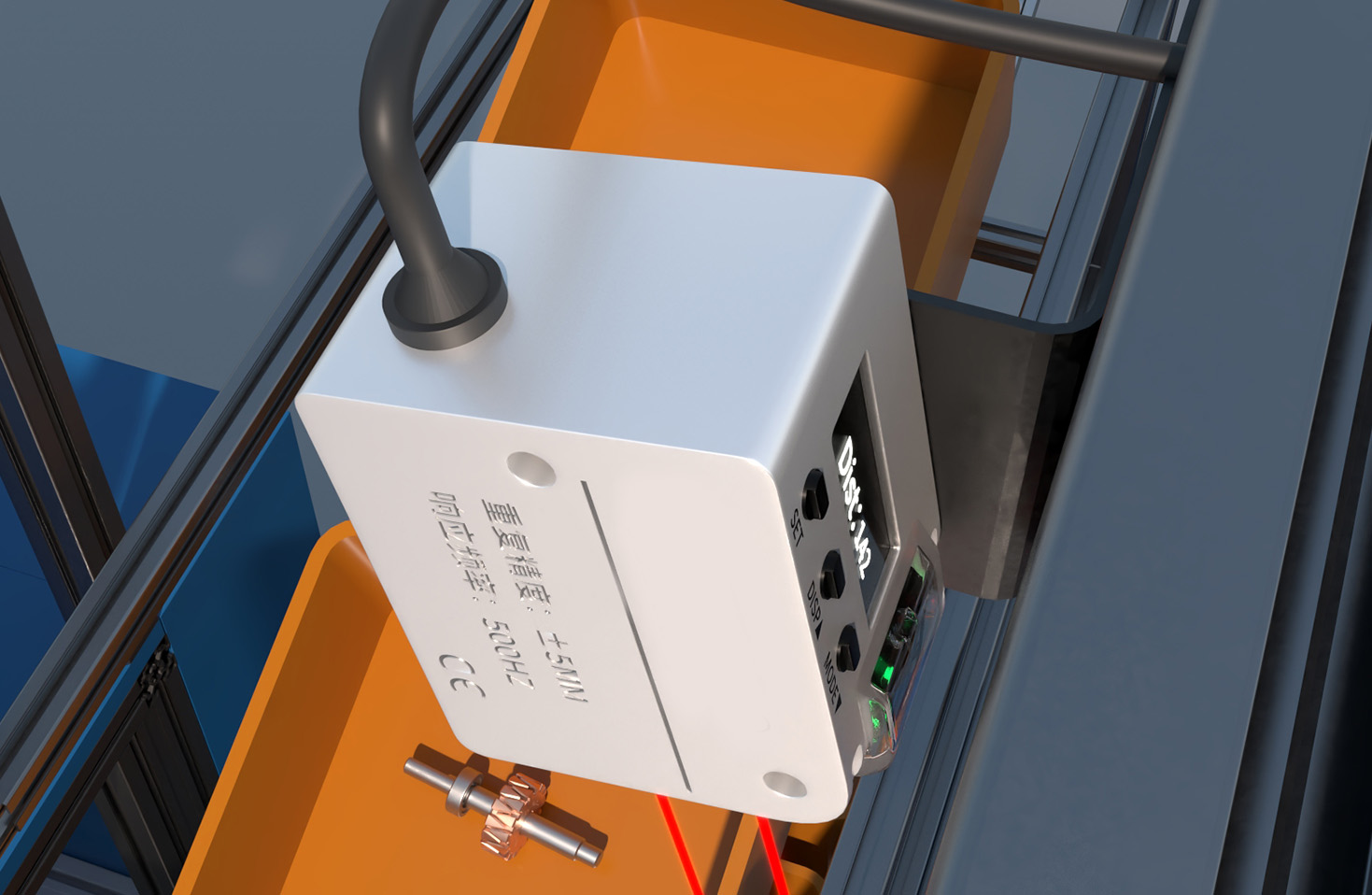
For robotic applications, TOYO laser displacement sensors provide critical feedback for path correction and object recognition. When integrated into robotic arms or autonomous guided vehicles (AGVs), they enable precise picking, placing, and assembly operations by accurately mapping the workpiece's profile and position in three-dimensional space. This capability is crucial for flexible manufacturing systems that handle multiple product variants on a single line.
Beyond displacement, TOYO's portfolio includes laser photoelectric sensors for precise object detection. These sensors, with their extremely small and visible laser spot, can detect minute objects, transparent materials like glass or film, and even mark positions with high precision. They are frequently used in electronics assembly for detecting tiny components or verifying the presence of labels and markings on products.
The integration of these sensors into a broader control system is streamlined through various output options, including analog (4-20mA, 0-10V), digital (NPN/PNP), and serial communication protocols like RS-485 or Ethernet/IP. This flexibility allows seamless connectivity with Programmable Logic Controllers (PLCs), human-machine interfaces (HMIs), and data acquisition systems, enabling real-time process monitoring and closed-loop control.

When selecting a TOYO laser sensor, engineers must consider several key parameters: measuring range, spot size, resolution, repeatability, response time, and the material/color of the target surface. TOYO offers a wide array of models to meet specific needs, from ultra-high-speed sensors for vibrating targets to ultra-compact models for space-constrained installations. Proper installation, alignment, and parameter setting are also critical to achieving optimal performance, as the laser beam must be perpendicular to the target surface for the most accurate readings.
In conclusion, TOYO laser sensors represent a fusion of optical precision and industrial ruggedness. Their ability to deliver accurate, non-contact measurements in real-time underpins critical quality assurance and process optimization efforts across countless industries. From ensuring the flawless surface of a smartphone screen to guaranteeing the precise fit of aircraft components, these sensors are silent guardians of manufacturing excellence. As Industry 4.0 and smart factory concepts continue to advance, the role of precise sensing technology, exemplified by TOYO, will only grow in importance, driving efficiency, reducing waste, and enabling new levels of automation sophistication.