Laser distance sensors have become indispensable tools across numerous industrial sectors, offering high-precision, non-contact measurement capabilities. Their applications range from robotics and automation to quality control, logistics, and construction. However, despite their widespread adoption and significant advantages, these sensors are not without inherent limitations. A comprehensive understanding of these constraints is crucial for engineers and system integrators to ensure reliable performance, select the appropriate technology for a given task, and avoid costly operational failures. This article delves into the primary technical and environmental limitations of laser distance sensors, providing a critical perspective for professionals in the electrical and automation engineering fields.
One of the most significant limitations is the sensor's performance dependency on the target surface characteristics. The principle of operation, typically based on time-of-flight or triangulation, relies on the reflection of a laser beam. Surfaces that are highly reflective, transparent, or absorbent can severely compromise accuracy or cause complete signal loss. A polished metal surface can specularly reflect the beam away from the detector, while a transparent object like glass may allow the beam to pass through, resulting in measurement of a background object. Dark, matte, or light-absorbing materials can weaken the return signal to a level below the sensor's detection threshold. While some sensors offer diffuse reflection modes or special filters, this remains a fundamental challenge requiring careful target consideration or surface treatment.
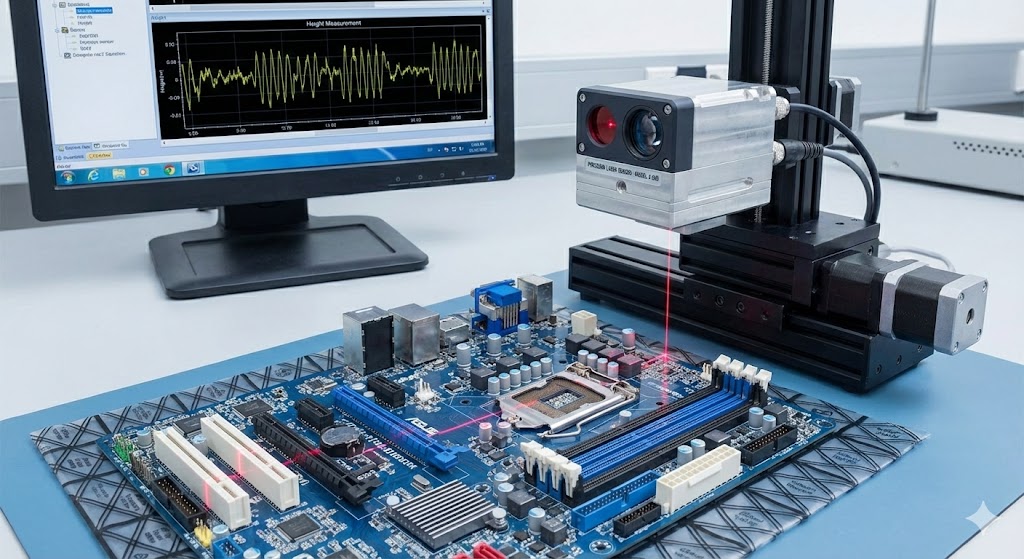
Environmental conditions pose another major set of constraints. Ambient light is a pervasive干扰. Strong sunlight, especially containing infrared components similar to the sensor's laser wavelength, can saturate the receiver and introduce noise, leading to inaccurate readings or failure. Industrial lighting, such as from arc welders or high-intensity discharge lamps, can have similar effects. Although modern sensors incorporate optical filters and modulated laser signals to mitigate this, operation in uncontrolled bright environments often requires shielding or specialized, more expensive models. Furthermore, the presence of airborne particulates like dust, smoke, steam, or fog can scatter or absorb the laser beam. In severe cases, these mediums can reflect the beam themselves, giving a false distance reading to the particle cloud rather than the intended target. This makes certain harsh industrial environments, such as mining or food processing with powder, particularly challenging.
The operating range and spot size present practical design limitations. Every laser sensor has a specified minimum and maximum measuring distance. Placing a target outside this range will yield no valid data. More subtly, within the range, the laser spot size increases with distance due to beam divergence. For a triangulation sensor, a large spot on a non-uniform or curved surface can average the measurement, reducing the effective resolution and accuracy for pinpoint tasks. This makes them less suitable for applications requiring measurement of very small features or sharp edges at a distance. Conversely, time-of-flight sensors may have larger spot sizes inherently, which is acceptable for larger object detection but not for precision profiling.
Speed and processing limitations must also be acknowledged. While laser sensors are generally fast, they have a finite response time and sampling rate. Measuring a rapidly moving object requires a sensor with a sufficiently high update frequency to capture its position without aliasing. High-speed applications, such as measuring the vibration of machinery or the position of objects on a very fast conveyor, demand premium, high-frequency sensors. Additionally, the onboard or downstream signal processing for filtering noise and calculating distance introduces a small but sometimes critical latency. In real-time closed-loop control systems, this latency must be factored into the control algorithm's stability.
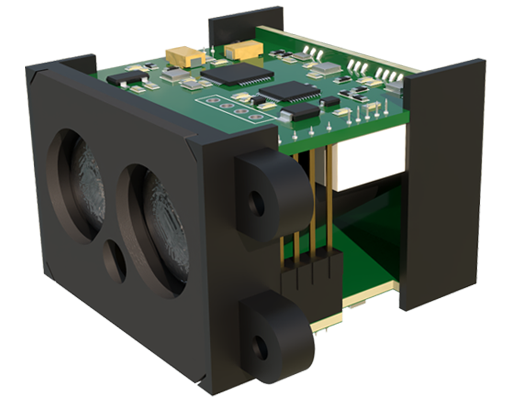
Finally, there are considerations regarding safety, cost, and complexity. Class 2 or Class 1 laser products are common and considered eye-safe for incidental exposure, but higher-power versions used for longer ranges may require Class 3R or higher safeguards, including protective housing and warning labels, adding to system complexity and compliance overhead. Economically, while basic models are affordable, sensors engineered to overcome specific limitations—such as long-range, high-precision, resistant to environmental extremes, or with advanced background suppression—command a significantly higher price. The integration itself requires expertise in mounting, alignment, and interfacing, which adds to the total cost of ownership.
In conclusion, laser distance sensors are powerful but not omnipotent. Their limitations concerning target properties, ambient light, atmospheric conditions, range dynamics, and speed are intrinsic to the underlying physics of optical measurement. Successful implementation in industrial settings is not merely a matter of selection but of holistic system design. Engineers must conduct a thorough analysis of the application environment, target material, required accuracy, and dynamic requirements. Often, a hybrid approach, combining laser sensors with other technologies like ultrasonic sensors for redundancy or capacitive sensors for specific materials, provides the most robust solution. Acknowledging and designing around these limitations is the hallmark of effective and reliable engineering in modern industrial automation.