Proximity sensors are widely used in industrial automation for speed measurement due to their non-contact operation, high reliability, and adaptability to harsh environments. These sensors detect the presence or absence of a target object without physical contact, making them ideal for monitoring rotational or linear speed in machinery. Common types include inductive, capacitive, and magnetic proximity sensors, each suited to specific applications based on target material and environmental conditions.
The fundamental principle behind speed measurement using proximity sensors involves counting pulses generated as a target passes by the sensor. For example, in rotational speed measurement, a gear or encoder disk with evenly spaced teeth or marks is attached to a rotating shaft. Each time a tooth passes the sensor, it generates an electrical pulse. By counting the number of pulses over a known time interval, the rotational speed can be calculated using the formula: Speed (RPM) = (Pulse count × 60) / (Number of teeth × Time in seconds). This method provides accurate real-time data essential for process control, safety monitoring, and predictive maintenance.
Linear speed measurement follows a similar approach, where targets are placed at fixed intervals along a moving belt or linear actuator. The sensor detects each target, and the time between successive detections is measured to compute velocity. Advanced systems integrate proximity sensors with programmable logic controllers (PLCs) or data acquisition systems to process pulse signals, filter noise, and output speed values in engineering units. Key considerations for accurate measurement include sensor response time, target size and material, installation distance, and environmental factors like temperature, vibration, and electromagnetic interference.
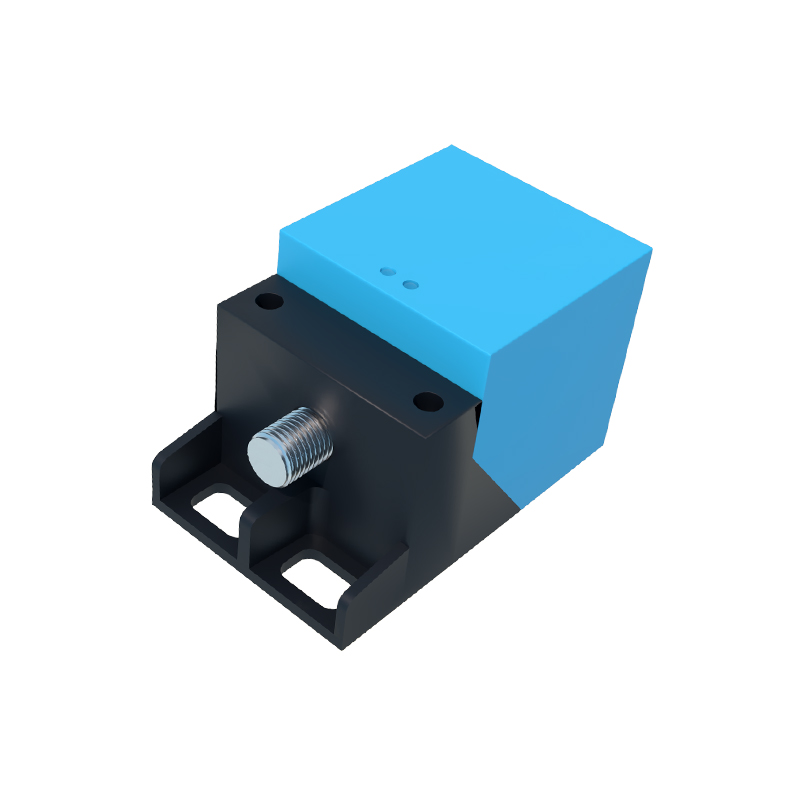
Inductive proximity sensors are particularly effective for metallic targets, using electromagnetic fields to detect ferrous or non-ferrous metals. They offer high switching frequencies, making them suitable for high-speed applications. Capacitive sensors can detect both metallic and non-metallic materials, such as plastics or liquids, but may require calibration to avoid false triggers. Magnetic proximity sensors, including Hall-effect sensors, are used with magnetic targets and excel in dirty or oily conditions where other sensors might fail.
To optimize speed measurement, engineers must select the appropriate sensor type, ensure proper alignment, and adjust sensitivity settings. Shielding and grounding techniques help mitigate electrical noise, while regular maintenance prevents buildup of contaminants that could affect performance. In critical applications, redundant sensor setups or dual-channel systems enhance reliability by providing backup measurements and detecting faults.
Emerging trends include the integration of IoT capabilities, allowing proximity sensors to transmit speed data wirelessly for remote monitoring and analytics. Smart sensors with embedded diagnostics can alert operators to deviations or potential failures, supporting Industry 4.0 initiatives. Case studies in conveyor systems, motor drives, and automotive assembly lines demonstrate how proximity sensors improve efficiency, reduce downtime, and ensure product quality through precise speed control.
In summary, proximity sensors offer a versatile and robust solution for speed measurement in industrial settings. By understanding their operating principles, selection criteria, and implementation best practices, engineers can leverage these devices to enhance automation performance and operational safety. Continuous advancements in sensor technology promise even greater accuracy and functionality for future applications.