In the rapidly evolving landscape of industrial automation, the demand for high-precision, reliable, and robust sensing technology has never been greater. Among the forefront of this technological advancement are DPTEX laser sensors, which have established themselves as critical components in a wide array of applications, from manufacturing and logistics to robotics and quality control. These sensors utilize advanced laser technology to deliver unparalleled accuracy in distance measurement, object detection, and positioning, making them indispensable in modern industrial ecosystems.
The core principle behind DPTEX laser sensors is the time-of-flight (ToF) or triangulation method, where a laser diode emits a focused beam of light towards a target. The sensor then precisely measures the time it takes for the reflected light to return or analyzes the displacement of the reflected beam. This data is processed to calculate the exact distance to the object with micron-level precision. Unlike traditional mechanical or ultrasonic sensors, laser sensors are non-contact, meaning they can measure without physically touching the object, thereby eliminating wear and tear and preventing potential damage to delicate surfaces. This characteristic is particularly valuable in industries dealing with sensitive materials, such as semiconductor fabrication, precision engineering, and food packaging.
One of the standout features of DPTEX laser sensors is their exceptional performance in challenging environments. They are engineered to maintain high accuracy despite the presence of ambient light, dust, vibration, or temperature fluctuations. Many models come with IP67 or higher ingress protection ratings, making them suitable for use in harsh industrial settings, including outdoor applications and washdown areas in the pharmaceutical and food & beverage sectors. Their compact design and ease of integration further enhance their appeal, allowing for seamless installation into existing production lines or robotic arms without requiring significant modifications.
The applications of DPTEX laser sensors are vast and varied. In automated guided vehicles (AGVs) and autonomous mobile robots (AMRs), these sensors provide critical navigation and obstacle avoidance capabilities, ensuring safe and efficient material handling within warehouses and factories. On assembly lines, they are used for precise part positioning, height verification, and fill-level monitoring, contributing to consistent product quality and reduced waste. In the realm of logistics, laser sensors facilitate dimensioning systems that accurately measure parcel sizes for optimal packaging and shipping cost calculation. Furthermore, in additive manufacturing (3D printing), they enable in-process monitoring and layer height control, ensuring the structural integrity of printed components.

Beyond traditional industrial uses, DPTEX laser sensors are paving the way for innovation in smart infrastructure and safety systems. They are integral to building automation for people counting, occupancy monitoring, and automatic door control, enhancing energy efficiency and security. In automotive testing, they measure vehicle gap and flushness with extreme precision, a critical factor in quality assurance for luxury car manufacturers. The advent of Industry 4.0 and the Industrial Internet of Things (IIoT) has further amplified their importance, as these sensors generate valuable real-time data that can be fed into centralized control systems for predictive maintenance, process optimization, and overall operational intelligence.
When selecting a DPTEX laser sensor for a specific application, several technical parameters must be considered. These include measuring range, resolution, response time, laser class (for safety compliance), output interface (analog, digital, IO-Link, Ethernet), and the type of measurement (diffuse, retro-reflective, or through-beam). Understanding the specific requirements of the task—such as the target material's color, reflectivity, and surface texture—is crucial for optimal sensor performance. For instance, a dark, matte surface may require a sensor with a higher laser power or a specialized algorithm to ensure reliable detection.
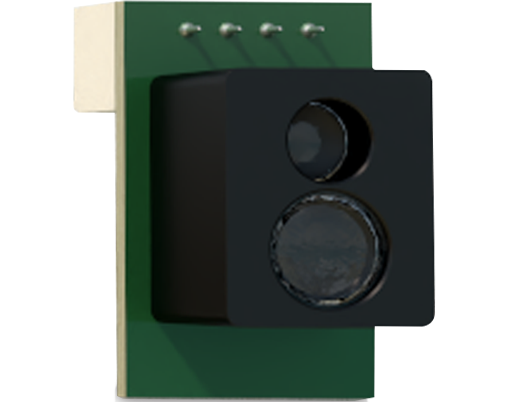
Looking ahead, the future of DPTEX laser sensors is intertwined with advancements in artificial intelligence and machine learning. The next generation of sensors is expected to feature embedded intelligence, enabling them to not only collect data but also interpret it, identify patterns, and make autonomous decisions. This will lead to even more adaptive and self-optimizing manufacturing processes. Additionally, ongoing miniaturization and cost reduction will make high-precision laser sensing accessible to a broader range of small and medium-sized enterprises, democratizing advanced automation.
In conclusion, DPTEX laser sensors represent a cornerstone of modern industrial measurement and automation. Their ability to provide fast, accurate, and non-contact measurements under demanding conditions has solidified their role as enablers of efficiency, quality, and innovation. As industries continue to strive for greater precision and connectivity, the evolution of laser sensor technology will undoubtedly remain a key driver in shaping the factories and smart systems of tomorrow. Engineers and system integrators are encouraged to leverage the capabilities of these sophisticated devices to solve complex measurement challenges and unlock new levels of operational excellence.