In modern industrial automation, rotary table proximity sensors play a critical role in ensuring operational accuracy, efficiency, and safety. These specialized sensors are designed to detect the presence or position of objects on rotating platforms without physical contact, making them indispensable in applications ranging from machining centers and assembly lines to packaging machinery and robotic workcells.
Unlike traditional mechanical limit switches, proximity sensors offer non-contact detection, which eliminates wear and tear, reduces maintenance needs, and enhances reliability. Rotary table proximity sensors typically utilize inductive, capacitive, or magnetic sensing technologies. Inductive sensors are commonly employed for detecting metallic objects, while capacitive sensors can handle both metallic and non-metallic materials. Magnetic sensors, often based on Hall effect or magnetoresistive principles, are ideal for detecting magnetic targets or encoded rings on rotating shafts.
The integration of these sensors into rotary tables enables precise angular positioning, speed monitoring, and synchronization of multiple axes. For instance, in CNC machining, proximity sensors ensure that the rotary table indexes accurately to predefined angles, allowing for complex multi-sided machining operations. In automated assembly systems, they verify the correct placement of components on rotating dials, preventing misalignments that could lead to defects or downtime.
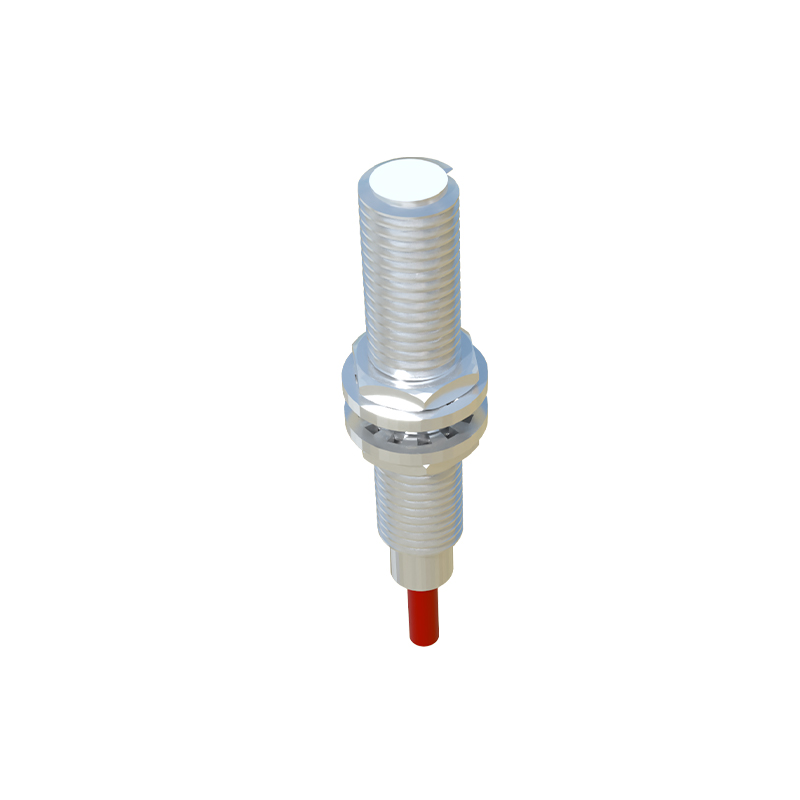
Key performance parameters include sensing distance, repeat accuracy, response time, and environmental robustness. High-quality rotary table proximity sensors feature rugged housings resistant to coolant, oil, dust, and vibration, ensuring stable performance in harsh industrial environments. Many modern sensors also incorporate IO-Link or other industrial communication protocols, enabling real-time data exchange, remote configuration, and predictive maintenance capabilities.
Installation and alignment are crucial for optimal sensor performance. Proper mounting minimizes the effects of mechanical tolerances, thermal expansion, and electromagnetic interference. Shielding techniques and careful cable routing help avoid signal degradation in electrically noisy settings. Regular calibration and diagnostic checks, supported by built-in LED indicators or network-based monitoring tools, further enhance system longevity.
Looking ahead, advancements in miniaturization, smart sensing, and integration with Industrial IoT platforms are expanding the capabilities of rotary table proximity sensors. These developments promise even greater precision, adaptability, and connectivity, supporting the evolution toward fully autonomous, data-driven manufacturing ecosystems.