In the rapidly evolving landscape of industrial automation, laser object sensors have emerged as a cornerstone technology, enabling unprecedented levels of precision, reliability, and efficiency. These sophisticated devices utilize focused beams of light to detect, measure, and position objects with micron-level accuracy, forming the backbone of modern manufacturing, logistics, and quality control systems. Unlike traditional photoelectric or proximity sensors, laser sensors offer superior performance in challenging environments characterized by dust, varying ambient light, or complex surface textures.
The fundamental operating principle of a laser object sensor revolves around the emission of a coherent, monochromatic laser beam. When this beam strikes a target object, its properties are altered—either through reflection, interruption, or time-of-flight measurement. The most prevalent technologies include through-beam, retro-reflective, and diffuse-reflective sensing modes. Through-beam sensors, consisting of separate emitter and receiver units, provide the longest sensing ranges and highest immunity to environmental interference. Diffuse-reflective types, where the emitter and receiver are housed in a single unit, detect objects based on the reflection of light from the target itself, offering easier installation and alignment. Advanced models incorporate time-of-flight (ToF) or triangulation principles for precise distance measurement, enabling tasks like height profiling, contour detection, and precise positioning.

Key performance parameters define a sensor's suitability for an application. Sensing range, typically from a few centimeters to several hundred meters, must be matched to the operational environment. Response time, often in the microsecond range, is critical for high-speed production lines. Spot size, determined by the laser's focus, affects resolution and the ability to detect small objects. Environmental ratings, such as IP67 or IP69K for dust and water resistance, and operational temperature ranges are non-negotiable for harsh industrial settings. Modern sensors also feature intelligent functions like background suppression, which allows them to ignore objects beyond a set distance, and teach-in capabilities for simplified configuration.

The application spectrum for laser object sensors is vast and continually expanding. In automotive assembly, they ensure robotic arms precisely weld components. In packaging machinery, they verify label placement and count products on high-speed conveyors. In semiconductor fabrication, they position wafers with nanometer precision. Logistics and warehousing rely on them for dimensioning parcels and guiding autonomous mobile robots (AMRs). Furthermore, their role in safety systems—creating light curtains to protect personnel around hazardous machinery—is indispensable.
Selecting the appropriate laser sensor requires a meticulous analysis of the application. Engineers must consider the target object's properties: size, color, material, and surface finish (e.g., shiny, transparent, or matte). Environmental factors like vibration, temperature extremes, and airborne contaminants are equally crucial. The required output type—discrete (PNP/NPN) or analog (4-20 mA, 0-10 V)—must interface seamlessly with the existing Programmable Logic Controller (PLC) or system architecture. Connectivity options are evolving, with Industrial Internet of Things (IIoT) enabled sensors offering Ethernet/IP, PROFINET, or IO-Link communication for real-time data monitoring and predictive maintenance.
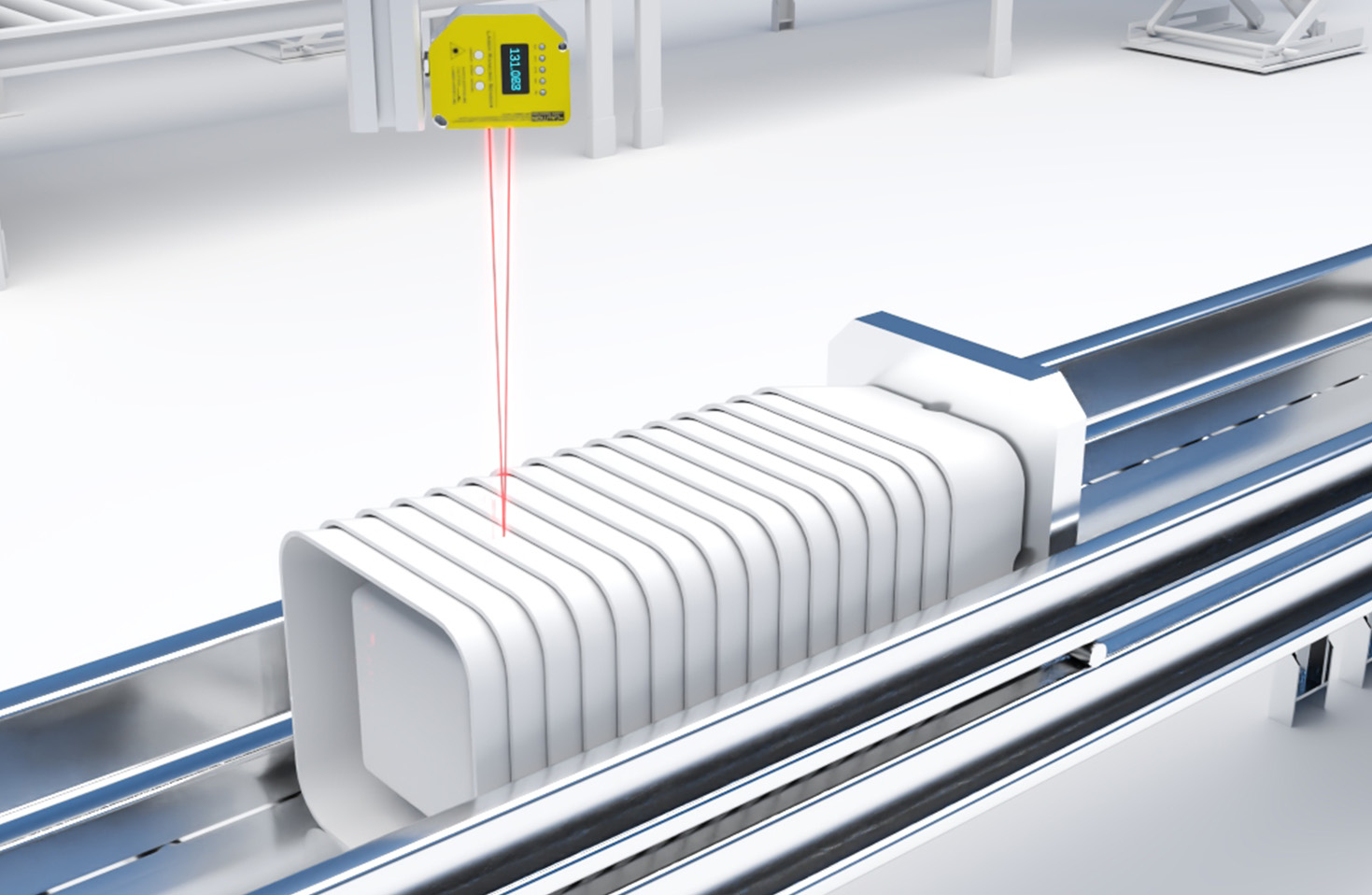
Despite their robustness, optimal performance hinges on correct installation and maintenance. Proper alignment is paramount; even minor misalignment can cause false triggers or detection failures. Lenses must be kept clean from oil, dust, or debris to maintain beam integrity. Regular verification against calibration standards ensures ongoing accuracy. It is also vital to adhere to laser safety classifications (typically Class 1 or 2 for industrial sensors), which indicate the risk level and necessary protective measures.
The future trajectory of laser object sensing is intertwined with Industry 4.0. Integration with artificial intelligence and machine vision systems will enable sensors not just to detect presence, but to classify objects and make autonomous decisions. Miniaturization will continue, allowing embedding into tighter spaces. Furthermore, advancements in laser diode technology and signal processing algorithms will push the boundaries of speed, range, and resolution while reducing power consumption and cost.
In conclusion, laser object sensors are transformative components that bridge the physical and digital worlds in automation. Their unparalleled accuracy, speed, and adaptability solve complex detection challenges, driving productivity and quality. For engineers and system integrators, a deep understanding of their operating principles, selection criteria, and application best practices is essential to harnessing their full potential and building resilient, intelligent automated systems for the future.