In the rapidly evolving landscape of security and automation, human detection technologies have become paramount. Among the most advanced and reliable solutions are human detection laser sensors and motion sensors. These devices, while often mentioned in the same breath, operate on distinct principles and offer unique advantages for various applications, from industrial safety to smart building management.
Human detection laser sensors, specifically designed to identify the presence of people, utilize laser beams to measure distance and detect movement with exceptional precision. Unlike generic motion sensors, these laser-based systems can differentiate between human forms and other objects, reducing false alarms significantly. They emit a laser beam that scans a designated area. When a person enters this zone, the beam is interrupted or reflected back to the sensor, triggering a response. The key advantage lies in their accuracy and range. Modern laser sensors can cover distances up to several hundred meters with millimeter-level precision, making them ideal for perimeter security in large facilities, construction sites, or restricted areas. Furthermore, they are less susceptible to environmental factors like temperature fluctuations or ambient light, which often plague other sensor types. Their ability to provide exact location data also enables integration with automated systems, such as activating lights, alarms, or even locking mechanisms only when a human is detected, thereby enhancing energy efficiency and security protocols.
On the other hand, motion sensors, particularly Passive Infrared (PIR) sensors, are more commonplace in residential and commercial settings. They detect changes in infrared radiation emitted by warm objects, such as humans or animals, within their field of view. When a person moves, the sensor picks up the variation in heat patterns and activates an alert or device. PIR sensors are cost-effective, easy to install, and consume minimal power, making them a staple for lighting control, intrusion detection in homes, and occupancy monitoring in offices. However, they have limitations: they typically require movement to trigger and may not distinguish between a human and a pet, leading to potential false positives. For broader coverage, some systems combine PIR with microwave or ultrasonic technology, which emit waves to detect motion based on the Doppler effect, but these can sometimes be overly sensitive to non-human movements.

The integration of both technologies represents the forefront of smart security. For instance, a comprehensive system might use laser sensors for precise, long-range outdoor monitoring while employing PIR motion sensors indoors for room-specific occupancy. In industrial environments, laser sensors ensure worker safety by creating invisible barriers around hazardous machinery, instantly shutting down equipment if a person is detected too close. Meanwhile, in smart cities, these sensors contribute to traffic management and public space monitoring, analyzing pedestrian flow without compromising privacy through anonymized data collection.
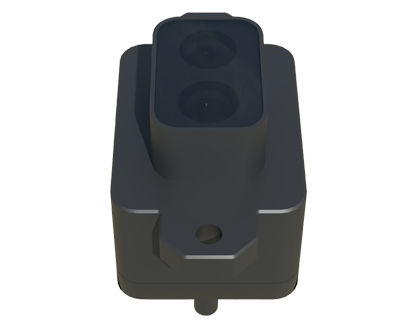
Choosing between a human detection laser sensor and a motion sensor depends on the specific requirements of the application. For high-security, outdoor, or large-scale scenarios where accuracy and reliability are critical, laser sensors are superior. For everyday, cost-sensitive applications like home automation or basic occupancy sensing, motion sensors offer a practical solution. As technology advances, we are seeing the emergence of hybrid systems and AI-enhanced sensors that combine multiple detection methods to achieve even greater accuracy and adaptability.
Ultimately, both human detection laser sensors and motion sensors play vital roles in creating safer, more efficient environments. By understanding their capabilities and limitations, engineers and system designers can deploy the right technology to meet the evolving demands of security and automation in the modern world.