In the rapidly evolving landscape of industrial manufacturing, the integration of advanced sensing technologies has become pivotal for achieving high-quality, efficient, and reliable welding processes. Among these innovations, welding wire laser sensor video systems stand out as a transformative tool, offering real-time monitoring and control capabilities that significantly enhance precision in various welding applications. This article delves into the principles, benefits, and practical implementations of these systems, providing insights for professionals in the electrical and welding industries.
Welding wire laser sensor video technology utilizes laser-based vision systems to capture detailed video footage of the welding wire during operation. These sensors emit a laser line or pattern onto the welding wire and surrounding area, while high-speed cameras record the reflections and distortions. The resulting video data is processed through sophisticated algorithms to analyze critical parameters such as wire position, feed speed, alignment, and potential defects like spatter or irregularities. By providing a clear, magnified view of the welding process in real time, these systems enable operators to make immediate adjustments, reducing errors and improving weld consistency.
The core advantages of welding wire laser sensor video systems are manifold. Firstly, they enhance accuracy by detecting minute deviations in wire placement that might otherwise go unnoticed. In automated welding setups, this precision is crucial for maintaining tight tolerances in industries like automotive, aerospace, and shipbuilding, where weld quality directly impacts structural integrity. Secondly, these systems boost productivity by minimizing downtime. Traditional methods often require manual inspections or post-weld testing, which can halt production lines. With laser sensor video, continuous monitoring allows for proactive maintenance and quick troubleshooting, leading to smoother operations and higher throughput. Additionally, the technology supports quality assurance by documenting the welding process through video recordings. This archival data can be used for compliance audits, training purposes, or forensic analysis in case of failures, thereby fostering a culture of transparency and continuous improvement.
Implementing welding wire laser sensor video systems involves several key considerations. The selection of appropriate hardware—such as laser diodes with suitable wavelengths (e.g., red or blue lasers for different materials) and cameras with high frame rates—is essential to capture clear images under challenging conditions like bright arcs or fumes. Integration with existing welding equipment, such as robotic arms or CNC machines, requires compatibility with industrial communication protocols like Ethernet/IP or PROFINET. Software plays an equally vital role; modern systems often feature user-friendly interfaces that display real-time video feeds alongside analytical metrics, such as wire diameter measurements or anomaly alerts. Training personnel to interpret this data effectively is also critical, as it empowers them to leverage the technology for optimal results.
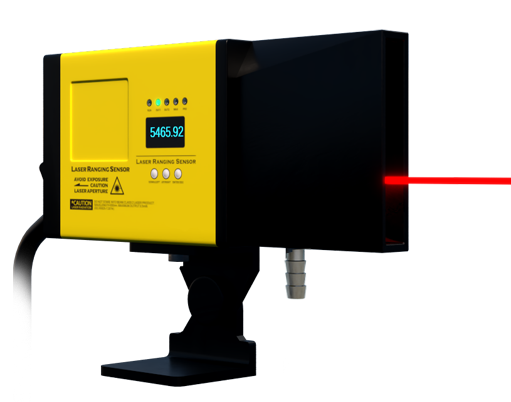
In practice, welding wire laser sensor video systems find applications across diverse scenarios. For instance, in gas metal arc welding (GMAW), they help maintain consistent wire extension and arc stability, reducing defects like porosity or undercut. In submerged arc welding (SAW), they monitor wire feed into the flux layer, ensuring proper penetration. Case studies from manufacturing plants highlight success stories: one automotive supplier reported a 20% reduction in rework rates after deploying laser sensor video, while a pipeline company achieved enhanced weld uniformity in high-pressure environments. These examples underscore the technology's versatility and return on investment.
Looking ahead, advancements in artificial intelligence and machine learning are poised to further revolutionize welding wire laser sensor video systems. Predictive analytics could enable these systems to anticipate issues before they occur, while augmented reality (AR) interfaces might overlay diagnostic information directly onto the workpiece. As industries increasingly adopt smart factory concepts, the demand for such intelligent sensing solutions is expected to grow, driving innovation in sensor miniaturization, data processing speeds, and wireless connectivity.
In conclusion, welding wire laser sensor video represents a significant leap forward in welding technology, bridging the gap between manual oversight and automated precision. By delivering real-time visual feedback and actionable insights, it empowers engineers and technicians to achieve superior weld quality, efficiency, and safety. For organizations aiming to stay competitive in a demanding market, investing in these systems is not just an upgrade—it's a strategic imperative for future-proofing their operations. Professionals are encouraged to explore this technology through demonstrations, technical literature, and hands-on trials to fully grasp its potential in transforming their welding processes.
