Laser antenna sensors represent a sophisticated fusion of photonics and radio frequency (RF) technologies, enabling precise detection and measurement capabilities across numerous industries. At their core, these devices utilize laser beams to function as virtual or "antenna-less" antennas for sensing electromagnetic fields, vibrations, displacements, or environmental parameters with exceptional accuracy and minimal intrusion. The fundamental principle involves modulating a continuous-wave or pulsed laser beam based on the interaction with a target parameter. This modulation is then detected and analyzed to extract the desired information. Unlike conventional metallic antennas, laser-based sensors are immune to electromagnetic interference (EMI), can operate in harsh environments, and offer high bandwidth and spatial resolution.
The operational mechanics typically involve one of several established techniques. In laser Doppler vibrometry, for instance, the sensor measures the frequency shift of laser light reflected from a vibrating surface, translating it into velocity and displacement data. This is invaluable for structural health monitoring in aerospace, civil engineering, and manufacturing. Another prominent method is based on laser interferometry, where interference patterns between a reference laser beam and a sensing beam are analyzed to detect minute changes in distance or refractive index, applicable in precision machining and semiconductor inspection. Furthermore, some advanced laser antenna sensors are designed to directly sense electric or magnetic fields by employing electro-optic or magneto-optic crystals that alter the polarization or phase of the laser light when exposed to such fields, paving the way for non-contact high-voltage line monitoring and advanced research.
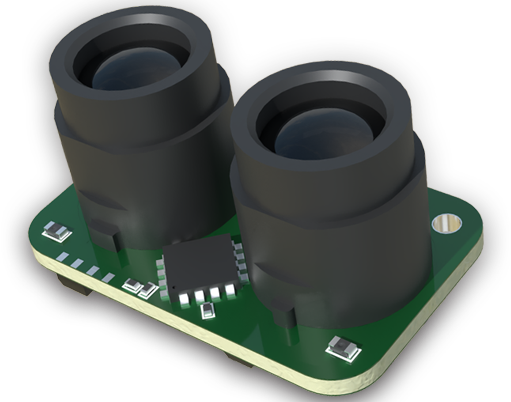
The applications of laser antenna sensors are vast and growing. In industrial automation, they facilitate non-contact quality control, alignment, and robotic guidance with micron-level precision. The telecommunications sector leverages them for signal processing and sensing in photonic integrated circuits. In the energy sector, they are deployed for monitoring the integrity of power grids and wind turbine blades. Environmental monitoring utilizes distributed laser sensing along fiber optic cables to detect leaks, seismic activity, or temperature changes over long distances. The defense and aerospace industries rely on them for stealthy surveillance, lidar systems, and testing of composite materials. The non-conductive nature of the laser probe makes these sensors ideal for applications involving high voltages or explosive atmospheres where traditional electronic sensors would pose a risk.
Current research is pushing the boundaries of laser antenna sensor technology. Key trends include miniaturization through photonic integrated circuits (PICs), which aim to combine lasers, modulators, and detectors on a single chip for portable, low-cost devices. The integration with artificial intelligence and machine learning algorithms enhances data analysis, enabling predictive maintenance and anomaly detection from complex sensor data. The development of quantum-enhanced sensors using entangled photon states promises unprecedented sensitivity for measuring magnetic fields or gravitational waves. Additionally, the advent of new laser sources, like frequency combs, offers improved accuracy for spectroscopic sensing of gases and chemicals.
Despite their advantages, challenges remain. The cost of high-quality laser components and precise optical alignment can be prohibitive for mass-market adoption. Environmental factors such as fog, dust, or extreme temperatures can attenuate the laser beam, affecting performance. Furthermore, the complexity of signal processing requires specialized expertise. However, ongoing advancements in component manufacturing, digital signal processing, and robust packaging are steadily overcoming these hurdles.
In conclusion, laser antenna sensors are a transformative technology bridging optics and sensing. Their ability to provide accurate, non-contact, and EMI-free measurements makes them indispensable in modern high-tech industries. As research continues to enhance their sensitivity, reduce their size and cost, and integrate them with smart systems, their role is set to expand further, driving innovation in fields ranging from fundamental science to everyday industrial processes. Engineers and technologists must stay abreast of these developments to harness the full potential of this versatile sensing paradigm.