In the landscape of industrial automation and control systems, the demand for reliable, precise, and robust sensing technology is paramount. Among the diverse array of sensors available, the square long-range proximity sensor stands out as a critical component for applications requiring non-contact detection of metallic objects at extended distances. This article delves into the engineering principles, key characteristics, and practical applications of these specialized sensors, providing a comprehensive overview for engineers and system integrators.
Fundamentally, a square long-range proximity sensor operates on the principle of electromagnetic induction. The sensor generates a high-frequency oscillating electromagnetic field from its active face. When a metallic target enters this field, eddy currents are induced on the target's surface. These eddy currents draw energy from the sensor's oscillator, causing a measurable change in the oscillation amplitude or frequency. This change is detected by the sensor's internal circuitry, which subsequently triggers a solid-state output signal (typically PNP, NPN, or Namur). The "square" designation refers to the physical housing geometry, which offers distinct advantages in mounting and spatial efficiency compared to cylindrical counterparts. The "long-range" capability is achieved through optimized coil design, higher power oscillation circuits, and sophisticated signal processing algorithms that can reliably detect standard steel targets at distances ranging from 15mm to 70mm or more, depending on the specific model and target material.
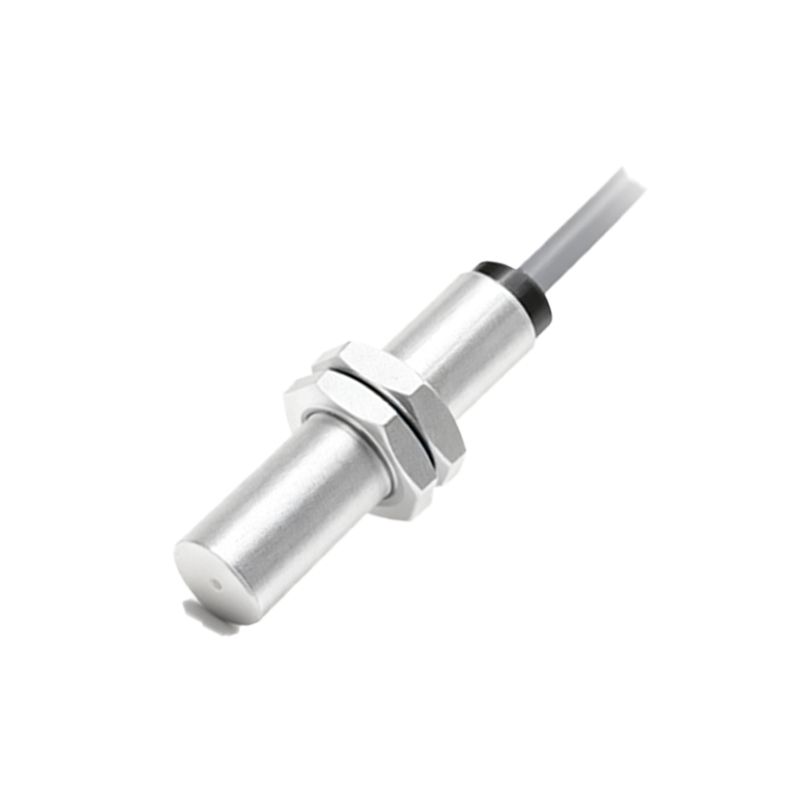
Several key specifications define the performance of a square long-range proximity sensor. The rated operating distance (Sn) is the nominal detection range for a standard 1mm thick, square mild steel target. It is crucial to note that the effective sensing distance can vary with target material; for instance, non-ferrous metals like aluminum or copper typically have a reduction factor, requiring a larger target or closer proximity for reliable detection. Repeat accuracy, often within a fraction of the sensing distance, is vital for precision positioning tasks. Another critical parameter is the hysteresis, which is the difference between the switch-on and switch-off points. This feature prevents output chatter when a target is positioned at the exact sensing limit. The housing, usually constructed from nickel-plated brass, stainless steel, or ruggedized PBT plastic, provides high ingress protection ratings (e.g., IP67, IP69K), making them resistant to dust, water jets, and harsh cleaning chemicals common in food processing, packaging, and automotive manufacturing environments. Furthermore, many models incorporate advanced features like weld-field immunity (for robotic welding cells), short-circuit and overload protection, and temperature stability across a wide operating range (e.g., -25°C to 70°C).
The industrial applications for square long-range proximity sensors are vast and varied. Their extended range and robust square housing make them ideal for several challenging scenarios. In material handling and logistics, they are deployed on conveyor systems for pallet detection, box counting, and position verification of large metal containers or racks, where the longer sensing distance accommodates variations in object placement. Within the automotive industry, these sensors monitor the presence and position of vehicle bodies on assembly lines, control robotic tooling, and verify component insertion in powertrain manufacturing. In heavy machinery and forestry equipment, they serve as limit switches for monitoring boom or bucket positions, offering superior durability over mechanical switches. The square form factor is particularly advantageous in machine design, allowing for flush or surface mounting in tight spaces and providing a larger labeling area for identification. For bulk material processing, such as in mining or aggregate, they can detect the level of metal in bins or chutes. When selecting a sensor for a specific application, engineers must consider not only the sensing range but also the target material, size, and approach direction, environmental factors (temperature, contaminants, presence of strong magnetic fields), required output type, and electrical requirements.
In conclusion, square long-range inductive proximity sensors represent a sophisticated fusion of electromagnetic theory and practical engineering. Their design addresses the need for dependable, long-distance detection in space-constrained and demanding industrial settings. By understanding their operating principles, key specifications, and application considerations, automation professionals can effectively integrate these sensors to enhance system reliability, improve safety, and optimize production efficiency. As Industry 4.0 and smart manufacturing evolve, the role of such robust and intelligent sensing elements will only continue to grow in importance.