In the realm of industrial automation and control systems, proximity switch sensors stand as fundamental components, enabling non-contact detection of objects with precision and reliability. As an electrical engineer with extensive field experience, I aim to provide a comprehensive overview of these critical devices, focusing on their operational principles, primary types, key applications, and essential selection factors.
At its core, a proximity sensor is a device that detects the presence or absence of an object within its sensing range without any physical contact. It achieves this by emitting an electromagnetic field or a beam of electromagnetic radiation and looking for changes in the field or return signal. The primary advantage of this non-contact method is the elimination of mechanical wear and tear, leading to significantly longer operational life, higher switching speeds, and the ability to detect fragile or small objects that might be damaged by physical switches.
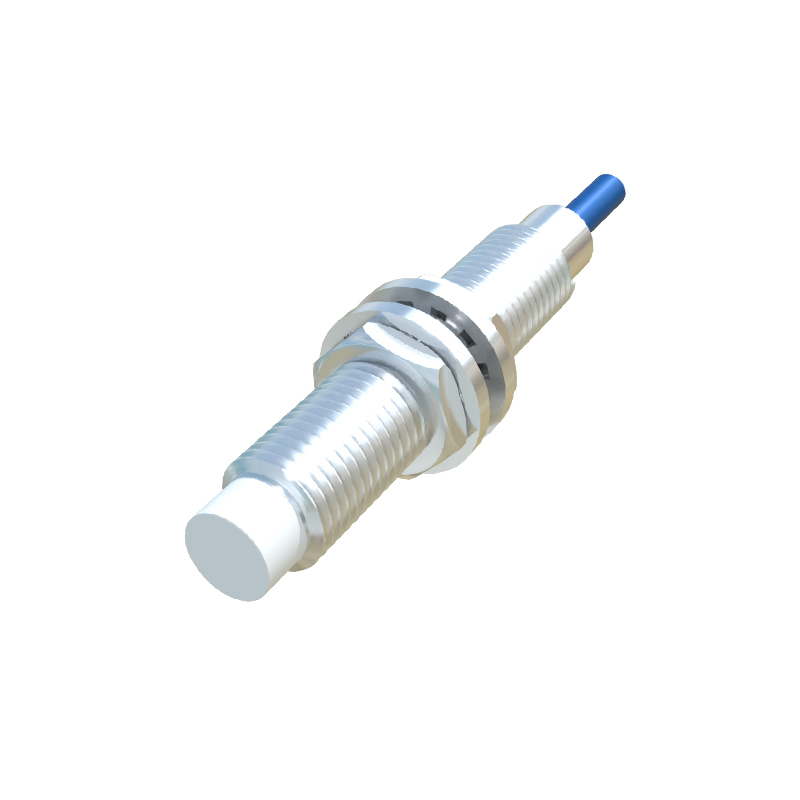
The most prevalent types of proximity sensors in industrial settings are inductive, capacitive, and photoelectric. Inductive proximity sensors are the workhorses for detecting metallic objects. They operate on the principle of electromagnetic induction. The sensor's oscillator generates a high-frequency electromagnetic field that radiates from the ferrite core at the sensing face. When a metallic target enters this field, eddy currents are induced on the target's surface, causing a load on the oscillator. This change is detected by the sensor's circuitry, which then switches the output state. These sensors are exceptionally robust, immune to environmental contaminants like dust, oil, and coolant, and are ideal for applications involving machine tools, material handling, and automotive assembly lines.
Capacitive proximity sensors, in contrast, can detect both metallic and non-metallic materials, including liquids, powders, plastics, and wood. They function by generating an electrostatic field. The sensor and the target act as two plates of a capacitor. As a target approaches the sensing face, it alters the capacitance of the system. The sensor's circuit monitors this change and triggers an output when a preset threshold is reached. This makes them perfect for level detection in tanks (liquids or granules), material handling of non-metals, and presence detection of packaged goods.
Photoelectric sensors, while sometimes categorized separately, are a crucial form of proximity detection. They use a light emitter (usually LED) and a receiver. When the emitted light beam is interrupted or reflected by an object, the receiver detects the change, and the output switches. They offer very long sensing ranges and can detect objects of virtually any material. Common configurations include through-beam, retro-reflective, and diffuse reflective modes.
Key specifications define a sensor's suitability for an application. Sensing distance, or "sn," is the nominal range at which a standard target can be reliably detected. It is critical to consider factors like temperature and supply voltage, which can affect this distance. The housing material, typically nickel-plated brass, stainless steel, or PBT plastic, must be chosen based on the environmental conditions (chemical exposure, washdowns). Output configuration is another vital decision; sensors come with discrete outputs like NPN (sinking), PNP (sourcing), or analog outputs (4-20mA, 0-10V) for distance-proportional measurement. The switching frequency defines how quickly the sensor can respond to objects passing by, a critical parameter for high-speed counting or sorting applications.
In practical applications, the selection process is paramount. For a metal part detection on a high-speed conveyor, an inductive sensor with a fast switching frequency and a shielded (flush-mountable) housing would be appropriate. For detecting the fill level of glue in a plastic container, a capacitive sensor with a sensitivity adjustment to ignore the container wall would be necessary. Environmental challenges must be rigorously assessed. Harsh environments with metal chips, heavy vibration, or frequent high-pressure washdowns demand sensors with high IP (Ingress Protection) ratings, such as IP67 or IP69K, and robust construction.
Installation and wiring require attention to detail. Maintaining proper clearance around the sensing face is crucial, especially for unshielded inductive sensors, to prevent false triggering from surrounding metal. Electrical noise from motors or variable frequency drives can interfere with sensor operation; therefore, using shielded cables and proper grounding practices is essential. Always consult the manufacturer's datasheet for specific wiring diagrams, load specifications, and temperature ratings.
In conclusion, proximity switch sensors are indispensable for modern automated systems, providing reliable, non-contact sensing that enhances efficiency and reduces maintenance. A deep understanding of their types—inductive for metals, capacitive for nearly all materials, and photoelectric for long-range—combined with a meticulous evaluation of application requirements regarding sensing distance, environment, output type, and speed, is the hallmark of effective engineering design. By applying these principles, engineers can ensure the selection and implementation of the optimal sensor, thereby building robust, reliable, and high-performing automation solutions.