Proximity sensors are indispensable components in modern industrial automation, providing non-contact detection of objects within a specific range without physical interaction. Their ability to detect the presence or absence of an object reliably and rapidly makes them critical for enhancing efficiency, safety, and precision in countless applications. Unlike mechanical limit switches, proximity sensors offer superior longevity, faster response times, and the ability to function in harsh environments where dirt, oil, or moisture are present. This article delves into the core detection capabilities of various proximity sensor technologies and their practical applications across industries.
The fundamental principle behind a proximity sensor is to emit a field or beam and detect changes in that field caused by a target object. The primary detection capabilities can be categorized based on the sensor technology used. Inductive proximity sensors are the most common type for detecting metallic objects. They generate an electromagnetic oscillating field. When a ferrous or non-ferrous metal object enters this field, it induces eddy currents within the metal, causing a change in the oscillation amplitude. The sensor's circuitry detects this change and triggers a switching output. These sensors excel at detecting metals at short ranges, typically from a few millimeters up to 60 millimeters, and are immune to non-metallic substances like dust or liquids. Common applications include part presence verification on conveyor lines, end-of-travel detection on actuators, and counting metal components.
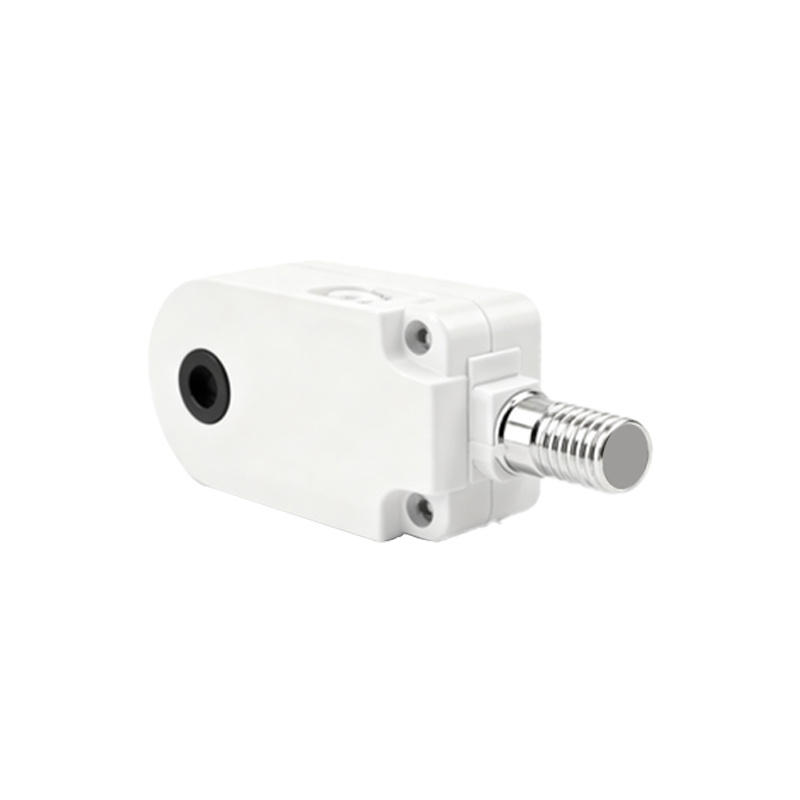
Capacitive proximity sensors, on the other hand, can detect both metallic and non-metallic materials, including liquids, plastics, glass, wood, and granular substances. They function by generating an electrostatic field. Any object with a dielectric constant different from air will disturb this field upon approach, altering the sensor's capacitance and triggering the output. This makes them incredibly versatile. They are often used for liquid level detection in tanks, monitoring the fill level of non-metallic bins or hoppers, and detecting the presence of paper, wood, or plastic products on production lines. Their sensing range is generally similar to or slightly less than inductive models.
For longer-range detection and for sensing any solid object regardless of material, photoelectric sensors are the preferred choice. They operate by emitting a beam of light (visible red, infrared, or laser) and detecting its reflection or interruption. There are three main operating modes: through-beam (separate emitter and receiver), retro-reflective (uses a reflector), and diffuse (reflects off the target itself). Photoelectric sensors can detect objects from a few centimeters up to several meters away. They are ideal for applications like object counting on high-speed packaging lines, detecting transparent bottles, monitoring web breaks in material handling, and providing safety curtains for personnel protection.
Ultrasonic proximity sensors use sound waves beyond human hearing. They emit high-frequency ultrasonic pulses and measure the time it takes for the echo to return from a target object. This time-of-flight principle allows them to detect objects of virtually any material, shape, or color, and they are particularly effective for measuring distance or detecting clear objects that photoelectric sensors might struggle with. Applications include precise distance measurement, pallet stacking height control, loop control in wire winding, and detecting liquid levels in transparent containers.
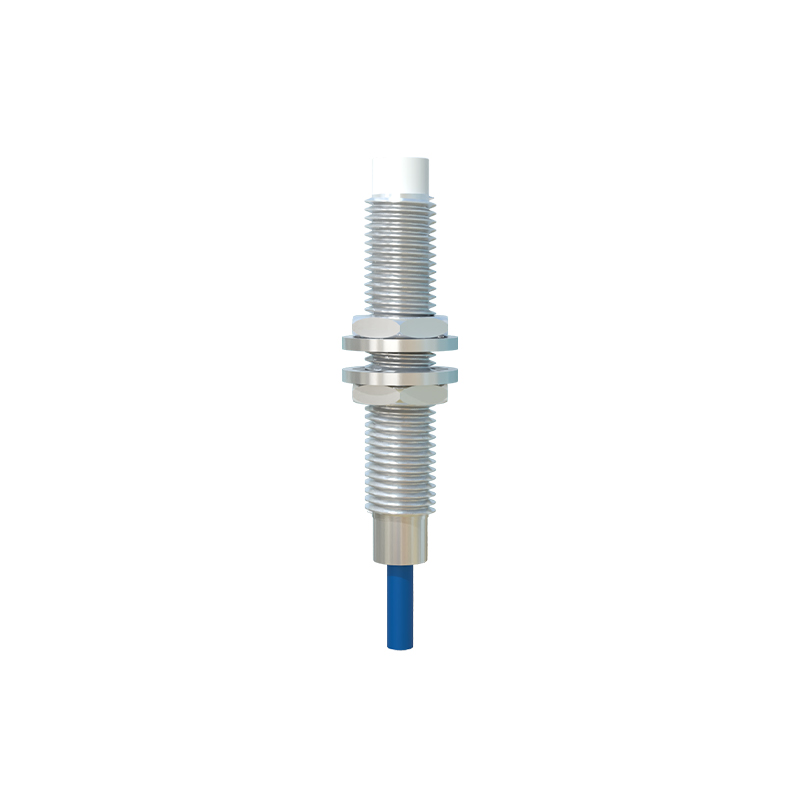
A more specialized type, the magnetic proximity sensor (often a reed switch or Hall-effect sensor), detects the presence of a permanent magnet. They are extremely reliable for detecting the position of cylinders with embedded magnets (pneumatic cylinder position sensing) or in safety door interlocks.
The selection of the appropriate sensor hinges on the target material, required sensing distance, environmental conditions (temperature, contaminants), required response speed, and electrical output needs (PNP/NPN, analog, IO-Link). Modern sensors also offer advanced features like teach-in functionality for easy setup, diagnostics via LED indicators, and network connectivity via Industrial Ethernet or IO-Link for Industry 4.0 integration.
In conclusion, the detection capability of a proximity sensor is defined by its underlying technology. Inductive sensors target metals, capacitive sensors target a wide range of materials based on dielectric constant, photoelectric sensors use light for versatile long-range detection, and ultrasonic sensors use sound for challenging materials and distance measurement. By understanding these core capabilities, engineers can effectively deploy proximity sensors to automate processes, ensure quality control, enhance machine safety, and build more intelligent, responsive, and efficient industrial systems. Their role as the "senses" of automated machinery continues to expand with advancements in sensing precision, connectivity, and durability.