In the ever-evolving landscape of sensing technology, a new frontier is being charted by the emergence of terahertz (THz) laser sensors. Operating in the electromagnetic spectrum between microwaves and infrared light, typically defined as frequencies from 0.1 to 10 THz, this technology is unlocking capabilities once thought to be the domain of science fiction. For electrical engineers and industry professionals, understanding the principles, applications, and future trajectory of THz laser sensors is becoming increasingly crucial.
The fundamental operation of a terahertz laser sensor hinges on the generation and detection of THz radiation. Unlike conventional sensors, THz waves possess unique properties: they can penetrate many non-conductive materials like plastics, ceramics, and fabrics, are non-ionizing and generally safe for biological tissues, and provide spectroscopic information that acts as a molecular "fingerprint" for many substances. The core of the sensor is the THz source. Modern systems often employ quantum cascade lasers (QCLs) or photoconductive antennas driven by ultrafast femtosecond lasers to generate coherent, tunable THz pulses. The detection side utilizes sensitive elements like bolometers or Schottky diode detectors to capture the radiation after it interacts with a target.

The industrial applications of this technology are vast and transformative. In non-destructive testing (NDT) and quality control, THz sensors excel. They can peer inside composite materials, polymer layers, and insulation to detect voids, delamination, or moisture ingress without causing any damage. This is invaluable in aerospace for inspecting carbon fiber reinforced polymers or in the automotive industry for checking paint thickness and coating integrity. The pharmaceutical sector leverages THz spectroscopy for precise identification of polymorphs in drug compounds, ensuring batch consistency and efficacy. Furthermore, in security screening, THz sensors can detect concealed weapons or illicit substances hidden under clothing, offering a safer alternative to X-rays for certain scenarios due to their non-ionizing nature.
From an electrical engineering perspective, the design and integration of THz systems present fascinating challenges and opportunities. The development of compact, room-temperature, and high-power THz sources remains a primary research focus. Advances in semiconductor materials, particularly in III-V compounds for QCLs, are pushing the boundaries of efficiency and operational range. On the detection front, improving signal-to-noise ratios and developing faster, more sensitive detectors are critical for real-time imaging and spectroscopy. System integration involves sophisticated optoelectronics, high-speed data acquisition circuits, and advanced signal processing algorithms to interpret the complex THz data. The move towards chip-scale THz systems, integrating sources, waveguides, and detectors on a single photonic integrated circuit (PIC), represents the next leap forward, promising to make the technology more accessible and cost-effective.
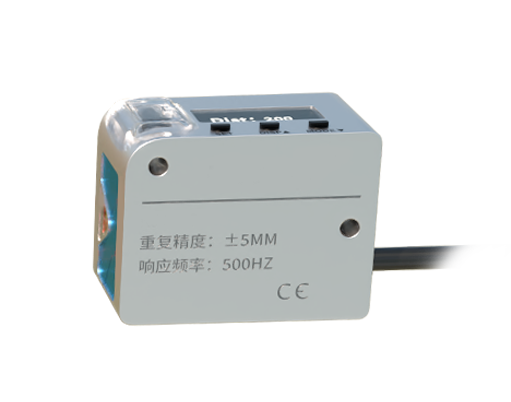
The future of terahertz sensing is incredibly promising, driven by interdisciplinary collaboration between electrical engineering, materials science, and photonics. Emerging trends include the development of real-time, high-resolution THz imaging cameras for industrial process monitoring and biomedical imaging. In communications, the exploration of the THz band for ultra-high-speed wireless data transmission (6G and beyond) is closely linked to sensor advancements. Another exciting avenue is the integration of artificial intelligence and machine learning with THz sensor data. AI algorithms can rapidly analyze complex spectral datasets, enabling automated material classification, anomaly detection, and predictive maintenance with unprecedented accuracy.
However, the path forward is not without hurdles. Atmospheric absorption of THz waves by water vapor can limit propagation distances, a challenge for certain remote sensing applications. The current cost of high-performance systems can be prohibitive for widespread adoption. Furthermore, standardization of measurement protocols and safety guidelines specific to THz radiation exposure is an ongoing process within regulatory bodies.
In conclusion, terahertz laser sensors represent a paradigm shift in sensing technology. Their ability to safely see through materials and identify chemical compositions fills a critical gap in the analytical toolkit available to engineers and scientists. As research continues to overcome technical barriers and drive down costs, we can anticipate a proliferation of THz sensors across diverse sectors—from manufacturing floors and security checkpoints to research laboratories and future communication networks. For the electrical engineering community, engaging with this technology now is an investment in shaping the sophisticated, data-driven industrial systems of tomorrow.