In the rapidly evolving landscape of industrial automation, vision proximity sensor companies are at the forefront of a technological revolution. These firms specialize in developing advanced sensing systems that combine the principles of machine vision with proximity detection, creating solutions that are far more sophisticated than traditional inductive or capacitive sensors. Unlike simple on/off switches, modern vision proximity sensors can detect the presence, position, orientation, and even specific features of an object without physical contact, providing a rich stream of data for process control.
The core technology hinges on compact, robust cameras paired with intelligent processing algorithms. These systems use structured light, stereoscopic vision, or time-of-flight (ToF) principles to generate precise 3D depth maps of their field of view. This allows them to perform complex tasks such as verifying assembly completeness, guiding robotic arms for precise pick-and-place operations, and ensuring operator safety by creating dynamic hazard zones around machinery. For instance, in a collaborative robot (cobot) cell, these sensors can distinguish between a tool and a human hand, adjusting the robot's speed or stopping it entirely to prevent accidents.
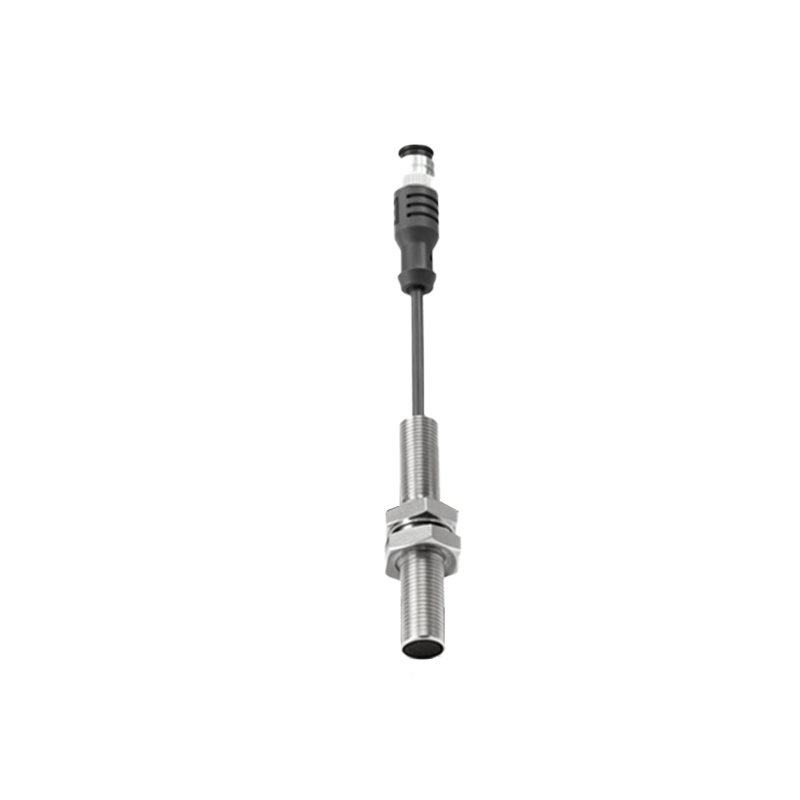
Leading companies in this niche are continuously pushing the boundaries. Their R&D focuses on enhancing resolution, processing speed, and environmental robustness. A key challenge has been ensuring reliable performance in harsh industrial environments characterized by dust, oil, vibration, and variable lighting. The answer has been the development of sensors with high IP ratings, specialized optical filters, and adaptive algorithms that can compensate for ambient light interference. Furthermore, the integration with Industrial Internet of Things (IIoT) platforms is a major trend. Modern sensors are not just data collectors; they are intelligent nodes that can pre-process information, communicate via Ethernet/IP, PROFINET, or OPC UA, and feed data directly into cloud-based analytics systems for predictive maintenance and process optimization.
The applications are vast and transformative. In automotive manufacturing, vision proximity systems inspect weld seams and verify gap dimensions on car bodies with sub-millimeter accuracy. In logistics, they enable automated palletizing by identifying package sizes and shapes for optimal stacking. In the food and beverage industry, they ensure packaging integrity and label placement without contaminating the product. The agility of these systems reduces changeover times in batch production, a critical factor for manufacturers adopting high-mix, low-volume strategies.
For engineers and system integrators, selecting the right vision proximity sensor company involves several considerations. Technical specifications like sensing range, field of view, frame rate, and accuracy are paramount. Equally important is the software ecosystem—the ease of configuring inspection tasks, the power of the development tools, and the quality of support. Companies that offer intuitive graphical interfaces and extensive libraries of pre-trained tools for edge detection, pattern matching, and blob analysis significantly reduce deployment time and complexity. Another critical factor is the total cost of ownership, which includes not just the sensor unit but also the processing hardware, software licenses, and integration effort.
Looking ahead, the convergence of artificial intelligence and edge computing is set to redefine the capabilities of vision proximity sensors. Embedded AI chips will allow sensors to perform complex classification and anomaly detection locally, in real-time, reducing latency and bandwidth requirements. This will unlock new applications in quality control, such as identifying subtle material defects or surface imperfections that are invisible to traditional rule-based vision systems.
In conclusion, vision proximity sensor companies are not merely component suppliers; they are essential partners in the journey toward smarter, safer, and more flexible factories. Their technologies provide the "eyes" and "perception" for automated systems, bridging the gap between the physical and digital worlds. As Industry 4.0 matures, the demand for these intelligent sensing solutions will only intensify, making the innovation from these specialized firms a cornerstone of modern industrial engineering.