The integration of laser camera sensor tracks into industrial automation systems represents a significant leap forward in precision measurement, quality control, and operational efficiency. These advanced systems combine the pinpoint accuracy of laser triangulation with the rich visual data capture of high-resolution cameras, all mounted on precisely controlled linear or multi-axis tracks. This synergy enables real-time, non-contact inspection and monitoring across extensive production lines or large workpieces, a capability once limited to stationary or smaller-scale applications.
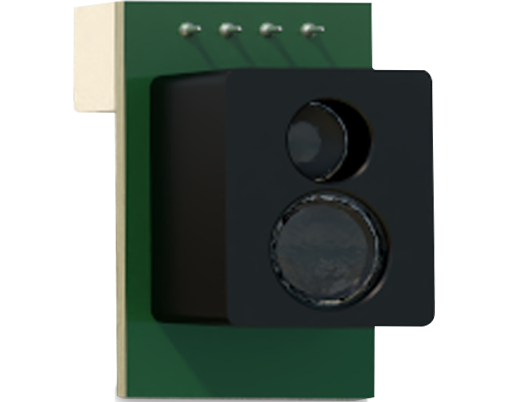
At the core of this technology is the laser line profiler. A laser line is projected onto the target surface, and the camera, offset at a known angle, captures the deformation of this line. Sophisticated software algorithms then analyze this deformation to calculate precise 3D profiles, including height, width, and depth measurements with micron-level accuracy. When this sensor assembly is mounted on a motorized track, its field of inspection is no longer constrained. The track system, typically comprising a rigid rail, a servo or stepper motor drive, and a high-precision encoder, allows the sensor to scan longitudinally along a product conveyor, rotate around a fixture, or follow complex programmed paths. This mobility is crucial for applications like continuous web inspection of textiles, metals, or plastics, robotic weld seam tracking in automotive manufacturing, and full 3D scanning of aerospace components.
The engineering considerations for implementing a laser camera sensor track are multifaceted. Track selection is paramount; it must provide smooth, vibration-free motion with minimal deflection under the sensor's weight and at operational speeds. Factors like straightness, flatness, and rigidity directly impact measurement accuracy. The choice of drive system—whether belt-driven for cost-effective long travels or ball screw-driven for higher precision and repeatability—must align with the application's speed and positional accuracy requirements. Integration with Programmable Logic Controllers (PLCs) or industrial PCs is standard, allowing for seamless synchronization between the track's movement, sensor triggering, and data acquisition. This creates a continuous stream of dimensional data that can be used for real-time pass/fail decisions, statistical process control (SPC), and automated feedback loops to adjust upstream machinery.

Key advantages of this approach are substantial. First, it dramatically increases inspection coverage compared to fixed sensor stations, often eliminating the need for multiple static sensors and reducing system cost and complexity. Second, it enables 100% inline inspection rather than sporadic sampling, ensuring zero-defect manufacturing goals. The non-contact nature prevents damage to delicate surfaces and allows inspection of hot, moving, or hazardous objects. Furthermore, the rich dataset—combining 2D visual imagery with 3D topographic data—provides unparalleled insight into product quality, identifying defects like scratches, dents, warpage, and coating inconsistencies that might be invisible to traditional 2D vision systems.
However, challenges persist. Environmental factors such as ambient light, dust, coolant mist, and vibration must be mitigated through proper housing, lighting control, and air purging systems. The large volumes of data generated require robust processing hardware and efficient software to maintain high line speeds. Calibration and maintenance are also critical; the entire system—camera, laser, and track—must be periodically calibrated to a known standard to ensure long-term measurement fidelity.
Looking ahead, the convergence of this technology with Artificial Intelligence (AI) and machine learning is set to unlock new potentials. AI algorithms can be trained on the vast datasets to not only detect anomalies but also predict process deviations and prescribe corrective actions, moving towards predictive quality. Enhanced sensor fusion, combining laser profiling with other modalities like thermal or hyperspectral imaging on the same track, will provide even more comprehensive material and product analysis. As Industry 4.0 advances, these intelligent, mobile sensor systems will become integral components of the digital thread, providing the critical metrology data that fuels smart, adaptive, and highly efficient factories. The laser camera sensor track is, therefore, not merely a tool for measurement but a foundational enabler for the next generation of autonomous industrial manufacturing.
