In the vast landscape of industrial automation and precision measurement, a quiet revolution is underway, driven by the relentless miniaturization of laser sensors. Once bulky, power-hungry, and confined to controlled laboratory environments, modern laser sensors have been meticulously engineered down to astonishingly compact form factors. This dramatic reduction in size, far from being a mere exercise in miniaturization, is unlocking unprecedented levels of flexibility, integration, and application scope, fundamentally altering how industries perceive and implement sensing technology.
The core of this miniaturization lies in advancements across multiple disciplines. Semiconductor laser diodes, the heart of these sensors, have become significantly smaller, more efficient, and more reliable. Innovations in micro-optics allow for the precise shaping and focusing of the laser beam using lenses and components measured in millimeters. Similarly, the photodetectors and the sophisticated signal-processing electronics have followed Moore's Law, being integrated into highly compact application-specific integrated circuits (ASICs). This holistic shrinkage of all core components—emitter, optics, receiver, and processor—enables the creation of self-contained sensor heads that are often no larger than a fingertip.
The implications of this tiny footprint are profound. First and foremost is the ability to integrate laser sensing into spaces previously deemed impossible. Robotic end-effectors, for instance, can now be equipped with multiple miniature laser displacement or profile sensors without compromising the robot's dexterity or payload. They provide real-time feedback for precise pick-and-place operations, seam tracking in welding, or intricate assembly tasks. In consumer electronics manufacturing, these sensors perform microscopic gap and flush measurements on smartphone casings or verify the precise alignment of miniature camera modules, all within the cramped confines of automated production lines.
Beyond assembly, the miniaturization drives innovation in quality control. Tiny laser triangulation sensors can be embedded directly into machinery to monitor tool wear in real-time, measuring micron-level changes in cutting tools or drill bits. In the pharmaceutical industry, compact laser sensors verify fill levels in tiny vials or inspect the integrity of minuscule pill coatings at high speeds. Their small size allows for dense arrays of sensors, providing not just a single point of data but a detailed 3D profile of an object in a fraction of a second.
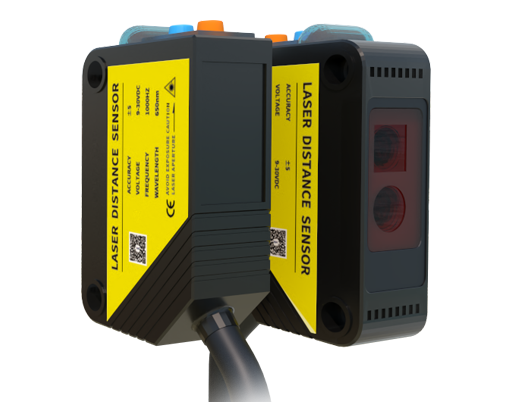
Furthermore, the reduction in size is intrinsically linked to reduced power consumption and heat generation. This makes battery-operated, wireless laser sensor systems a practical reality for mobile applications and Internet of Things (IoT) deployments. Imagine autonomous guided vehicles (AGVs) using miniature LiDAR sensors for navigation in dynamic warehouses, or portable inspection devices that bring laboratory-grade measurement capability directly to the field for maintenance and verification work.
However, engineering at this scale presents unique challenges. Maintaining signal integrity and signal-to-noise ratio in such a small package is paramount. Stray light interference becomes a more critical issue, demanding clever optical design and advanced filtering algorithms. Mechanical stability and resistance to vibration are also magnified concerns, as even a micron of misalignment can skew results. Manufacturers address these through robust housing designs, often using thermally stable materials, and through intelligent software that compensates for environmental variables.
Looking ahead, the trend toward the microscopic continues. Emerging fields like photonic integrated circuits (PICs) promise to build entire optical sensing systems on a single chip, reducing size and cost even further. These advancements will push laser sensing deeper into new frontiers: embedded within medical devices for real-time biometric monitoring, distributed across smart infrastructure for structural health monitoring, or deployed on micro-drones for precision agricultural scanning.
In conclusion, the miniaturization of laser sensors represents a paradigm shift. It is a transition from sensors as peripheral, stationary equipment to sensors as pervasive, embedded intelligence. By conquering space and power constraints, these mighty miniature devices are dissolving physical barriers to application, enabling smarter, more precise, and more adaptable automated systems. Their small stature belies their enormous impact, proving that in the world of industrial sensing, the greatest power is increasingly found in the smallest packages.