In modern industrial automation and process control, precise measurement of rotational speed is a critical parameter for monitoring machinery health, ensuring operational efficiency, and preventing costly downtime. Traditional methods, such as mechanical tachometers or magnetic encoders, often face limitations in accuracy, durability, or application range. Laser sensors have emerged as a superior solution, offering non-contact, high-precision, and versatile capabilities for rotational speed measurement across various industries, including manufacturing, automotive, aerospace, and energy.
The fundamental principle behind laser sensor-based speed measurement involves optical triangulation or time-of-flight techniques. In a typical setup, a laser diode emits a focused beam of light toward a rotating target, such as a shaft, gear, or marked surface. When the beam strikes the target, it reflects back to a photodetector within the sensor. By analyzing the reflected light—either through changes in intensity due to surface irregularities (e.g., reflective marks or grooves) or through Doppler shift effects—the sensor calculates the rotational speed. Advanced models utilize pulsed laser systems and digital signal processing (DSP) to enhance resolution and reduce noise interference from ambient light or vibrations.

Key advantages of laser sensors include their non-contact nature, which eliminates mechanical wear and allows measurement on delicate or high-speed components without physical interference. They provide exceptional accuracy, often within ±0.1% of the measured value, and can detect speeds ranging from near-zero to over 100,000 RPM. Additionally, laser sensors are highly adaptable to harsh environments, with options for ruggedized housings that resist dust, moisture, and temperature extremes. This makes them ideal for applications like turbine monitoring in power plants, conveyor belt speed control in logistics, and engine testing in automotive R&D.
Implementation requires careful consideration of factors such as target surface properties, installation distance, and alignment. For optimal performance, the target should have contrasting reflectivity—e.g., a matte surface with reflective tape or engraved patterns. The sensor must be positioned to avoid obstructions and calibrated according to the target's geometry. Modern laser sensors often integrate with industrial networks (e.g., Ethernet/IP, PROFINET) or PLC systems, enabling real-time data acquisition and integration into predictive maintenance frameworks. Case studies in paper mills, for instance, demonstrate how laser-based monitoring reduced unplanned stoppages by 30% through early detection of bearing wear via speed anomalies.
Despite their benefits, challenges exist, such as sensitivity to highly reflective or transparent surfaces, which may require filter adjustments. Cost can be higher than conventional sensors, but the long-term ROI from improved reliability and reduced maintenance often justifies the investment. Future trends point toward miniaturization, enhanced AI-driven analytics for fault prediction, and integration with IoT platforms for cloud-based monitoring.
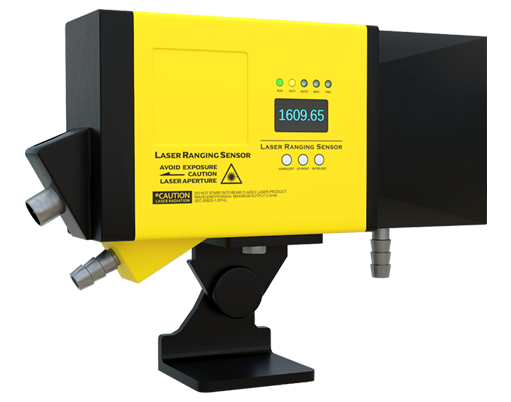
In summary, laser sensors represent a transformative technology for rotational speed measurement, combining precision, durability, and flexibility. By adopting these systems, industries can achieve higher operational standards, minimize downtime, and support the evolution toward smart, data-driven manufacturing ecosystems. As technology advances, their role is set to expand, further bridging the gap between mechanical processes and digital innovation.