In the rapidly evolving landscape of industrial automation and quality control, laser profile sensors have emerged as a pivotal technology for non-contact, high-precision 3D measurement. Unlike traditional 2D vision systems, these sensors capture the complete cross-sectional profile of an object, providing rich dimensional data critical for inspection, guidance, and robotic applications. This article delves into the operational principles, key applications, and essential factors for selecting the right laser profile sensor for specific industrial tasks.
At its core, a laser profile sensor operates on the principle of laser triangulation. The sensor projects a visible laser line onto the target object's surface. A high-resolution camera, positioned at a known angle relative to the laser emitter, captures the deformation of this line. As the object's surface contours change, the laser line appears bent or displaced in the camera's field of view. Sophisticated onboard processors then analyze this captured image. Using trigonometric calculations based on the fixed geometry between the laser and the camera, the sensor software reconstructs a highly accurate 2D cross-sectional profile, representing height (Z-axis) information across the laser line (X-axis). By moving either the sensor or the object, a series of these profiles can be stitched together to create a full 3D point cloud model of the object.
The advantages of this technology are manifold. It enables extremely fast, real-time measurement at rates often exceeding thousands of profiles per second. It is non-contact, eliminating any risk of damaging delicate surfaces. Furthermore, it provides dense, high-resolution data, allowing for the detection of minute defects, precise dimensional verification, and complex shape analysis. Modern laser profile sensors are engineered to be robust, featuring IP67 or higher ingress protection ratings to withstand harsh factory environments with dust, moisture, and vibration.
The applications for laser profile sensors span virtually every manufacturing sector. In automotive manufacturing, they are indispensable for inspecting weld seams, measuring gap and flush on car body panels, and verifying the dimensional accuracy of critical components like brake discs and engine blocks. In electronics, they ensure the coplanarity of Ball Grid Array (BGA) solder balls, measure component height, and inspect for warpage on printed circuit boards (PCBs). In logistics and packaging, these sensors guide robotic arms for depalletizing and bin picking by identifying object position and orientation in 3D space. They also verify package dimensions for shipping and check fill levels in containers. Additional uses include road surface profiling, tire tread inspection, wood processing, and food product sorting based on size and shape.
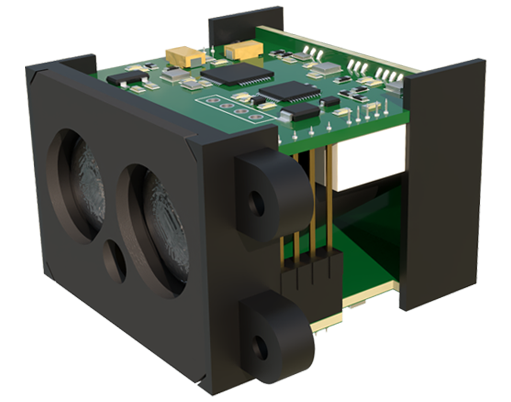
Selecting the appropriate laser profile sensor requires careful consideration of several technical parameters. First, the measurement range and standoff distance must match the physical constraints of the application. The Z-axis resolution determines the smallest height difference the sensor can detect, which is crucial for detecting fine scratches or subtle warping. The profile frequency (or scan rate) must be high enough to capture data without aliasing on fast-moving production lines. The laser wavelength and camera sensitivity are important for measuring different materials; some surfaces, like shiny metals or dark, absorbent plastics, may require specialized sensors with blue lasers or specific filtering to reduce noise. The X-axis resolution (or point spacing) defines the density of data points along the laser line. Finally, integration ease is key. Consider the output interface (Ethernet/IP, PROFINET, TCP/IP), the availability of powerful, user-friendly software development kits (SDKs), and the form factor for mounting.
In conclusion, laser profile sensors are a transformative tool for modern industry, bridging the gap between simple presence detection and complex volumetric analysis. By converting physical contours into precise digital data, they empower automated systems to perform tasks with unprecedented accuracy and reliability. As manufacturing demands continue to trend towards greater flexibility, higher quality standards, and full traceability, the role of laser profile sensing will only become more central. Understanding their working principles and selection criteria is the first step for engineers and system integrators to leverage this powerful technology for enhancing productivity and ensuring superior product quality.
