Laser sensors have become indispensable tools across numerous industrial sectors, offering unparalleled precision in distance measurement, object detection, and profile scanning. However, the raw data captured by these sensors is merely the starting point. Effective data processing is the critical bridge that transforms this raw information into actionable insights, enabling reliable automation, quality control, and system monitoring. This article delves into the core techniques and methodologies for processing laser sensor data, tailored for engineering professionals.
The journey begins at the sensor output. Most modern laser sensors, whether based on time-of-flight (ToF), triangulation, or interferometry principles, output a digital or analog signal representing distance or presence. The first stage of processing is often signal conditioning. This involves filtering to remove high-frequency electrical noise inherent in industrial environments. Techniques like moving average filters or more sophisticated digital filters (e.g., Kalman filters) are applied to smooth the signal without introducing significant lag, which is crucial for real-time applications. Amplification and offset correction are also part of this stage to ensure the signal utilizes the full dynamic range of the subsequent analog-to-digital converter (ADC).
Following digitization, the data stream enters the realm of algorithmic processing. A fundamental task is outlier detection and rejection. Spurious readings caused by environmental interferences like dust, steam, or highly reflective surfaces must be identified and removed. Statistical methods, such as comparing a reading to the mean and standard deviation of a moving window, are commonly employed. For more complex scenarios, machine learning models can be trained to recognize and filter out noise patterns specific to the application.
For measurement tasks, calibration is paramount. Sensor data must be mapped to real-world physical units (e.g., millimeters). This involves establishing a calibration curve using known reference points. Linear regression is often sufficient, but for sensors with non-linear response characteristics, polynomial or piecewise calibration is necessary. Temperature compensation algorithms are also frequently integrated, as the wavelength and performance of laser diodes can drift with ambient temperature changes, affecting measurement accuracy.
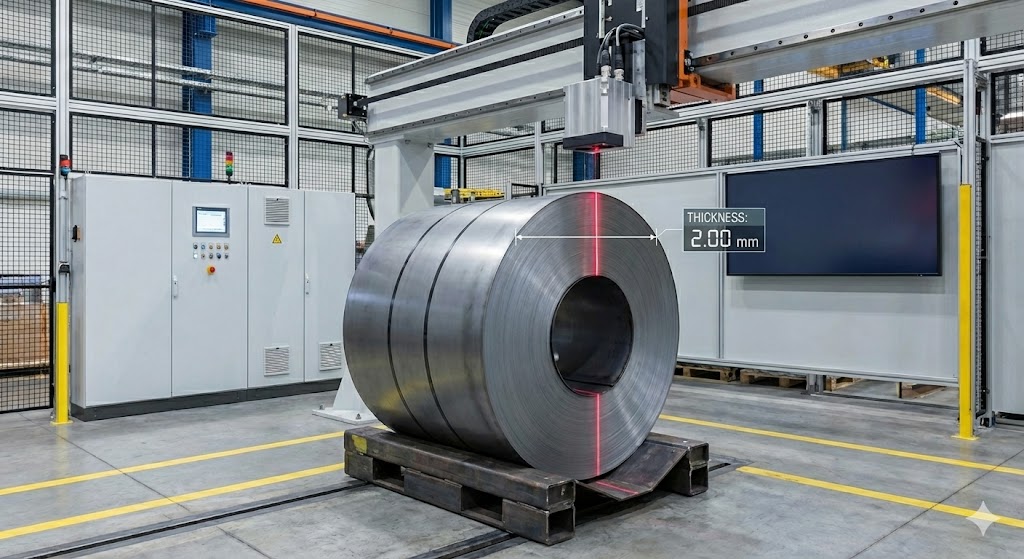
In applications like contour profiling or 3D scanning, the data processing pipeline becomes more complex. Here, the sensor provides a point cloud—a set of data points in a coordinate system. Processing involves several steps: point cloud registration (aligning multiple scans), noise reduction, and surface reconstruction. Algorithms such as Iterative Closest Point (ICP) are used for registration, while statistical outlier removal filters clean the data. Finally, meshing algorithms create a continuous digital surface model from the discrete points, which can be used for reverse engineering or inspection against a CAD model.
Edge computing has revolutionized laser sensor data processing. Instead of streaming all raw data to a central server, preprocessing is performed locally on intelligent sensor nodes or gateways. This reduces network bandwidth, lowers latency for critical control loops, and enhances system reliability. For instance, a laser sensor on a robotic arm can locally compute the presence and dimensions of a part, sending only a pass/fail command or coordinate data to the main robot controller.
Advanced applications increasingly leverage machine learning (ML) and artificial intelligence (AI). Supervised learning models can classify objects detected by a laser scanner based on their profile. Anomaly detection algorithms, often unsupervised, can monitor a process by learning the normal pattern of sensor data and flagging deviations that indicate potential faults or quality issues. These techniques move beyond simple thresholding, enabling predictive maintenance and more adaptive automation.

The choice of processing architecture—whether on a programmable logic controller (PLC), industrial PC, or embedded microcontroller—depends on the required complexity and speed. Real-time operating systems (RTOS) are often chosen for time-critical tasks. The processed data must then be integrated into broader systems via industrial communication protocols like OPC UA, PROFINET, or EtherNet/IP, providing context and enabling coordinated action across the production line.
In conclusion, the value of a laser sensor is fully realized only through robust data processing. From basic filtering and calibration to advanced point cloud analysis and AI-driven insights, these techniques ensure the sensor's high precision translates into high reliability and intelligence for industrial systems. As sensors become more sophisticated and computing power more accessible at the edge, the role of data processing will only grow in significance, driving the next wave of industrial innovation.