In the realm of automation, robotics, and smart devices, the ability to detect the presence or absence of an object and measure its distance is fundamental. This capability is powered by two closely related yet distinct technologies: proximity sensors and distance sensors. While the terms are sometimes used interchangeably, understanding their specific functions, operating principles, and applications is crucial for engineers, developers, and technology enthusiasts.
A proximity sensor is a device designed to detect the presence or absence of a nearby object without any physical contact. Its primary function is to answer a simple binary question: "Is an object there, or not?" These sensors typically have a defined detection range or field. When an object enters this field, the sensor triggers a signal. They are not inherently designed to provide precise information about how far the object is, only that it is within the detection zone. Common types of proximity sensors include inductive sensors (for detecting metals), capacitive sensors (for detecting a wide range of materials including liquids and plastics), and photoelectric sensors (using light beams).
On the other hand, a distance sensor, often called a ranging sensor, is specifically engineered to measure the exact interval between the sensor itself and a target object. It answers the question: "How far away is the object?" These sensors provide continuous or discrete data representing the measured distance, usually in millimeters, centimeters, or meters. Technologies employed in distance sensing are diverse, including ultrasonic sensors (using sound waves), laser rangefinders (using laser beams), and time-of-flight (ToF) sensors (measuring the time for light to bounce back).
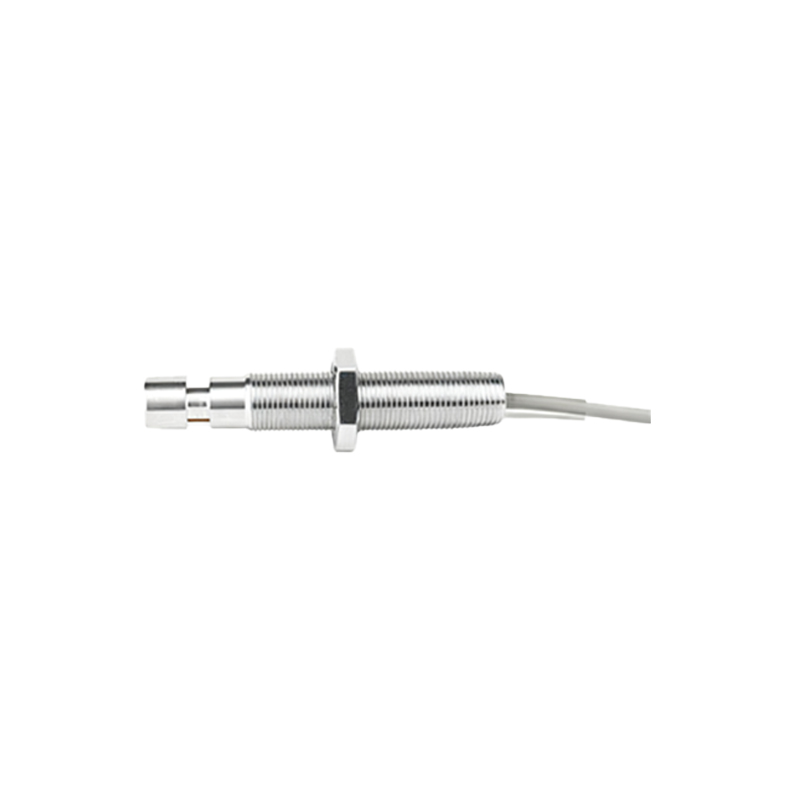
The core distinction lies in their output. A proximity sensor typically provides a simple on/off, high/low digital signal. For instance, it might output a voltage when an object is within 10mm. A distance sensor, however, provides an analog signal or digital data that corresponds to a specific distance value, such as 152mm. It's worth noting that many modern distance sensors can be configured to act as proximity sensors by setting a threshold. Conversely, a basic proximity sensor cannot function as a distance sensor.
The operating principles further differentiate them. Inductive proximity sensors generate an electromagnetic field; a metallic object entering this field induces eddy currents, which are detected. Capacitive sensors detect changes in capacitance caused by any material that alters the electrostatic field. These are purely proximity-based. Ultrasonic distance sensors, however, calculate distance by emitting a sound pulse and measuring the time it takes for the echo to return, using the known speed of sound. Similarly, laser-based sensors use the time-of-flight or triangulation principle of a light beam for highly accurate distance measurement.
Applications for proximity sensors are vast and often focused on safety, counting, or position verification. In industrial automation, they detect if a metal part is correctly positioned on an assembly line. In consumer electronics, they deactivate a smartphone's touchscreen when held to the ear during a call to prevent accidental inputs. They are also used in liquid level detection, anti-collision systems for elevators, and object counting on conveyor belts.
Distance sensors find their critical role in applications requiring spatial awareness and measurement. They are the eyes of autonomous mobile robots and drones for obstacle avoidance and navigation. In the automotive industry, ultrasonic distance sensors are essential for parking assist systems, while more advanced LiDAR (Light Detection and Ranging) systems are used for autonomous driving. In logistics, they measure parcel dimensions. In smart buildings, they can monitor room occupancy or control automatic doors based on a person's approaching distance.
The evolution of sensor technology, particularly with the advent of the Internet of Things (IoT) and Industry 4.0, is blurring some lines. Advanced sensors now integrate multiple functionalities. For example, a Time-of-Flight (ToF) camera module can provide not only precise distance mapping but also proximity detection and even simple gesture recognition. The choice between a dedicated proximity sensor and a distance sensor ultimately depends on the application's requirements: Is a simple presence detection sufficient, or is precise, quantitative distance data necessary for control and feedback?
Both sensor types are indispensable components in creating interactive, efficient, and intelligent systems. From the simple act of a faucet turning on when hands are nearby (using an infrared proximity sensor) to a robotic arm precisely placing a component based on laser distance feedback, these technologies work silently in the background, enabling the seamless interaction between the digital and physical worlds. Their continued development promises even greater precision, miniaturization, and integration, driving forward innovations in automation, safety, and user interface design across all industries.