Linear laser sensors, also known as line laser sensors or laser displacement sensors, represent a cornerstone technology in modern industrial automation and precision measurement. Unlike point laser sensors that measure a single spot, these devices project a visible or invisible laser line onto a target surface. By analyzing the deformation, position, or profile of this line using a complementary receiver (typically a CMOS or CCD sensor), they can extract a wealth of one-dimensional or two-dimensional data. The core principle is based on optical triangulation. The laser emitter projects a sharp line. The reflected light from this line is captured by the receiver lens at a specific angle. Any change in the distance or contour of the target surface causes a proportional shift in the position of the laser line image on the receiver's sensor. Sophisticated onboard processors then calculate precise measurements of height, width, step, gap, or a complete cross-sectional profile.
The advantages of linear laser sensors are numerous and drive their widespread adoption. They offer non-contact measurement, eliminating wear and damage to both the sensor and delicate target objects. They provide exceptionally high speed, capable of thousands of measurements per second, making them ideal for inline inspection on fast-moving production lines. Their resolution can reach the micron level, ensuring detection of the most minute defects or variations. Furthermore, they are largely immune to ambient light interference and can measure a wide range of materials, including metals, plastics, glass, and even organic substances, though surface reflectivity must be considered.
In practical industrial applications, linear laser sensors are indispensable across diverse sectors. In electronics manufacturing, they meticulously measure the coplanarity of Ball Grid Array (BGA) solder balls, the height of components on printed circuit boards (PCBs), and the thickness of coatings or films. The automotive industry relies on them for gap and flush measurement between body panels, tire tread profiling, and robotic guidance in assembly processes. In precision machining, they perform in-process inspection of part dimensions, tool wear monitoring, and surface defect detection like scratches or dents. They are also pivotal in logistics for package dimensioning and volume calculation, and in robotics for providing 3D vision and precise positioning data.
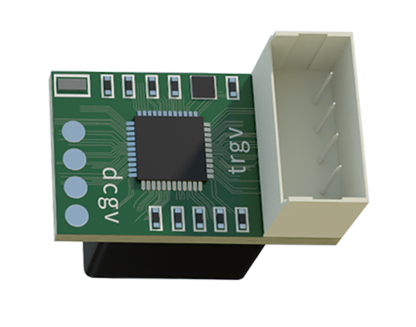
Selecting the appropriate linear laser sensor requires careful analysis of several key parameters. First, the measurement range and stand-off distance must match the physical constraints of the application. The required resolution and repeatability will dictate the sensor's grade and cost. The laser line length must adequately cover the target feature or part width. The sampling rate, or measurement frequency, must be high enough to maintain accuracy at the production line's maximum speed. Environmental factors are critical: sensors may need specific ingress protection (IP) ratings for dusty or wet conditions, robust housings for high vibration, and specialized filters for high ambient temperatures or intense ambient light. Finally, the output interface (e.g., Ethernet/IP, PROFINET, analog voltage, digital I/O) must seamlessly integrate with the existing factory control system, such as a PLC or industrial PC.
Integration and calibration are vital final steps. Proper mechanical mounting ensures stability and correct alignment. The sensor typically requires configuration via dedicated software to set measurement windows, filters, and output logic. For profile measurement, a precise traverse system (like a linear stage or integration into a robot arm) moves the sensor or the target to build a full 3D model. Regular maintenance, primarily keeping the lens clean from dust and debris, is essential for sustained accuracy.
Looking ahead, the evolution of linear laser sensors is intertwined with Industry 4.0. Future trends include the development of smarter sensors with embedded AI capabilities for direct edge computing and anomaly classification, reducing the data load on central systems. Multi-line lasers and blue laser models (which offer better performance on shiny or organic surfaces) are gaining traction. Furthermore, tighter integration with robot controllers and cloud platforms for predictive analytics and centralized quality data management is becoming standard. In conclusion, the linear laser sensor is far more than a simple measuring tool; it is a critical enabler of quality control, process optimization, and intelligent automation, providing the precise, reliable, and high-speed data that modern manufacturing fundamentally requires.
