Proximity sensors are indispensable components in modern industrial automation, offering non-contact detection capabilities that enhance efficiency, reliability, and safety. A critical aspect of their functionality lies in their ability to detect different materials, which directly influences sensor selection, performance, and application success. This article delves into the principles of material detection by proximity sensors, the factors affecting their performance, and best practices for implementation.
The core operating principle of a proximity sensor is based on generating an electromagnetic field or beam and detecting changes caused by a target object entering its sensing range. However, not all materials interact with these fields in the same way. The primary types of proximity sensors—inductive, capacitive, and photoelectric—each respond differently to material properties.
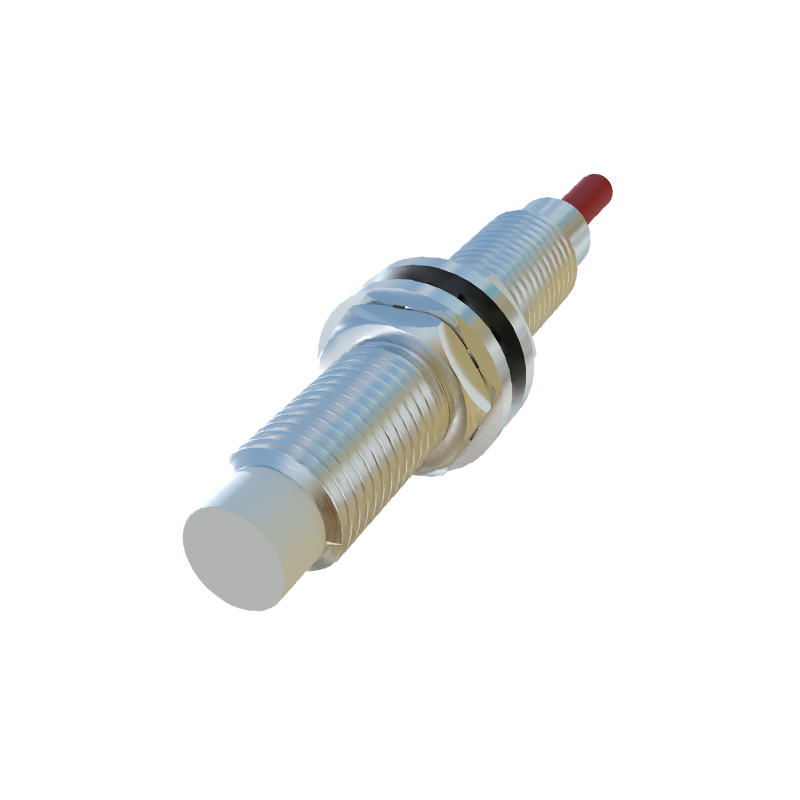
Inductive proximity sensors are the most common type for metal detection. They generate an oscillating electromagnetic field from a coil. When a conductive metal target enters this field, eddy currents are induced on the target's surface. These currents absorb energy from the oscillator, causing a reduction in oscillation amplitude. The sensor's circuit detects this amplitude drop and triggers a switch signal. The key material property here is electrical conductivity. Ferrous metals like iron and steel are highly detectable due to their high permeability, which also distorts the magnetic field. Non-ferrous metals like aluminum, copper, or brass have lower permeability but good conductivity, resulting in a shorter nominal sensing distance compared to steel. Inductive sensors generally cannot detect non-metallic materials like plastics, wood, or liquids, as they are not electrically conductive.
Capacitive proximity sensors, in contrast, can detect both metallic and non-metallic materials. They operate by generating an electrostatic field between two electrodes (often the sensor face and a ground plane). Any object entering this field alters the capacitance of the system. The dielectric constant (permittivity) of the target material is the decisive factor. Materials with a high dielectric constant, such as water, metals, or certain plastics, cause a significant change in capacitance and are easily detected. Materials with a low dielectric constant, like dry wood or air, cause a smaller change. Therefore, capacitive sensors are ideal for detecting liquids, powders, grains, plastics, and glass, in addition to metals. Their sensing distance is generally shorter than inductive sensors and can be influenced by environmental factors like humidity.
Photoelectric sensors use a light beam (visible, infrared, or laser) and detect the presence of an object by either the interruption of the beam (through-beam), reflection from the target (retro-reflective), or reflection from the target back to the emitter (diffuse reflective). Material detection here depends on optical properties: color, reflectivity, transparency, and surface finish. A glossy white surface reflects more light than a matte black one, affecting the sensing range. Transparent materials like clear glass or plastic may require specialized polarized or background suppression sensors. Photoelectric sensors are highly versatile for all solid materials but can be challenged by environmental contaminants like dust or fog.
Several key factors influence a sensor's ability to detect a specific material reliably. The nominal sensing distance (Sn) specified in datasheets is typically calibrated for a mild steel target (for inductive) or water (for capacitive). For other materials, a reduction factor must be applied. For instance, an inductive sensor with an Sn of 10mm for steel might only sense aluminum at 40% of that distance (4mm). The target size must also be sufficient; a small target may not perturb the field enough. The sensor's frequency response can be affected by fast-moving targets of different materials. Environmental conditions—temperature extremes, chemical exposure, or electromagnetic interference—can also impact performance.
For optimal application, engineers must follow a systematic selection process. First, identify the target material and its key properties (conductivity, dielectric constant, color). Second, consider the operating environment (clean, washdown, hazardous). Third, define mechanical requirements like required sensing distance, mounting constraints, and response time. Fourth, choose the appropriate sensor technology: Inductive for metals only; Capacitive for metals, non-metals, and liquids; Photoelectric for long-range or color/contrast detection. Finally, always consult the manufacturer's datasheets for material-specific correction factors and perform real-world testing with the actual target under actual conditions. Proper installation is crucial; ensuring the correct mounting, avoiding sensor-to-sensor interference, and setting the sensitivity correctly will prevent false triggers and ensure longevity.
In conclusion, the effective detection of materials by proximity sensors is a cornerstone of industrial automation. Understanding the fundamental interaction between the sensor's field and the target's material properties allows for precise selection and deployment. By matching the sensor technology—inductive, capacitive, or photoelectric—to the specific material and application demands, engineers can build robust, efficient, and reliable systems that form the backbone of modern manufacturing, packaging, and material handling processes.