In modern industrial automation and environmental monitoring, the accurate detection of particulate matter is paramount for safety, process control, and regulatory compliance. Among various sensing technologies, laser dust sensors have emerged as a superior solution, offering high precision and reliability. This article delves into the working principles, key advantages, diverse applications, and critical selection criteria for laser-based dust sensors in industrial settings.
The core principle of a laser dust sensor is based on light scattering, specifically Mie scattering theory. A controlled laser diode emits a focused beam of light into a detection chamber. As airborne particles pass through this chamber, they intersect the laser beam, causing the light to scatter in multiple directions. A strategically positioned photodetector, typically placed at a specific angle (e.g., 90 degrees), captures this scattered light. The intensity of the scattered light is directly proportional to the concentration and size of the particles. Sophisticated onboard algorithms then process this photoelectric signal, converting it into a digital output representing mass concentration (e.g., µg/m³) for specific particle size fractions like PM1.0, PM2.5, and PM10.
Several key advantages distinguish laser dust sensors from traditional methods like gravimetric analysis or older infrared sensors. Firstly, they provide real-time, continuous monitoring, which is essential for dynamic industrial processes. Their high sensitivity allows for the detection of low-concentration particulates, while their fast response time enables immediate feedback for control systems. Modern laser sensors are also known for their long-term stability and minimal drift, reducing maintenance frequency. Furthermore, their compact size and digital interfaces (e.g., UART, I2C) facilitate easy integration into existing monitoring networks, IoT platforms, and HVAC systems.
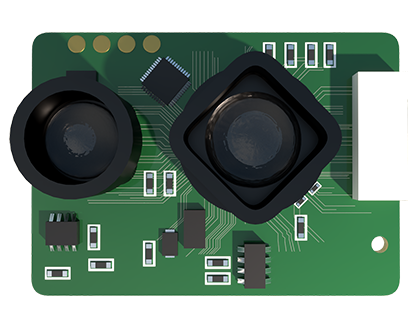
The applications for laser dust sensors span numerous industries. In manufacturing, they are crucial for monitoring air quality in cleanrooms, electronic assembly lines, and pharmaceutical production to prevent product contamination. Within the energy sector, they are deployed to monitor combustion efficiency and particulate emissions from stacks. In workplace safety, these sensors protect workers in environments prone to hazardous dust, such as woodworking, metal grinding, mining, and grain handling, ensuring compliance with occupational exposure limits (OELs). They are also integral to smart building management systems, optimizing air filtration and ventilation based on real-time particulate levels.
Selecting the appropriate laser dust sensor requires careful consideration of several parameters. The required measurement range and resolution must match the application's needs, from cleanroom monitoring to high-dust industrial exhaust. The particle size fraction of interest (PM2.5, PM10, TSP) dictates the sensor's optical design. Environmental conditions are critical; sensors must be rated for the operating temperature, humidity, and potential presence of corrosive gases. The output interface should be compatible with the host data acquisition system. Finally, certifications such as ATEX or IECEx for hazardous areas, or other relevant industry standards, are often mandatory for industrial use.
Despite their robustness, optimal performance depends on proper installation and maintenance. Sensors should be installed in locations representative of the air being monitored, avoiding dead zones or areas with direct airflow from sources. Regular calibration, as recommended by the manufacturer, is essential to maintain accuracy. Keeping the optical path clean from cumulative dust buildup through periodic inspection ensures consistent and reliable readings over the sensor's lifespan.

In conclusion, laser dust sensors represent a critical technological advancement for particulate matter monitoring. Their precision, reliability, and connectivity make them indispensable tools for enhancing industrial safety, ensuring product quality, improving process efficiency, and meeting stringent environmental regulations. As industries continue to prioritize automation and data-driven decision-making, the role of these sophisticated sensors will only become more central to operational excellence.