In the rapidly evolving landscape of industrial automation, vision proximity sensors have emerged as a pivotal technology, fundamentally transforming how machines perceive and interact with their environment. Unlike traditional proximity sensors that rely on physical contact or basic electromagnetic fields, vision proximity sensors integrate advanced optical systems, image processing algorithms, and intelligent software to provide rich, contextual data about objects within a defined field of view. Essentially, they serve as the sophisticated "eyes" of automated systems, enabling precise detection, measurement, identification, and guidance without direct contact.
At its core, a vision proximity sensor system comprises several key components: a high-resolution camera or imaging device, a dedicated light source (often LEDs or lasers), a processing unit, and specialized software. The light source illuminates the target area, and the camera captures images or video streams. These visual data are then transmitted to the processing unit, where sophisticated algorithms analyze features such as shape, size, color, texture, and pattern. By comparing this information against predefined criteria or learned models, the system can determine an object's presence, exact position, orientation, and even detect specific defects or anomalies. This non-contact method is invaluable in applications where physical touch could damage delicate components or where high-speed, precise positioning is critical.
The operational principle hinges on digital image processing and machine vision techniques. Common approaches include 2D imaging for basic presence detection and dimensional gauging, and more advanced 3D vision using stereo cameras or laser triangulation for depth perception and complex volumetric analysis. The sensor's "proximity" function is defined by its ability to detect objects within a specific range and field of view, triggering outputs or actions when an item enters, leaves, or occupies a particular zone. This goes beyond simple binary detection; it enables continuous monitoring and feedback, such as verifying the correct assembly of parts on a conveyor or guiding a robotic arm to pick and place items with sub-millimeter accuracy.
The applications of vision proximity sensors are vast and cross-sectoral. In automotive manufacturing, they inspect weld seams, verify part placement, and guide robots in assembly tasks. In electronics, they ensure microscopic components are correctly positioned on circuit boards. Packaging lines utilize them for label verification, fill-level inspection, and barcode reading. Logistics and warehousing benefit from their ability to sort parcels and manage inventory autonomously. Furthermore, in collaborative robotics (cobots), these sensors provide essential safety functions by detecting human presence and adjusting robot speed or trajectory to prevent collisions, fostering safer human-machine interaction.
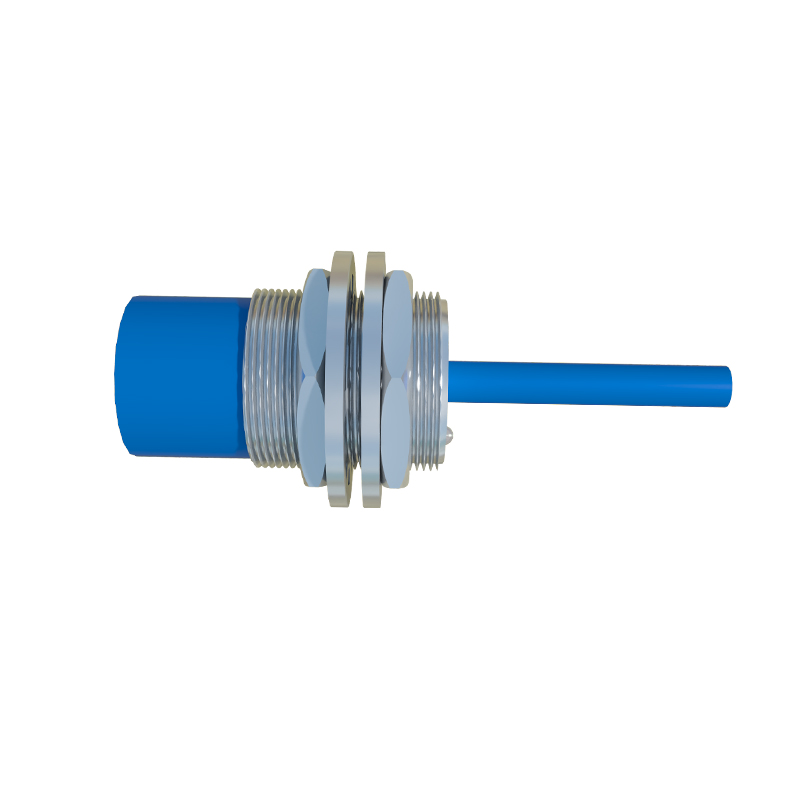
Several advantages distinguish vision proximity sensors from conventional counterparts. First, they offer unparalleled flexibility; a single vision system can often perform multiple inspection tasks (e.g., presence, size, and flaw detection) that would require several discrete sensors. Second, they provide rich, data-rich feedback that can be used for process optimization and quality control analytics. Third, their non-contact nature minimizes wear and tear and avoids product damage. However, challenges exist. These systems can be sensitive to ambient lighting conditions, requiring controlled illumination or advanced algorithms to compensate. They also involve higher initial costs and complexity in setup and programming compared to simple photoelectric or inductive sensors. Processing large amounts of image data also demands significant computational power and can introduce latency, though edge computing advancements are mitigating this issue.
When selecting a vision proximity sensor, engineers must consider key parameters: resolution (which determines detail clarity), field of view (the observable area), working distance (range from sensor to target), processing speed (often measured in frames per second), environmental ratings (for dust, moisture, or vibration), and the robustness of the software's toolset for analysis and integration. Compatibility with industrial communication protocols like Ethernet/IP, PROFINET, or IO-Link is also crucial for seamless integration into broader automation networks.
Looking ahead, the integration of artificial intelligence and deep learning is pushing the boundaries of what vision sensors can achieve. AI-enabled sensors can learn from examples, improving defect detection for irregular patterns and adapting to variable conditions with minimal reprogramming. The trend towards smarter, more compact, and easier-to-deploy "vision sensors" (as opposed to complex vision systems) is making this technology accessible for a wider range of applications. As Industry 4.0 and the Industrial Internet of Things (IIoT) mature, vision proximity sensors will increasingly function not just as isolated detection devices, but as intelligent data nodes, feeding valuable visual insights into digital twins and predictive maintenance systems.
In conclusion, vision proximity sensors represent a significant leap forward in sensing technology. By merging optics, computing, and intelligence, they provide machines with a level of perceptual awareness that closely mimics human sight, but with greater consistency, speed, and precision. Their ability to deliver comprehensive proximity and inspection data makes them indispensable for modern automated systems striving for higher quality, efficiency, and flexibility. As technology continues to advance, their role as the foundational visual perception layer in smart factories and beyond will only become more