As an experienced electrical engineer specializing in industrial automation, I recently conducted a detailed teardown of a commonly used square proximity sensor switch to explore its internal design, operational principles, and manufacturing quality. This analysis aims to provide insights for professionals involved in selection, maintenance, or integration of such sensors in automated systems.
The sensor model examined is a standard 12-24V DC inductive square proximity switch with IP67 rating, designed for metal detection within a range of 4mm. The external housing is constructed from nickel-plated brass, providing robustness and corrosion resistance suitable for harsh industrial environments. The first step involved disassembling the four stainless steel screws on the front face, revealing a tightly sealed internal compartment.
Inside, the core components are arranged on a compact PCB. The oscillator circuit, based on a Colpitts configuration, generates a high-frequency electromagnetic field. When a metallic object enters this field, eddy currents are induced, causing a change in oscillation amplitude. This change is detected by a demodulator stage, which triggers a solid-state switching output. The output stage utilizes a MOSFET driven by a comparator IC, ensuring fast response times and low leakage current. Notably, the sensor incorporates reverse polarity protection and short-circuit protection via a series diode and a resettable fuse.
The sensing coil is wound around a ferrite core, potted with epoxy to prevent moisture ingress and mechanical vibration damage. The potting material shows uniform application, indicating high manufacturing standards. The PCB is double-sided with a solder mask, and all surface-mount components are neatly aligned, suggesting automated assembly processes. Trace routing follows good EMI practices, with ground planes shielding sensitive analog sections.
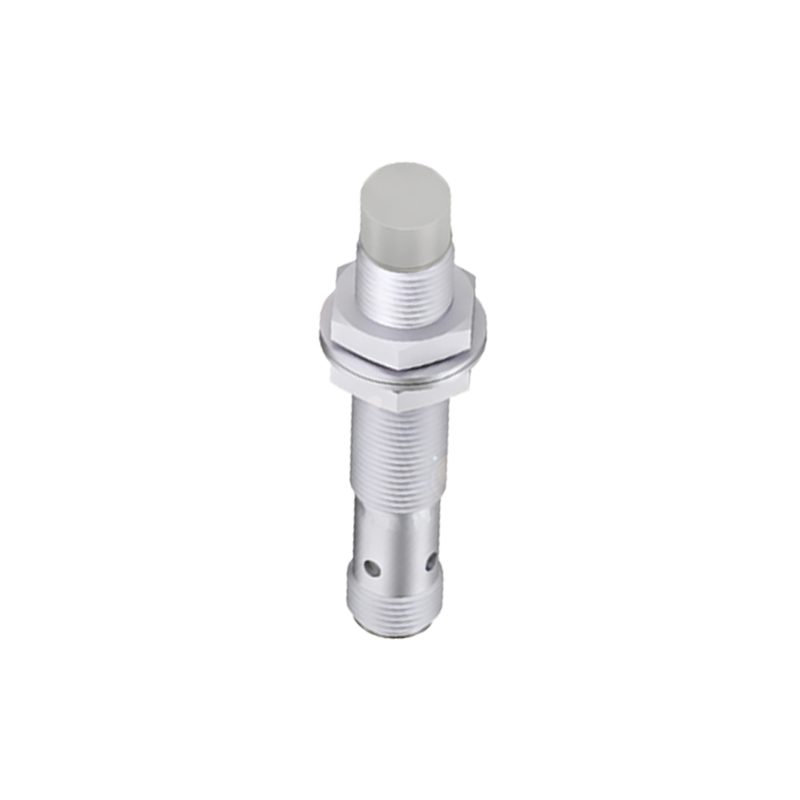
Performance testing under varying conditions revealed stable operation from -25°C to 70°C, with minimal drift in switching points. The hysteresis, set at approximately 10% of the sensing range, prevents chatter during target approach. However, the teardown also highlighted potential failure points: the wire connections to the PCB are strain-relieved but could benefit from additional clamping in high-vibration applications. Furthermore, while the housing seal is effective, prolonged exposure to chemicals might degrade the O-ring over time.
In summary, this square proximity sensor exemplifies reliable design with attention to durability and electrical safety. Its modular construction facilitates easy repair, such as replacing the output module if damaged. For engineers, understanding these internal details aids in optimizing sensor placement and diagnosing field issues, ultimately enhancing system uptime. Future improvements could include integrated diagnostics via IO-Link or enhanced materials for extreme temperatures.