In the demanding landscape of modern industrial automation and process control, the ability to accurately measure parameters in extreme thermal environments is paramount. High temperature laser sensors have emerged as a critical technology, enabling non-contact, precise, and reliable measurements where conventional sensors would fail. This article delves into the operational principles, core applications, and key considerations for selecting and implementing these sophisticated instruments.
At its core, a high temperature laser sensor operates on the principle of optical triangulation or time-of-flight measurement, adapted for harsh conditions. A laser diode emits a focused beam of coherent light onto the target surface. The reflected light is captured by a high-sensitivity receiver, typically a position-sensitive detector (PSD) or a CMOS/CCD array. For high-temperature applications, the sensor must distinguish the laser signal from the intense background infrared radiation emitted by the hot target itself. Advanced models employ modulated laser signals and sophisticated filtering techniques to isolate the specific wavelength of the laser light, ensuring measurement integrity even when the target is glowing red-hot. The key differentiator is the robust construction, featuring specialized optics made from materials like sapphire or quartz that can withstand thermal radiation and potential exposure, along with active or passive cooling systems for the sensor housing.
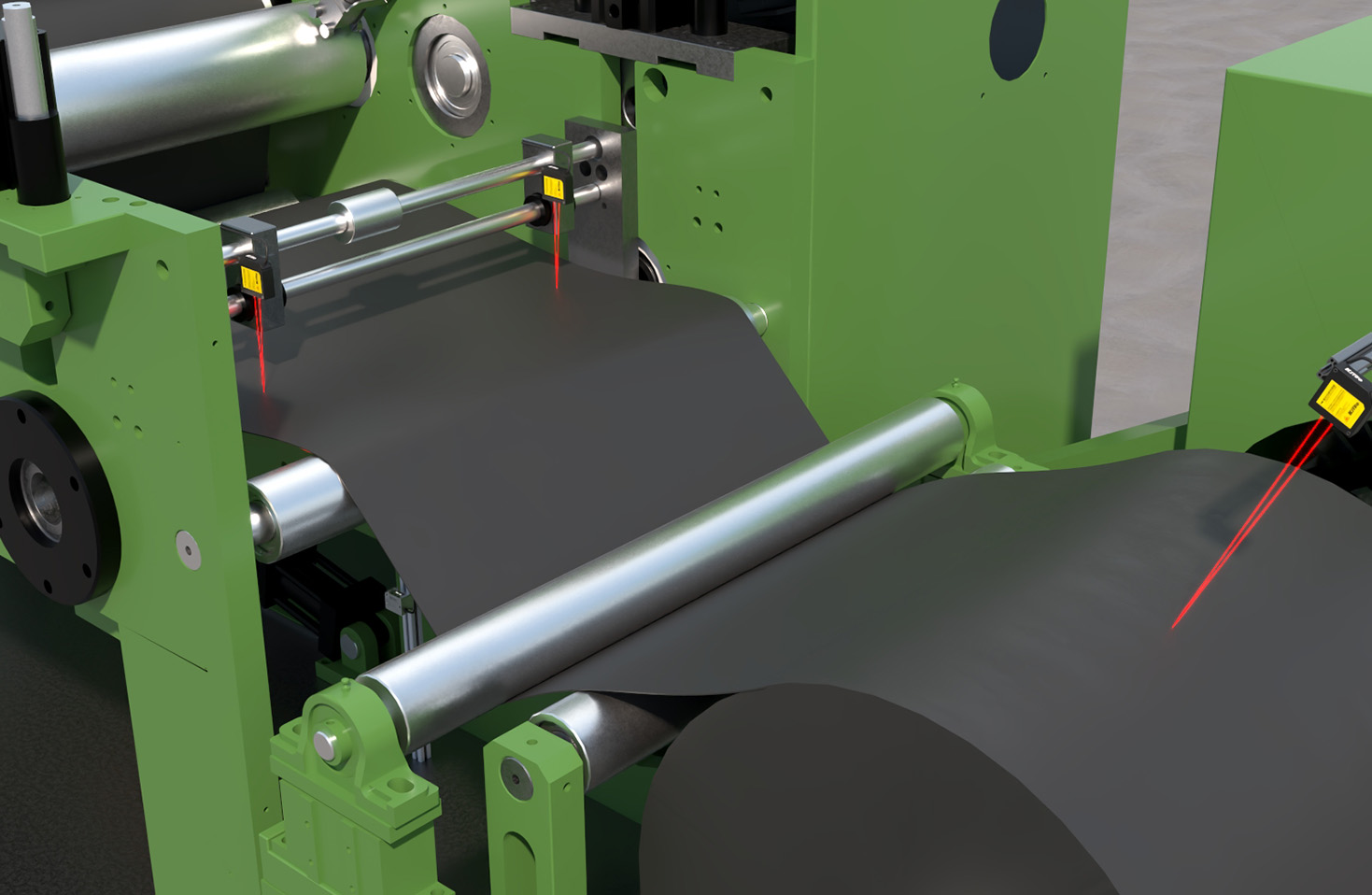
The applications for high temperature laser sensors are vast and span numerous heavy industries. In metal production and processing, they are indispensable for monitoring the thickness, width, and profile of red-hot steel slabs in rolling mills. They provide continuous, real-time data for process control, improving product quality and yield. In glass manufacturing, these sensors measure the gob temperature and mold spacing during the forming process, which is critical for maintaining consistency and reducing waste. The automotive industry utilizes them in welding processes, such as laser welding of car body components, to monitor seam tracking and stand-off distance in real-time, where temperatures at the weld point are extremely high. Furthermore, in the ceramics and cement industries, they are used to monitor kiln lining wear and the level of molten materials, contributing to predictive maintenance and operational safety.
Selecting the appropriate high temperature laser sensor requires a careful analysis of several technical and environmental factors. The primary specification is the operational temperature range, which defines the ambient conditions the sensor can endure, not the temperature of the target it measures. Sensors are available with ratings from 80°C to over 200°C for continuous operation. The measurement range, resolution, and linearity must match the specific dimensional or positional task. The type of laser (typically red or blue, with blue offering better performance on hot surfaces) and its spot size are crucial for accuracy on rough or molten surfaces. Environmental protection is another critical aspect; a high IP rating (e.g., IP67 or IP69K) is necessary for resistance to dust and water ingress, while specialized housings protect against flying sparks, slag, and mechanical impact. Finally, integration capabilities—such as analog outputs (4-20 mA, 0-10 V), digital interfaces (Ethernet/IP, PROFINET, IO-Link), and software compatibility—determine how seamlessly the sensor will fit into the existing control architecture.

Installation and maintenance also demand attention. Proper mounting, considering vibration and thermal expansion, is essential. Ensuring a clear optical path, free from steam, smoke, or debris, often necessitates the use of protective air purge units that blow a curtain of clean air across the sensor's lens. Regular calibration checks against a known reference are recommended to maintain long-term accuracy, though many modern sensors feature excellent long-term stability.
In conclusion, high temperature laser sensors are not merely incremental improvements but enabling technologies for advanced industrial processes. They provide a critical window into processes that are otherwise hostile to measurement, driving efficiency, quality, and safety. As industries push toward higher efficiencies and smarter manufacturing under increasingly severe conditions, the role of these robust and precise optical sensors will only continue to expand, forming the eyes of automation in the heat of production.